

Abuakwa State College At 89: Celebrating A Proud Heritage And The Urgent Call To Restore Its Academi...


As Abuakwa State College (ABUSCO) celebrates 89 years of existence in 2026, the historic institution stands at an important crossroads between its distinguished past and the challenges of modern secondary education. Founded through the vision and commitment of the Okyeman Traditional Council, the college has contributed immensely to Ghana's educational, political, cultural and socioeconomic development. Yet, as preparations begin for its 90th anniversary in October 2027, questions surrounding academic performance, infrastructure, institutional classification and alumni commitment demand renewed attention.
Established in 1936 at Akyem Asafo in the Eastern Region of the then Gold Coast, Abuakwa State College emerged from a determination by the traditional authorities of Okyeman to expand access to secondary education. At a time when educational opportunities were limited and concentrated in relatively few institutions, the establishment of the college represented an important investment in human capital and community advancement.
The school subsequently operated from temporary facilities in Kyebi before relocating to its present campus near Pano along the Kyebi–Asiakwa road. A major turning point occurred in 1967 under Headmaster D. E. K. Agyepong-Yamoah, whose leadership facilitated the movement from the old military barracks to a more suitable educational environment. Further expansion followed, including the completion of the Complex Block in 1977 and the commissioning of the L-Block in 2010.
These developments reflected the determination of successive school administrators, traditional authorities, teachers, parents and benefactors to transform a modest community educational initiative into a recognised institution of national importance.
At the heart of ABUSCO's identity is its enduring motto, Susubiribi, which encourages students to aim high, think positively, act honourably and exercise sound judgment. These values have shaped generations of students and remain central to the school's educational philosophy.
The college's history is closely associated with academic achievement, discipline, sporting excellence and cultural development. During its celebrated years, ABUSCO earned recognition in athletics, hockey, table tennis and music, competing successfully against some of Ghana's most established secondary schools.
Its hockey team achieved national prominence, while its athletes distinguished themselves in regional and national competitions. The school's table tennis tradition also produced notable achievements, including the reported success of Osagyefuo Amoatia Ofori Panin II, the present Okyenhene, during his student days.
ABUSCO's once-celebrated school band further contributed to its reputation, demonstrating that the institution valued creativity, teamwork and cultural expression alongside classroom instruction.
The achievements of the college are perhaps best reflected in the contributions of its former students. Over the decades, ABUSCO has produced individuals who have distinguished themselves in traditional leadership, politics, business, medicine, literature, the military, religion and the creative arts.
Among its prominent alumni are Osagyefuo Amoatia Ofori Panin II, industrialist Akenten Appiah-Menka, former Minister for Roads and Highways Kwasi Amoako-Attah, former Member of Parliament Carlos Ahenkorah, celebrated author Asare Konadu and distinguished physician Dr. Jacob Kwakye-Maafo.
Other notable personalities associated with the college include former Chief of Defence Staff John Odaate-Barnor, former parliamentarian Ahmed Arthur, musician Mzbel and the late photographer Bob Pixel. Their accomplishments illustrate the breadth of talent nurtured by an institution established primarily to serve the educational needs of Okyeman.
The school's development was also shaped by dedicated administrators and teachers whose contributions deserve recognition. Among them were C. L. Patterson, Aaron Ofori Atta, William Ofori Atta, D. E. K. Agyepong-Yamoah, S. A. Allotey, D. K. Asiedu and several others who helped establish traditions of discipline, academic commitment and institutional pride.
However, the celebration of ABUSCO's achievements must be accompanied by an objective assessment of its present circumstances.
One issue attracting considerable attention among old students and other stakeholders is the school's classification within Ghana's senior high school categorisation system. Although ABUSCO has historically competed with some of the country's leading secondary institutions, concerns have been raised about its Category B status and the need to strengthen the academic and infrastructural foundations required for sustained recognition among the nation's leading schools.
There have been reports of an upgrade to Category A, although the school's officially published classification has reportedly not yet reflected that change. This situation requires clarification from the appropriate educational authorities. More importantly, any improvement in classification must be supported by measurable progress in academic performance, infrastructure, discipline and institutional management.
School categorisation should not become an end in itself. The ultimate objective must be to provide students with quality education, modern learning facilities, competent teaching, effective supervision and opportunities to develop their full potential.
ABUSCO's academic revival must therefore begin with a comprehensive assessment of teaching and learning outcomes. Particular attention should be given to performance in the West African Senior School Certificate Examination, especially in English Language, Core Mathematics, Integrated Science and Social Studies.
The school should establish clear academic improvement targets, strengthen remedial programmes, promote effective supervision and provide additional support for students who struggle in critical subjects. Academic excellence cannot be restored through nostalgia alone; it requires planning, investment, monitoring and accountability.
The contributions of former students will be essential to this transformation. Across Ghana and internationally, ABUSCO alumni occupy influential positions in education, engineering, medicine, law, business, technology and public administration. Their collective knowledge, professional networks and financial resources represent an enormous opportunity for institutional development.
Old students who are professional teachers, lecturers, scientists and other specialists could support the school through guest lectures, career guidance, academic mentorship, examination preparation programmes and professional development opportunities for teachers.
Similarly, alumni working in business and industry could help establish partnerships to modernise science laboratories, improve ICT facilities, expand library resources and provide scholarships for academically promising but financially disadvantaged students.
A structured alumni mentorship programme linking current students with accomplished former students could also inspire higher academic ambitions and expose learners to emerging career opportunities.
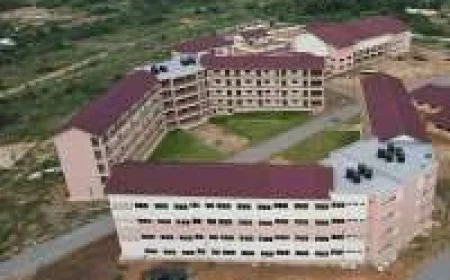
Infrastructure development remains another critical priority. As student enrolment has expanded over the decades, pressure on classrooms, dormitories, sanitation facilities, laboratories and other essential infrastructure has increased.
The construction of a perimeter fence wall has been identified in the source material as an important alumni development priority. Such a project would help protect school property, discourage unauthorised access, reduce land encroachment and strengthen campus security.
However, infrastructure priorities should be guided by a comprehensive needs assessment and implemented through transparent procurement, proper financial reporting and effective project supervision.
The college's 90th anniversary in 2027 offers an exceptional opportunity to mobilise stakeholders around a long-term institutional development programme.
Rather than limiting the celebration to ceremonial activities, speeches, reunions and fundraising events, the anniversary should serve as the launching platform for a measurable educational transformation agenda.
Such an agenda could include a five-year academic improvement programme, modernisation of science and ICT facilities, rehabilitation of essential infrastructure, teacher development initiatives, student welfare programmes and a sustainable alumni-supported educational endowment fund.
The Okyeman Traditional Council, school management, Board of Governors, Parent-Teacher Association, Ghana Education Service and alumni leadership must work collaboratively to establish realistic priorities and clearly defined responsibilities.
The role of the Old Abuscodians Association will be particularly important. Effective alumni participation requires more than occasional financial contributions. It demands strong governance, transparent administration, reliable communication, inclusive decision-making and a shared commitment to the institution's long-term interests.
Individual year groups should be encouraged to adopt development projects consistent with an agreed institutional master plan. This would help prevent duplication, promote equitable resource allocation and ensure that contributions address the school's most pressing needs.
The anniversary also presents an opportunity to document and preserve ABUSCO's institutional history. The experiences of former headmasters, teachers, students and community leaders should be collected through oral histories, archival research, photographs and publications.
A comprehensive historical record would preserve the school's legacy while providing future generations with a deeper understanding of the sacrifices and achievements that shaped the institution.
As ABUSCO approaches nine decades of service, it is important to recognise that its founding vision remains as relevant today as it was in 1936. The Okyeman Traditional Council established the school to expand educational opportunity, develop human potential and contribute to the progress of society. That responsibility must continue to guide its future.
The college's distinguished history provides a strong foundation, but past achievements alone cannot guarantee future excellence. Educational institutions must continuously adapt to changing academic standards, technological developments, labour market demands and the expectations of society.
For ABUSCO, the challenge is not simply to reclaim a prestigious classification or compete with historically established schools. It is to build an institution capable of consistently producing knowledgeable, disciplined, innovative and socially responsible graduates.
The spirit of Susubiribi must therefore be translated into practical action. To aim high is to establish ambitious but achievable academic targets. To think positively is to embrace innovation and institutional reform. To act honourably is to uphold integrity, accountability and responsible leadership.
As the college prepares to celebrate its 90th anniversary on October 11, 2027, the occasion should inspire renewed unity among all members of the ABUSCO family.
The time has come for old students, traditional authorities, educators, parents and other stakeholders to move beyond expressions of pride and nostalgia towards sustained investment in the future of their beloved institution.
Abuakwa State College has given Ghana generations of leaders, professionals and accomplished citizens. The greatest tribute its alumni can now offer is to ensure that the next generation receives an education worthy of that distinguished heritage.
The journey towards renewed excellence will require sacrifice, cooperation, financial commitment and visionary leadership. Yet the institution's history demonstrates that determination and collective effort can overcome even the most difficult challenges.
As ABUSCO approaches 90 years, the message to every old student is clear: the legacy of the founding fathers must not merely be celebrated; it must be protected, strengthened and passed on to future generations.
Susubiribi — Aim High, Think Positively and Act Honourably.
ABUSCO! Yaanom, duty calls.
What's Your Reaction?
 Like
0
 Dislike
0
 Love
0
 Funny
0
 Wow
0
 Sad
0
 Angry
0
















Comments (0)