

Cockroach Janta Party: Satire, Youth Anger, and India’s Political Frustration
The “Cockroach Janta Party” (CJP) emerged in India after controversial remarks allegedly comparing unemployed youth and online activists to “cockroaches and parasites.” The statement triggered massive backlash online and inspired a satirical digital movement representing frustrated Indian youth. Although not an officially registered political party, CJP quickly gained popularity through memes, irony, and social media activism focused on unemployment, educational scams, rising living costs, and political dissatisfaction. The movement even surpassed major Indian political parties in online presence and received international media attention. Many now see CJP as a symbol of Gen Z frustration with traditional politics and a possible future political force in India.
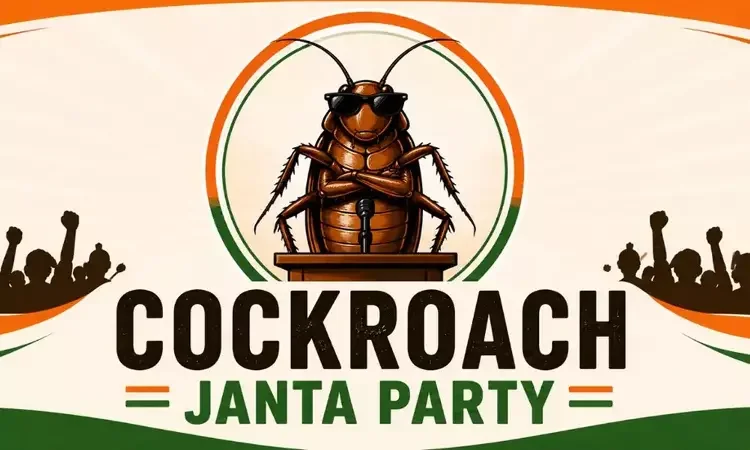
The Supreme Court is one of the noblest courts in any country. If your justice system works properly, your country has faith in its justice system. But in many countries, courts are just puppets for the powerful or elites. Previously, a news story created chaos in India. It was coming from the Supreme Court of India, where Surya Kant, Chief Justice of India, made a statement comparing “some unemployed youth and online activists to cockroaches and parasites.”
A statement from such a big government official was harsh. It triggered a backlash online where youth reacted aggressively, but later on, this inspired the “Cockroach Janta Party.” Currently, it is viewed as a satirical online movement, which is digital activism and social commentary rather than a formal electoral party. This party surpassed the digital presence of huge political parties in India. At this time, they have a digital presence of 17 million, which is more than that of the Bharatiya Janata Party (BJP).
Why did it become popular?
India is currently suffering from unemployment issues, educational scams, a lack of jobs, and rising costs of living essentials. Indian youth were already frustrated with the system, and on top of it, an official mocking youth over their biggest issue was ridiculous. It was the threshold point for Gen Z to jump in. CJP gained rapid popularity for following grassroots issues like youth problems, and these issues were covered in a meme-heavy and ironic way. It became a hilarious way to express their biggest issues despite knowing that nothing was going to change.

CJP appeared as a symbol of frustration with traditional political parties. The buzz was so huge that it got media coverage from global networks like BBC, The Guardian, and Al Jazeera. This also fueled CJP to gain the massive reach they now hold. Somehow, the right insult at the right time created a platform for youth.
What makes it different?
CJP is not a registered party in India. It is more like a satirical movement against Surya Kant and the system that ruined millions of creative minds. In 2023, the number of unemployed graduates in India aged 20–29 was 1.1 crore out of 6.3 crore total graduates in that age group.
In every election, people got disappointed by similar parties with the same manifesto about getting jobs and a better future, but it never happened. Recent elections went in a similar way. CJP brought a different story, which raised straightforward questions about harsh realities in India.

Will CJP become a political representative?
Right now, it is difficult to say anything. Whether they are going to become a registered political party or just stay a satirical movement is still unclear. Will CJP become a political representative for Indian youth? Things are moving in a way that they may become a possible challenger to traditional politicians in India.
According to the founder of CJP, their Twitter account got suspended. Following this, they also shared an email claiming that the party account was reported over security concerns.
Reports suggest that CJP supporters are considering their first candidate for the upcoming Banklpur Assembly by-elections in Bihar. Many people want it to become a real youth force. But everything depends on founder Abhijeet Dipke and his team, whether they go for formal registration or not.
With time, things will be revealed in the coming days. It may be that India is moving toward a Gen Z-driven change, but it will take time to see how things go.
What's Your Reaction?
 Like
0
Like
0
 Dislike
0
Dislike
0
 Love
0
Love
0
 Funny
0
Funny
0
 Wow
0
Wow
0
 Sad
0
Sad
0
 Angry
0
Angry
0

Muhammad Saad Ismail is a multimedia journalist and columnist with international experience across sports, politics, and digital media. His work spans multiple regions, including Europe, North America, and Africa, reflecting a strong global perspective in contemporary journalism. He began establishing his profile as a sports writer with World in Sports, where he produced match reports and tactical analyses covering football and cricket. Expanding into international media, he contributed as a sports journalist at MancSports, focusing on club-level football analysis, and later worked with Meer as an entertainment journalist, blending sports coverage with cultural and entertainment narratives. Alongside his reporting roles, Saad has held editorial responsibilities as Web Content Manager at The Hub Web , where he managed and published content across sports and entertainment while driving audience engagement through opinion-led journalism. Currently, he serves as a Political Journalist at The FLUC, producing research-driven commentary on global politics and public policy. In parallel, he works as an NBA correspondent for Verticality Sports, delivering analytical coverage, feature stories, and performance breakdowns centered on league trends and key storylines. With a foundation in Mass Communication and professional training from institutions such as Al Jazeera, Reuters, and the Press Council of Pakistan, Saad combines traditional reporting skills with modern multimedia expertise. His work is defined by analytical depth, cross-platform storytelling, and a commitment to informed, impactful journalism.


















Comments (0)