

Bangladesh’s ‘Iron Lady’ Khaleda Zia Dies at 80
Bangladesh’s first female prime minister and longtime political leader Khaleda Zia has died at age 80 after a prolonged illness, marking the end of a defining era in the nation’s political history. Zia; a two-term prime minister and chairperson of the Bangladesh Nationalist Party (BNP), passed away at Evercare Hospital in Dhaka, where she had been treated for multiple age-related ailments. Her decades-long rivalry with Awami League leader Sheikh Hasina shaped Bangladesh’s modern political landscape. Global leaders and citizens have extended condolences as the country enters a period of mourning.
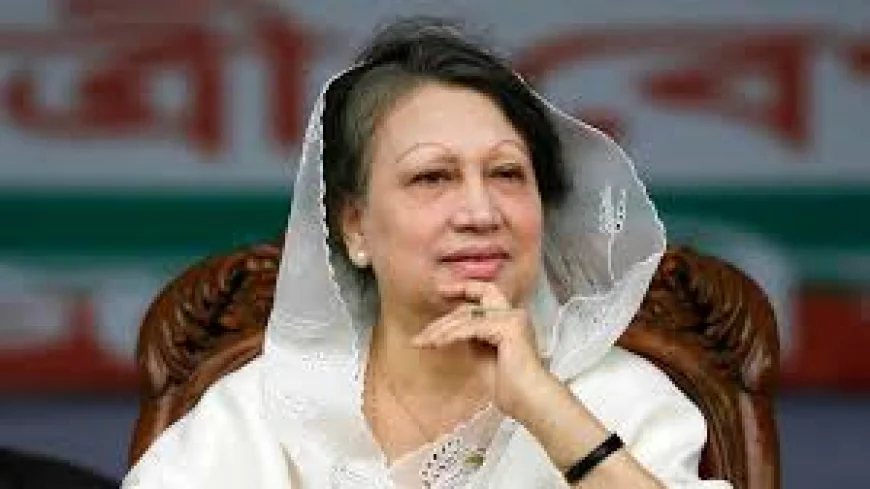
Trailblazer and Power Broker: Khaleda Zia Passes Away After Prolonged Illness
Begum Khaleda Zia, a pioneering leader in Bangladeshi politics and the country’s first female prime minister, has died at the age of 80 after a prolonged illness, her party announced Tuesday morning.
Zia died at Evercare Hospital in Dhaka, where she had been receiving medical care for complications including advanced liver cirrhosis, arthritis, diabetes, and heart and chest issues, according to her doctors.
A Trailblazer in Bangladeshi Politics
Born into a politically prominent family, Zia rose to national leadership following the assassination of her husband, President Ziaur Rahman, in 1981. She took control of the Bangladesh Nationalist Party (BNP) and led opposition movements against military rule, helping restore democratic governance in the early 1990s.
In 1991, Zia became Bangladesh’s first woman prime minister, a significant milestone in South Asian politics and only the second woman after Pakistan’s Benazir Bhutto to lead a Muslim-majority democracy. She served as prime minister from 1991 to 1996 and 2001 to 2006.
Her administrations focused on democratic reforms, economic development, and education expansion, though her tenure was also marked by rising militancy and political strife that affected stability and governance.
The “Battle of the Begums”
Zia’s political journey was deeply intertwined with her decades-long rivalry with Sheikh Hasina, leader of the Awami League. The two leaders alternated in power for years, and their clashes became known as the “Battle of the Begums,” shaping political discourse and electoral outcomes throughout the country.
Despite this rivalry, international figures: including India’s Prime Minister Narendra Modi and Pakistan’s Prime Minister Shehbaz Sharif, as well as leaders across South Asia and beyond, have expressed condolences, acknowledging Zia’s contributions to political life and regional diplomacy.
Legacy and National Mourning
Following the announcement of her death, the BNP declared a seven-day mourning period, with flags at half-mast across party offices and public tributes occurring nationwide. Details on her funeral arrangements will be disclosed by authorities.
Zia’s passing comes just ahead of Bangladesh’s general elections scheduled for February 2026, a period already marked by political anticipation following major shifts in the country’s leadership landscape. Her son, Tarique Rahman, BNP’s acting chairman, has returned to Bangladesh from exile and is expected to play a central role in the party’s future direction.
Her death signifies the end of a political chapter that saw Bangladesh transition through turbulent democratic transformations, deeply personal rivalries, and evolving political alliances.
Sources:
Reuters/Outlook India +1/The New York Times
What's Your Reaction?
 Like
0
Like
0
 Dislike
0
Dislike
0
 Love
0
Love
0
 Funny
0
Funny
0
 Wow
0
Wow
0
 Sad
0
Sad
0
 Angry
0
Angry
0

Shirley Ama Acquah Content Creator | Copywriting Specialist | Digital Content Strategist A dynamic storyteller with a sharp editorial eye, I craft compelling content that engages audiences and drives meaningful conversations. With a background in [persuasive writing, digital media,social media marketing], I specialize in high-impact copywriting, from SEO-driven articles and persuasive marketing copy to in-depth entertainment reviews and trend analysis. My work bridges creativity and strategy, whether dissecting the latest streaming trends, developing brand narratives, or optimizing content for maximum reach. I don’t just write; I create experiences that resonate with readers and convert casual viewers into loyal followers. Key Strengths: ✔ Versatile Content Creation (blogs, scripts, social media, SEO) ✔ Entertainment & Pop Culture Analysis (TV, film, streaming trends) ✔ Brand & Audience-First Writing (tone-adaptive, platform-optimized) ✔ Data-Informed Storytelling (analytics meets creativity) Let’s collaborate or connect: [amaboah23@gmail.com]

















Comments (0)