

PRINCE YAW OWUSU RESIGN: KOTOKO LOSE ANOTHER COACH IN A SEASON OF INSTABILITY
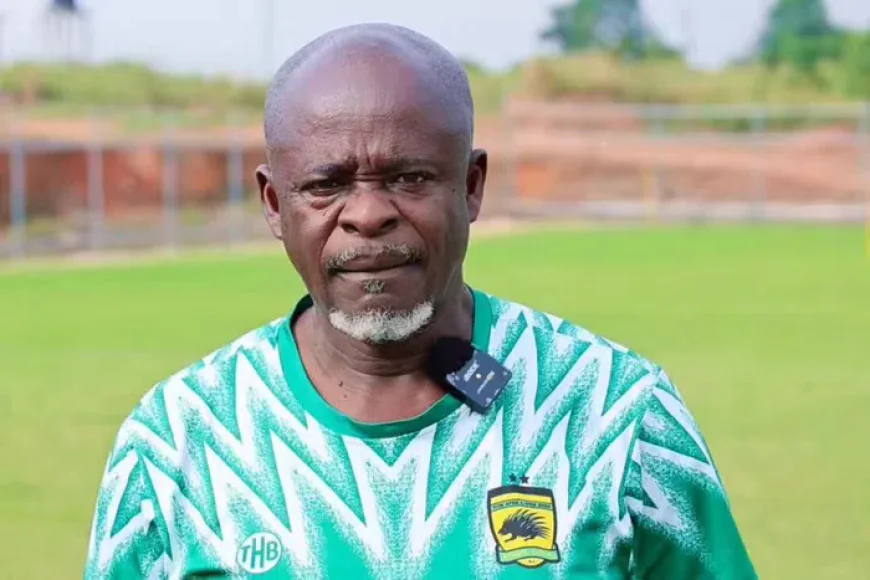
Prince Yaw Owusu has resigned as interim head coach of Asante Kotoko. The club confirmed the decision on April 20, 2026, ending a brief but intense two-month period in charge. His exit makes him the second Kotoko coach to leave during the 2025-26 Ghana Premier League season, and it leaves the club once again searching for direction with only five league games left to play.
Owusu was appointed on February 9, 2026. That morning, Kotoko announced that Abdul Karim Zito had stepped down as head coach with immediate effect. The club thanked Zito for his service and moved quickly to name a replacement. Owusu, who had previously coached Medeama SC, was handed the job on an interim basis. He was joined by assistant coach Mohammed Hamza Obeng. The arrangement was never meant to be long-term. The club’s statement at the time made it clear that both men were in charge until a substantive head coach was appointed. Owusu stepped into the role knowing the job was temporary, but also knowing that at Kotoko, every game counts, whether you are interim or permanent.
His first match was the biggest one in Ghanaian football. Kotoko faced Hearts of Oak in the Super Clash just days after he took over. That is the reality of the job. There is no time to settle. You are thrown into the fire immediately. Owusu understood that. He had been in the league long enough to know what Kotoko demands from its coaches. What he inherited, however, was a team already low on confidence. Results under Zito had dipped, and the trend did not reverse after the change
By the middle of April, the record under Owusu was difficult to defend. Kotoko had played eight league games with him in charge. They won two, drew two, and lost four. The last six matches brought one win, two draws, and three defeats. The heaviest blow came on April 13, 2026, away at Tarkwa. Kotoko lost 4-0 to Medeama, the club Owusu used to manage. The scoreline was emphatic. The performance was flat. After 29 rounds of matches, Kotoko were sixth on the table with 43 points, ten points behind leaders Medeama. The title race was over. A top-four finish was slipping away. Pressure was building again, just as it had two months earlier when Zito resigned.
What followed the Medeama game was confusion. Owusu did not appear at training in the days after the loss. Stories began to spread that he had left the team residence and was no longer in contact with the club. On April 17, Kotoko released a statement to address the speculation. The club said Owusu had not abandoned his post. He had requested permission to attend to family matters as he mourned the passing of his mother. Management confirmed he was expected back in Kumasi and would remain in charge until a new head coach was named. For three days, that was the official version of events. Owusu was grieving, not quitting.
That changed on April 20. Kotoko issued a second statement confirming that Owusu had submitted his resignation and that the club had accepted it. The announcement was brief. It thanked Owusu for taking charge during a difficult period and wished him well for the future. No further details were provided. The timing suggests that the combination of poor results, public criticism, and personal circumstances led him to step aside. He had hinted at the pressure in March when he told the media that coaches expect backlash when results go badly. He also said the new Kotoko Board would decide his future. In the end, he made the decision himself.
His resignation leaves assistant coach Hamza Obeng to take charge of training and match preparation. Kotoko’s next fixture is scheduled for May 3 against Dreams FC. The Board will now have to decide whether Obeng sees out the season or whether they move quickly to appoint a permanent coach before the campaign ends. The search for a substantive head coach had already started when Owusu was named interim. His exit means that process can no longer wait. The club needs stability, and it needs it before the next season begins.
This is the second time in three months that Kotoko have lost a head coach mid-season. Zito resigned in February after a poor run of form. Owusu resigned in April after a poor run of form. The pattern points to deeper issues. Changing the coach has not changed the results. The team has lacked consistency since the season started. The new Board, which was put in place earlier this year, now faces its first major footballing test. The next appointment cannot be another stopgap. The club has had too many of those. If Kotoko want to challenge again, the next coach needs time, backing, and a clear plan.
For Owusu, the resignation closes a chapter that was always going to be judged harshly. He took the job when the club needed someone to step in. He did it knowing he was not the long-term answer. He did it while carrying personal grief. The 4-0 loss to Medeama will be remembered as the defining result of his spell, but the problems were there before that game. Two wins in eight matches is not the Kotoko standard. He knew that when he accepted the role. He knew it when he left it.
There is a human element that deserves mention. Owusu lost his mother during the most stressful period of his professional life. He was managing Kotoko, facing criticism from supporters, and dealing with speculation about his job security, all while grieving. The club’s April 17 statement asked for understanding. Three days later, he resigned. It is impossible to separate the personal from the professional in that timeline. Sometimes the weight of both becomes too much, and stepping away is the only option left.
Reaction to his exit has been mixed. Some supporters feel he should have stayed until the end of the season to provide continuity. Others believe the results left him with no choice. Many point out that the real failure was the club’s delay in appointing a permanent coach after Zito left. All of those views are valid. The reality is that Kotoko have been in a state of transition all year. Transition without a plan leads to instability. Instability leads to resignations.
Owusu’s record reads 71 days in charge, eight league games, two wins, two draws, four losses. He managed the team through a Super Clash, a heavy defeat to his former club, and a week of intense personal loss. Then he walked away. His time will not be remembered for trophies or progress. It will be remembered for the circumstances. He came in during a crisis, he worked under pressure, and he left when the pressure outweighed the job.
Kotoko now move on to their third head coach of the season. The Board must get the next decision right. The fans are tired of change. The players need clarity. The club needs direction. Prince Yaw Owusu did not provide the turnaround Kotoko wanted, but he did provide a response when the club asked him to help. He leaves with that noted. The season continues without him, and the search for stability continues for Kotoko.
What's Your Reaction?
 Like
0
Like
0
 Dislike
0
Dislike
0
 Love
0
Love
0
 Funny
0
Funny
0
 Wow
0
Wow
0
 Sad
0
Sad
0
 Angry
0
Angry
0

A facilitator in the Ghana Education Service














Comments (0)