

CAN ARSENAL WIN THE PREMIER LEAGUE?
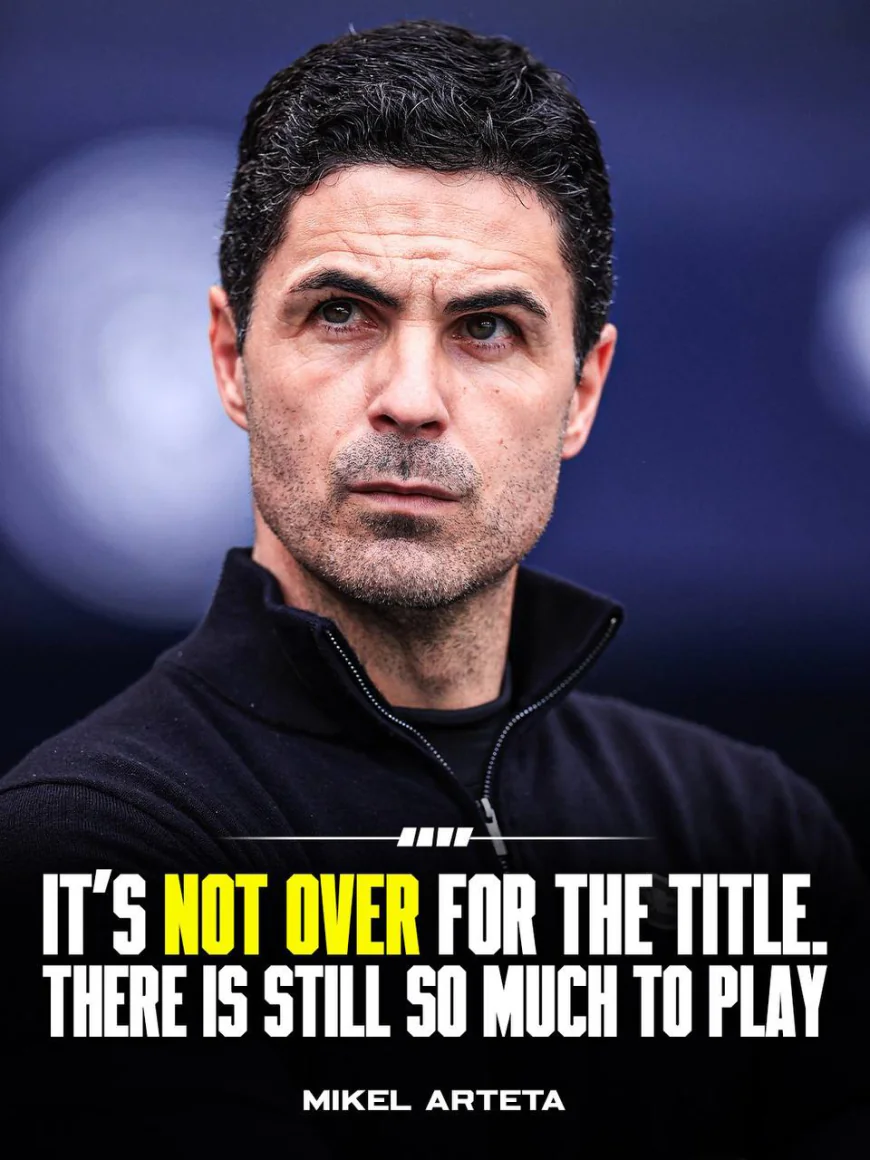
The 2-1 loss at the Etihad on April 19, 2026 changed the texture of the title race, and it did so because of what it revealed about Arsenal’s performance under pressure. For long stretches of this season Arsenal have been the best side in the league. They have controlled games, scored early, and suffocated opponents with coordinated pressing and patient buildup. That version of Arsenal put them eight points clear in February and had people talking about a first title since 2004. The version that showed up in April is different, and the table is starting to reflect it. The City game was not a collapse. It was a slow leak. Arsenal started well, reacted well to going 1-0 down when Kai Havertz punished a Gianluigi Donnarumma mistake, and went into halftime at 1-1 with every reason to believe they could take something from the Etihad. The problem was the next 45 minutes. After Erling Haaland made it 2-1, Arsenal had 42 minutes to chase the game. They finished that period with 63 percent possession, four shots, and one on target. City were not hanging on. They were managing. They were letting Arsenal have the ball 40 yards from goal, cutting off the lanes into Martin Ødegaard, and trusting that their box defenders would win crosses. They were right.
That performance connects directly to what happened eight days earlier against Bournemouth at the Emirates. Arsenal lost 2-1 there too, and the pattern was almost identical. Concede first, equalize through a Viktor Gyökeres penalty, concede again with 16 minutes left, then dominate the ball without really threatening the goal. Eli Junior Kroupi and Alex Scott do not have the pedigree of Haaland and Rayan Cherki, but the way they scored was similar. Quick transition, a defender caught between decisions, and a finish that punishes hesitation. Arsenal’s performance in both games was not terrible. It was just short. Short by one chance, short by one tactical tweak, short by one moment of individual brilliance when the system stopped creating it. Over a 38-game season you can survive being short twice. In a title race with Manchester City you cannot, because City do not go short in April.
So the title race now looks different than it did at the start of the month. Arsenal are still top. They are three points ahead. On paper that is a strong position. The reality is harsher. City have a game in hand at home to Burnley on Wednesday. If they win, as everyone expects, they go top on goal difference. From that point on Arsenal need City to drop points. The shift is psychological as much as mathematical. Two weeks ago Arsenal were setting the pace and asking City to keep up. Now City are setting the pace and asking Arsenal not to break. That is a huge difference in how players feel when they walk out for kickoff. You can see it in the body language. Against Bournemouth the team looked tense at 1-1, like they were waiting for something to go wrong. At the Etihad they looked brave for an hour and then uncertain once they were behind. Declan Rice saying “It’s not over yet” matters because it tells you the squad is trying to fight the narrative. But narratives are built by results, and the results in April are 0 points from 6 against a relegation candidate and the reigning champions.
Performance-wise, the issues are concentrated in the final third. Arsenal’s buildup is still elite. William Saliba and Gabriel progress the ball cleanly, Rice breaks lines with carries, and Ødegaard finds space between midfield and defense better than almost any ten in Europe. The problem starts 25 yards from goal. Bukayo Saka is being doubled on every possession and has not had a clear one-on-one in open play for three games. Gabriel Martinelli is struggling for timing on his runs, and when he does get the ball he is shooting early because the passing lane is not there. Gyökeres works incredibly hard, but he is feeding on half chances. He scored a penalty against Bournemouth and forced a turnover for Havertz’s goal at City, yet he has not had a clean look from 12 yards out in either match. That is not on him. That is on the service. When teams block the central channel and force Arsenal wide, the crosses are not beating the first man often enough. When Arsenal try to walk the ball through the middle, there is a crowd of five defenders and no space to combine. This is not a new problem. It is the same problem they had in April last year. The difference is that last year they were chasing. This year they are being chased, and the pressure to create is heavier.
The title race will be decided by how Arsenal respond to that pressure in the next four games. Chelsea at home comes first. Chelsea are inconsistent but they have pace on the break, which is exactly what hurt Arsenal against Bournemouth. Then it is Tottenham away, where the atmosphere will be hostile and the game will be chaotic. After that, Manchester United at home and Newcastle away. Three of those four opponents will not let Arsenal play on their terms. They will sit, they will foul, and they will wait for one transition. If Arsenal’s performance level in those games looks like the last two, they will drop more points. If it looks like January and February, they can win all four and force City to be perfect.
This is why the conversation around Mikel Arteta is so tense right now. He has improved Arsenal’s performance floor more than any manager in the league. The worst version of Arsenal under Arteta is still a top-four side. The issue is the performance ceiling in the ten games that decide a title. Against City, Arsenal were good for 60 minutes and average for 30. Against Liverpool in March they were excellent for 90. The gap between those two versions is the gap between first and second. Arteta’s job between now and the final day is to make sure the Liverpool version shows up four more times. That means finding a way to get Saka one-on-one without sacrificing defensive structure. It means using Havertz or Trossard as a true second striker when Gyökeres is isolated. It means recognizing earlier when Ødegaard is being marked out of the game and giving Rice permission to drive past him. These are small performance tweaks, not system changes. But small tweaks are what win leagues.
City’s performance level is the complicating factor. They have won four straight in all competitions, including the league and the League Cup final against Arsenal. They look like a team that has been here before and knows exactly how many points it needs. Haaland is scoring, Cherki is emerging, and Guardiola has rotated just enough to keep legs fresh. They do not need to be brilliant every week. They need to be efficient. Arsenal, on the other hand, probably need to be brilliant in three of the last six to win the league. That is the tax you pay for losing to Bournemouth. You lose margin for error.
The title race is not over. Three points is still three points, and City could draw at Burnley. Football is chaotic enough that one bad deflection changes everything. But Arsenal’s performance in April has handed City the initiative, and in a race this tight, initiative is often decisive. The next time Arsenal take the pitch, they are not just playing Chelsea. They are playing the last two weeks. They are playing the doubt that creeps in when you lose two games you expected to win. If they start fast, score early, and move the ball with the clarity they had in February, the race tilts again. If they start slow, concede first, and spend 70 minutes trying to break down a low block, the race will likely be gone. That is how thin the line is. That is how brutal the performance standard is when you are trying to dethrone City. Arsenal have earned the right to be in this position. The next month decides whether they can live in it.
What's Your Reaction?
 Like
0
Like
0
 Dislike
0
Dislike
0
 Love
0
Love
0
 Funny
0
Funny
0
 Wow
0
Wow
0
 Sad
0
Sad
0
 Angry
0
Angry
0

A facilitator in the Ghana Education Service


















Comments (0)