

When Transparency Meets Resistance: Gaps Weakening Ghana's RTI Law
An investigative piece exposing how resistance, poor awareness, and enforcement gaps are undermining the effectiveness of Ghana's RTI Act.
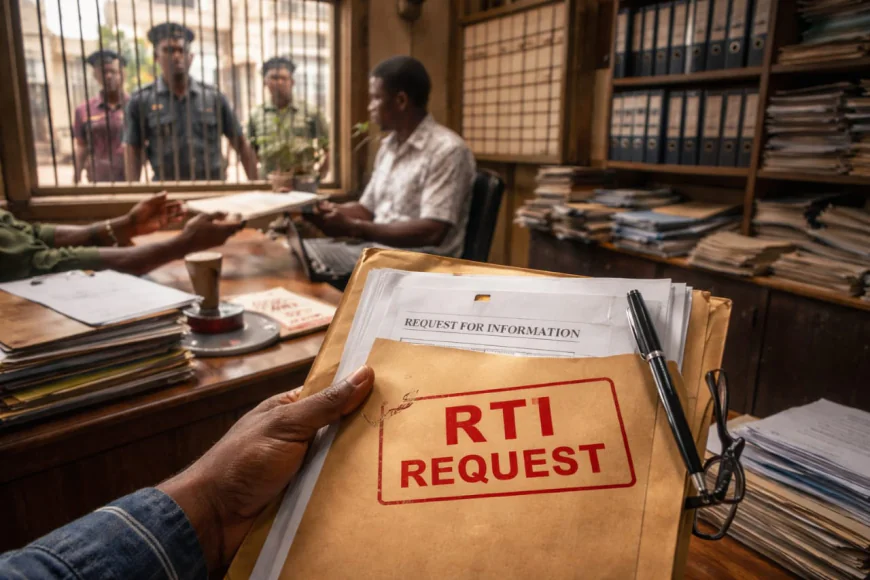
On a humid morning in September, Nana Yaw, a journalist, walked into the headquarters of the Electricity Company of Ghana (ECG) with a simple request: data on prepaid meter installations, revenue losses, and recovery figures.
Armed with a letter and backed by law, he expected a response within fourteen days, as required under Section 23(1) of Ghana's Right to Information (RTI) Act.
Instead, he bagn a two-month journey through confusion, deflection, and silence.
At ECG, officials directed him to the Communications Department, presenting it as the appropriate office for RTI requests. His letter was received, stamped, and filed. Two weeks later, when he returned, he was told the building had no RTI Unit.
A designated RTI officer, Madam Rita, later redirected him to another ECG office at Circle.
"I was shocked," Nana Yaw said. "How do you assigned an RTI function to department that isn't the RTI Unit? It felt deliberate, whether out of negligence or an attempt to frustrate the process." Nana added.
When a response finally came after an internal appeal, ECG's legal team through their General External Communications Officer, Mr. Ayiku, claimed the requested data was "exempt."
Findings from the RTI Commission's annual reports point to similar systemic challenges, including delays in responding to requests and weak institutional arrangements for handling RTI applications.
Furthermore, the RTI Act's exemption provisions, outlined in Sections 5 to 17, do not explicitly cover such operational data. The refuasal raised a critical question: are exemption clauses being misunderstood, or deliberately stretched to avoid scrutiny?
Nana Yaw's experience is not isolated. Across Ghana, journalists and citizens seeking public information encounter similar resistance.
Exemptions as a Shield
Investigative journalists say public institutions increasingly rely on exemption clauses, or claim records do not exist, just to avoid disclosure.
"They hide behind exemptions. Or, they say they don't have the information. Those are the top excuses," said Seth, an investigative Journalist with the Fourth Estate.
In one case, Parliament reportedly declined to release a list of Members of Parliament holding positions that could constitute "office of profit," citing exemptions under the RTI Act.
In another, Seth Bokpe recounted how the Minerals Commission demanded $1,000 for access to mining lease data. According to him, when the RTI Commission ruled that the fee should be significantly lower, the Commission challenged the decision in court, arguing the information had commercial value.
Years later, the data remains undisclosed.
These cases suggests that exemption clauses intended to protect sensitive information, are increasingly being used as administrative barriers to transparency.
When Fines Replace Compliance
Even when institutions are found in violation of the RTI Act, compliance is not guaranteed.
According to data from the RTI Commission's annual reports, some public institutions have been fined for failing to respond to requests. However, in many instances, payment of the penalty does not result in the release of the requested information.
"Some institutions think once they are fined, the matter ends there," Seth explained. "They treat the fine as the cost of withholding information." He added.
The RTI Commission maintains that administrative penalties are not a substitute for disclosure. Yet enforcement appears limited when institutions choose to absorb fines rather than comply.
This raises concerns about whether the current penalty regime is sufficient to deter non-compliance.
A Law Passed, A Law Ignored
Seven years after the RTI Act came into force, implementation gaps remain widespread particularly at the level of Municipal, Metropolitan, and District Assemblies (MMDAs).
Some officials are unaware of their obligations under the law. Others lack the institutional structures required to process requests.
Private legal practitioner and former Member of Parliament, Captain (Rtd.) Nkrabea Effah-Darteh, says the problem begins with awareness.
"Many people are not even aware of the RTI Law. If you don't publish and educate, people will not comply ," Nkrabea revealed.
The law requires every public institution to establish an information unit and designate an information officer. In practice, however, many of these officers operate without autonomy.
One senior MMDA official admitted that information officers often depend on approval from their superiors before releasing information, undermining the independence required by law.
In some cases, even designated officers lack basic knowledge of the Act.
"As an information officer, I expect that you direct the letter to the MCE," one official at the La Nkwatanang-Madina Municipal Assembly said when presented with an RTI request. When asked if he was familiar with the law, he replied: "No."
Such gaps turn a legal right into a bureaucratic obstacle.
The Persistency of Secrecy
Beyond legal and institutional gaps, a deeper challenge persists: a culture of secrecy within public institutions.
"Many people don't want certain questions to be asked," Effah-Darteh noted. "And if you ask them, they are not prepared to cooperate." He added.
For journalists, this has a real consequences. Stories on public spending, procurement, asset declarations, and state programs often stall, not for lack of leads, but for lack of access to official records.
"Without the information, the story is dead," one journalist said. "And delays can kill months of work."
More Than a Legal Failure
At its core, the RTI Act was designated to empower citizens, strengthen accountability, and deepen democratic governance.
But when institutions delay, deny, or deflect access to information, the consequences extend beyond journalism. They affect citizens' ability to scrutinize power, demand accountability, and participate meaningfully in governance.
A transparency law without effective enforcement risks becoming symbolic present in statute, but absent in practice.
Until compliance is enforced, awareness improved, and institutional resistance addressed, the promise of the RTI Act will remain unfulfilled.
What's Your Reaction?
 Like
1
Like
1
 Dislike
0
Dislike
0
 Love
0
Love
0
 Funny
0
Funny
0
 Wow
0
Wow
0
 Sad
0
Sad
0
 Angry
0
Angry
0

An efficient and confident investigative freelance journalist, a gifted writer and a proficiency in digital security. Also, expert in research and fact checking. Very hardworking and observant young man. An effective leader and problem solver. Here are some links to my work done in Ghana: https://thefourthestategh.com/2025/11/power-for-sale-inside-the-ecgs-shadow-economy/ https://www.fact-checkghana.com/muntakas-claim-on-road-crashes-fire-service-attended-to-in-2025-first-half-false/ https://www.myjoyonline.com/patriotism-the-missing-driving-force-in-ghanas-development/






Comments (0)