

Bono East Regional Health Directorate intensifies campaign against reproductive health misinformation
The Bono East Regional Health Directorate, in partnership with BERCC and UNFPA, has engaged over 600 parents, religious and traditional leaders, and community stakeholders across Pru East, Sene East and Sene West to address misinformation surrounding Reproductive Health Education and promote informed discussions on adolescent health and wellbeing.
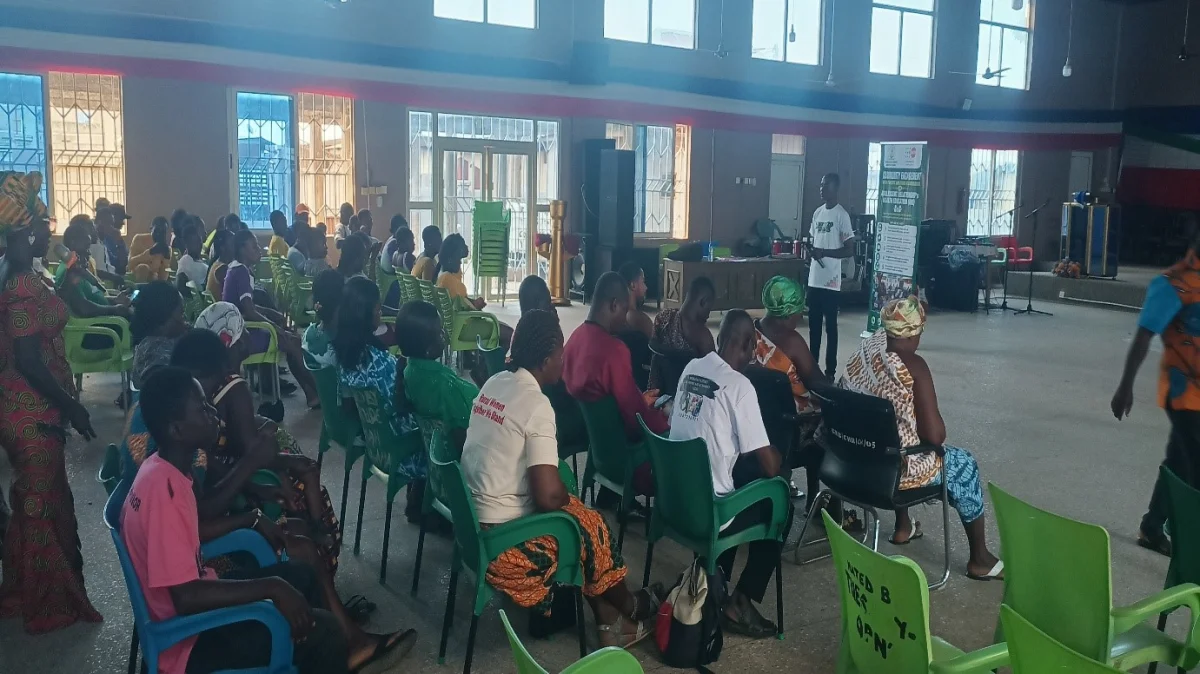
The Bono East Regional Health Directorate has stepped up efforts to combat misinformation and public resistance to Reproductive Health Education (RHE) by engaging more than 600 parents and key community stakeholders through a series of sensitization programmes across three districts in the region.
The initiative, organized in partnership with the Bono East Regional Coordinating Council (BERCC) with support from the United Nations Population Fund (UNFPA), targeted communities in Pru East, Sene East and Sene West. Participants included members of Parent-Teacher Associations (PTAs), religious and traditional leaders, mothers’ and fathers’ groups, as well as local opinion leaders, all aimed at promoting informed conversations on adolescent sexual and reproductive health.
The educational sessions were facilitated by the Bono East Regional Adolescent Focal Person of the Ghana Health Service, Robin Appiah, the UNFPA Focal Person at the Bono East Regional Coordinating Council, Julian Harrison Mutaah, and Health Promotion Officer Najas Ibrahim. The outreach was conducted in Yeji, Kajaji, Kojokrom, Bantama and Drobe.
Addressing participants, Robin Appiah explained that Reproductive Health Education seeks to provide adolescents with the information and practical skills required to make responsible choices and safeguard their wellbeing.
He emphasized that the programme is intended to protect young people rather than encourage early sexual activity.
"Reproductive Health Education equips adolescents with the knowledge, values and life skills needed to make responsible decisions. It is designed to protect their health, future and overall wellbeing, not to encourage sexual activity.''

Mr. Appiah also called on parents to become more involved in the lives of their children, noting that strong family guidance remains one of the most effective ways to prevent teenage pregnancy, substance abuse and other risky behaviours.
"Parents should not leave the responsibility of raising their children to social media platforms or peers. Open communication at home is essential in helping young people make positive life choices.''
The UNFPA Focal Person at BERCC, Julian Harrison Mutaah, observed that widespread misconceptions continue to hinder efforts to improve adolescent sexual and reproductive health, making continuous community engagement necessary.
She explained that the programme seeks to replace false narratives with factual information that empowers parents and guardians to support the healthy development of adolescents.
"Misinformation and disinformation create unnecessary fear and opposition to Reproductive Health Education. Our objective is to provide evidence-based information that enables parents to become active partners in protecting the health and rights of young people.''

Ms. Mutaah further encouraged parents, traditional authorities and religious leaders to collaborate in creating supportive environments that enable adolescents to make informed decisions and contribute meaningfully to society.
Health Promotion Officer Najas Ibrahim highlighted emerging challenges confronting adolescents, including excessive phone use, gambling, substance abuse and mental health concerns.
He encouraged parents and guardians to establish trusting relationships with their children by creating opportunities for open and honest discussions.
"Creating a safe environment where children can ask questions without fear builds trust and helps them make healthier and more informed decisions.''
Participants were taken through a wide range of topics, including adolescent relationships, peer influence, harmful socio-cultural practices, teenage pregnancy prevention, phone addiction, gambling, alcohol and drug abuse, puberty, menstrual health management, mental health, social media influence and effective parent-child communication.
Facilitators also addressed common myths surrounding Reproductive Health Education and urged participants to rely on verified and evidence-based information when discussing adolescent health issues within their families and communities.

Many participants welcomed the initiative, describing it as an eye-opening experience that had reshaped their understanding of Reproductive Health Education.
A parent representative noted that the engagement had dispelled several misconceptions, saying they now appreciate that the programme focuses on protecting children and preparing them to make responsible decisions rather than promoting immoral behaviour.
A traditional leader also pledged continued support for the initiative, stressing that communities have a collective responsibility to nurture the younger generation and ensure they grow into responsible and productive citizens.
The sensitization programme forms part of ongoing efforts by the Bono East Regional Health Directorate, the Bono East Regional Coordinating Council and UNFPA to strengthen community understanding of adolescent sexual and reproductive health, improve support for youth-focused interventions and promote effective communication between parents and their children.
What's Your Reaction?
 Like
0
Like
0
 Dislike
0
Dislike
0
 Love
0
Love
0
 Funny
0
Funny
0
 Wow
0
Wow
0
 Sad
0
Sad
0
 Angry
0
Angry
0

I am a Ghanaian journalist specializing in public-interest and accountability reporting, with a focus on governance, public policy, anti-corruption, human rights, and social justice. My work covers key development issues, including education, agriculture, environmental governance, and community development, with a strong commitment to ethical, research-driven journalism that amplifies marginalized voices and strengthens public accountability. In addition to journalism, I engage in civil society and advocacy work that supports democratic governance and inclusive development. I am committed to using journalism as a tool to inform public discourse, strengthen accountability, and contribute to evidence-based decision-making.












Comments (0)