

Islamabad Cricket Witnesses Historic Power Shift as JJ Group Sweeps 2026 Elections
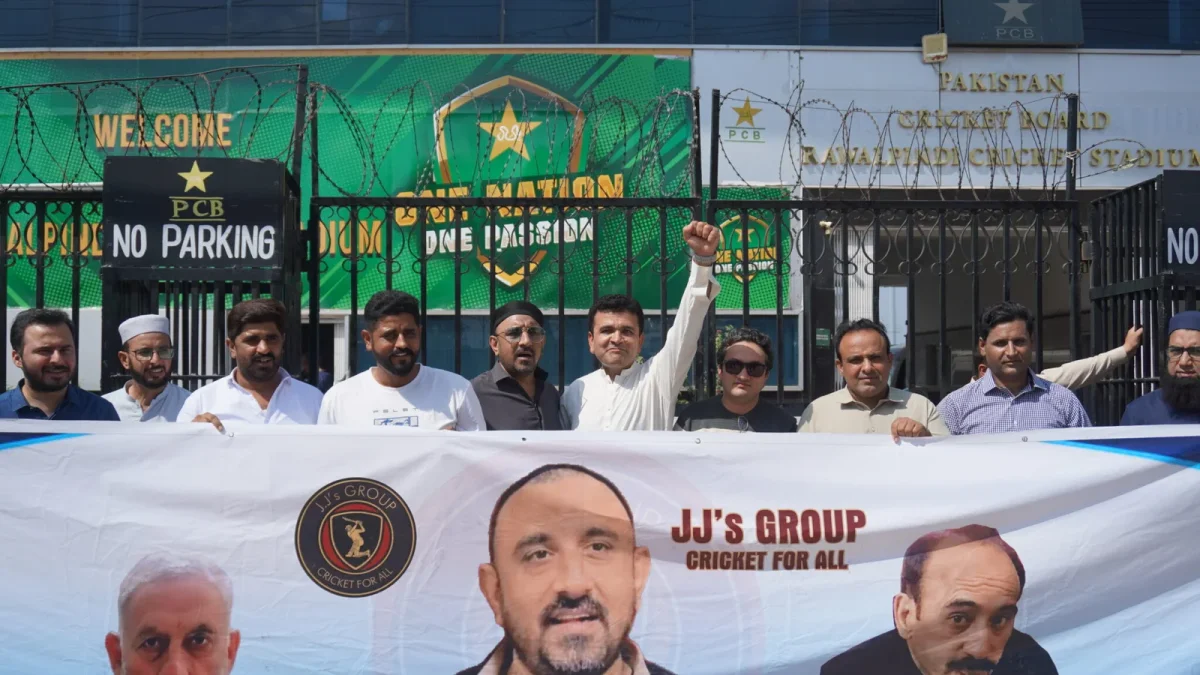
The 2026 Islamabad cricket elections marked a historic shift in power as the JJ Group secured a sweeping victory across all major zones, ending more than two decades of dominance by Shakeel Ahmed Sheikh's administration. Led by key figures such as Junaid Akhtar and Imran Ilyas, the group built its success through years of grassroots engagement and strategic planning. The North Zone emerged as a decisive battleground, where the JJ Group recorded a commanding 13-1 victory, including Muhammad Umar Shabbir's emphatic win as Secretary. Victories in the West, Central, and East Zones, along with success in Gilgit-Baltistan, completed an unprecedented electoral sweep. The results signal the beginning of a new era in Islamabad cricket, with the JJ Group now positioned to influence future cricket governance at both district and national levels.
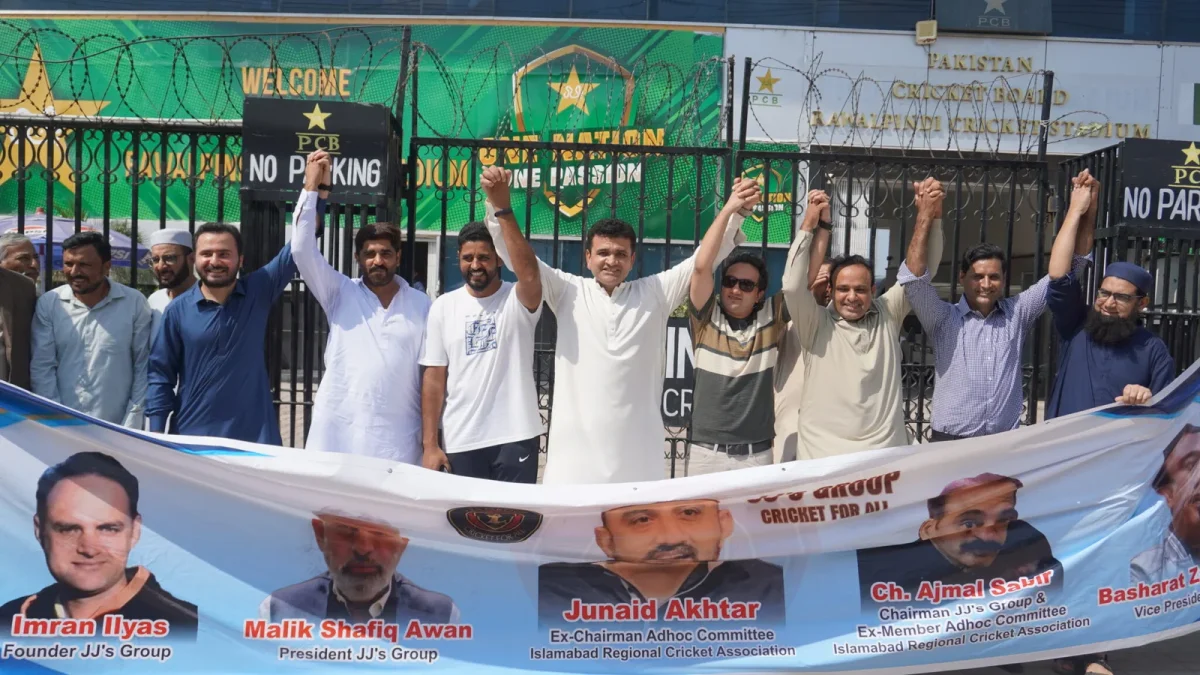
ISLAMABAD: A major political transformation has unfolded in Islamabad cricket following the 2026 elections, where the JJ Group secured a comprehensive victory across all major zones, ending more than two decades of influence associated with veteran cricket administrator Shakeel Ahmed Sheikh.
The result marks one of the most significant turning points in the history of Islamabad cricket, with the JJ Group emerging as the dominant force after years of campaigning, organizational work, and growing support among affiliated clubs.
A Movement Years in the Making
While the outcome appeared decisive, the roots of the victory can be traced back several years. The JJ Group first emerged as a visible opposition force in 2022, challenging an established structure that had remained largely unchanged for over two decades.
Over the following years, the group expanded its support base through grassroots engagement and regular interaction with clubs across Islamabad. By the time elections arrived in 2026, the organization had developed a well-structured network capable of mounting a serious challenge to the existing leadership.
The campaign was led by prominent figures including Junaid Akhtar and Imran Ilyas, both of whom played key roles in building alliances and coordinating support across various zones.
North Zone Sets the Tone
Among the most closely watched contests was the North Zone election, which ultimately became one of the earliest indicators of the scale of support enjoyed by the JJ Group.
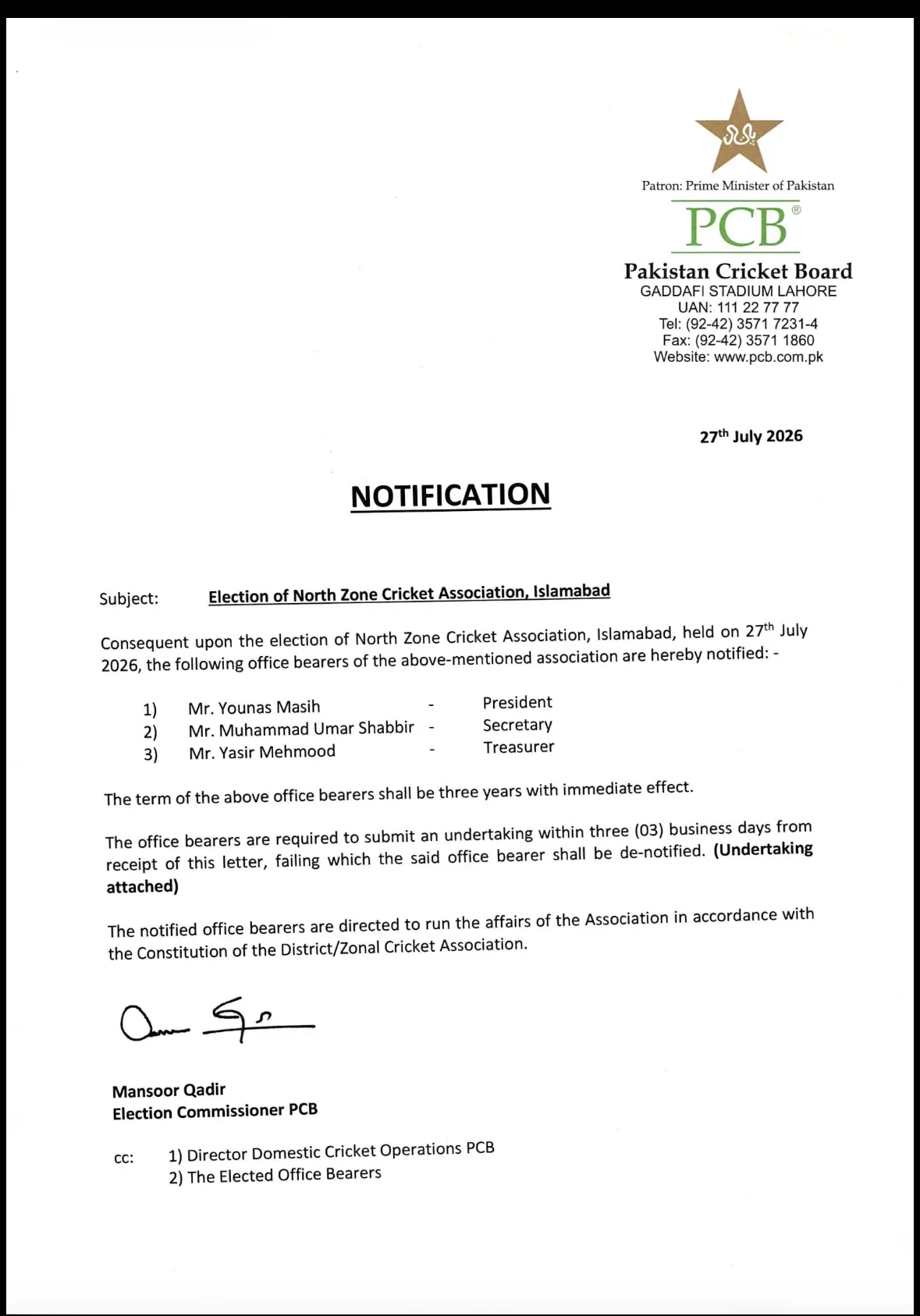
The panel secured a commanding 13-1 victory, electing Younas Masih as President and Yasir Mehmood as Treasurer. The result was viewed as a strong endorsement of the group's campaign and organizational strategy.
Particular attention was focused on the race for the Secretary's position, where Muhammad Umar Shabbir recorded one of the most convincing victories of the election cycle.
Despite entering the contest without the active presence of his father, former North Zone President Shabbir Ahmed, who remained abroad during the campaign, Muhammad Umar Shabbir successfully built support among affiliated clubs through an extensive outreach effort.
When voting concluded, he was elected Secretary by a decisive 13-1 margin, matching the broader success achieved by the JJ Group throughout the zone.
Political observers within Islamabad cricket viewed the North Zone results as an early sign that the traditional balance of power was shifting.
Strongholds Fall Across Islamabad
The momentum generated in the North Zone soon spread across the rest of the capital.
The JJ Group secured victories in the West Zone and achieved a significant breakthrough in the Central Zone, long regarded as the political stronghold of Shakeel Sheikh and his allies. The result carried symbolic importance, as the Central Zone had for years been considered one of the most difficult areas for opposition groups to penetrate.
In the East Zone, the JJ Group's candidates were elected unopposed, further highlighting the level of support the group had accumulated among affiliated clubs.
The electoral success was not limited to Islamabad alone. The group also recorded victory in Gilgit-Baltistan, completing an electoral sweep that few observers had predicted at the start of the campaign.
End of a Long-Dominant Era
For more than twenty years, Shakeel Ahmed Sheikh remained one of the most influential figures in Islamabad cricket administration. His leadership and political network played a defining role in shaping the region's cricketing landscape.
However, the 2026 elections demonstrated a clear appetite for change among the voting clubs.
What emerged was not merely a victory for a single panel but a broader shift in political sentiment. Across multiple zones, clubs opted to support a new leadership group, giving the JJ Group an overwhelming mandate to guide the future direction of Islamabad cricket.
Looking Ahead
With victories secured across every major zone, attention is now turning toward district-level representation and future positions linked to the governance structure of the Pakistan Cricket Board (PCB).
The JJ Group's electoral success has placed it in a strong position to influence future decision-making within Islamabad cricket and beyond. However, the challenge now moves from campaigning to governance.
Supporters view the outcome as an opportunity to introduce reforms and strengthen cricket administration, while critics and observers will closely monitor whether the promises made during the campaign translate into meaningful changes on the ground.
Regardless of future developments, the significance of the 2026 elections is unlikely to be disputed.
The results brought an end to one of the longest-standing political eras in Islamabad cricket and opened the door to a new chapter under a different leadership structure.
For Islamabad cricket, the ballots delivered a clear verdict: the political landscape has changed, and a new administration now carries the responsibility of shaping its future.
What's Your Reaction?
 Like
0
Like
0
 Dislike
0
Dislike
0
 Love
0
Love
0
 Funny
0
Funny
0
 Wow
0
Wow
0
 Sad
0
Sad
0
 Angry
0
Angry
0

Muhammad Saad Ismail is a multimedia journalist and columnist with international experience across sports, politics, and digital media. His work spans multiple regions, including Europe, North America, and Africa, reflecting a strong global perspective in contemporary journalism. He began establishing his profile as a sports writer with World in Sports, where he produced match reports and tactical analyses covering football and cricket. Expanding into international media, he contributed as a sports journalist at MancSports, focusing on club-level football analysis, and later worked with Meer as an entertainment journalist, blending sports coverage with cultural and entertainment narratives. Alongside his reporting roles, Saad has held editorial responsibilities as Web Content Manager at The Hub Web , where he managed and published content across sports and entertainment while driving audience engagement through opinion-led journalism. Currently, he serves as a Political Journalist at The FLUC, producing research-driven commentary on global politics and public policy. In parallel, he works as an NBA correspondent for Verticality Sports, delivering analytical coverage, feature stories, and performance breakdowns centered on league trends and key storylines. With a foundation in Mass Communication and professional training from institutions such as Al Jazeera, Reuters, and the Press Council of Pakistan, Saad combines traditional reporting skills with modern multimedia expertise. His work is defined by analytical depth, cross-platform storytelling, and a commitment to informed, impactful journalism.
















Comments (0)