

UEFA Bans Five Clubs from Competing in Champions League
Five clubs have notably been banned from participating in the prestigious UEFA Champions League or European Cup at different times by UEFA.

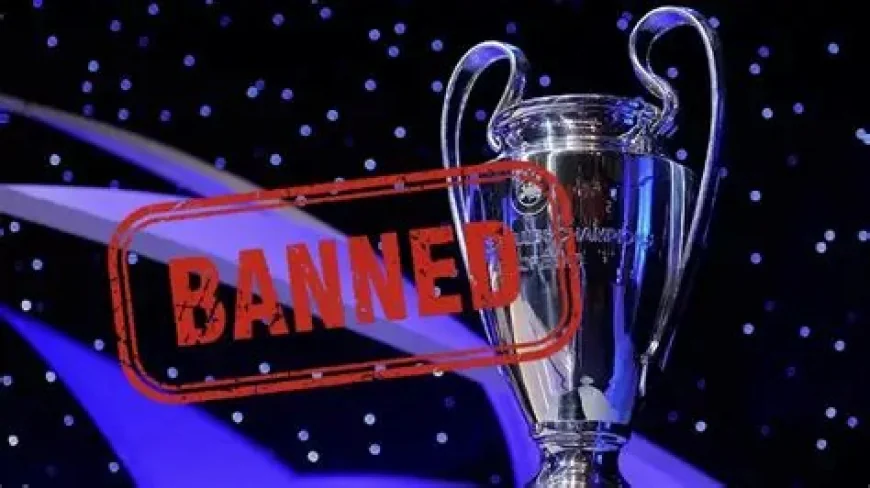
The Union of European Football Associations (UEFA) has over the years imposed strict sanctions on clubs found guilty of match-fixing, financial irregularities, and disciplinary violations. Five clubs have notably been banned from participating in the prestigious UEFA Champions League or European Cup at different times.
The Banned Clubs include:
Besiktas (Turkey, 2013): Banned for match-fixing. The sanction was upheld by the Court of Arbitration for Sport (CAS).
Fenerbahce (Turkey, 2013): Handed a three-year ban for similar offenses. Their CAS appeal was unsuccessful.
Juventus (Italy, 2023/24): Excluded from UEFA competition after breaching Financial Fair Play (FFP) regulations between 2012 and 2019.
FK Pobeda (North Macedonia, 2009): Received an eight-year ban for match-fixing. The club’s president, Aleksandar Zabrcanec, was given a lifetime ban.
FK Arsenal Tivat (Montenegro, 2025): Hit with a historic 10-year ban and fined €500,000 after disciplinary violations during a European fixture.
In 1985, the Heysel Stadium disaster during the European Cup final between Juventus and Liverpool led to the deaths of 39 fans. UEFA responded with a five-year ban on all English clubs from European competitions. Liverpool faced an additional one-year ban, returning to Europe only in 1991.
These bans underscore UEFA’s uncompromising stance on disciplinary breaches, financial misconduct, and safety failures. While the Champions League remains the pinnacle of club football, these cases serve as reminders that violations can strip clubs of the chance to compete on Europe’s biggest stage.
What's Your Reaction?
 Like
0
Like
0
 Dislike
0
Dislike
0
 Love
0
Love
0
 Funny
0
Funny
0
 Wow
0
Wow
0
 Sad
0
Sad
0
 Angry
0
Angry
0

















Comments (0)