

French Prime Minister Quits After 27 Days — Macron Faces Political Meltdown
France’s Prime Minister Sébastien Lecornu has resigned after just 27 days in office, marking one of the shortest tenures in modern French history. His abrupt departure, following fierce backlash over his new cabinet lineup and deadlocked negotiations with opposition parties, has thrown President Emmanuel Macron’s government into crisis. The resignation underscores the deep political fragmentation in France, raising fears of fresh elections, market instability, and a weakened presidency.
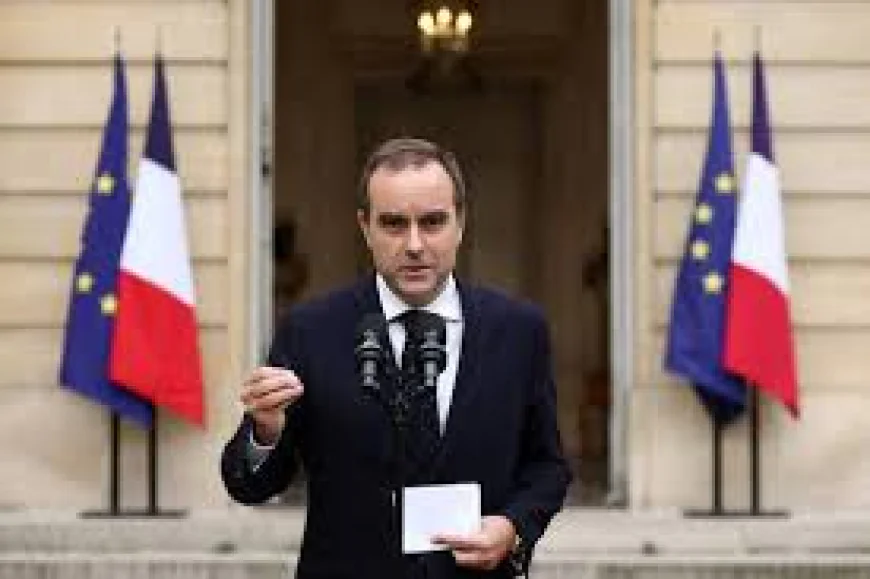
France’s Political Crisis Deepens
In a stunning turn of events, Prime Minister Sébastien Lecornu submitted his resignation on October 6, 2025, barely four weeks after taking office. His resignation followed intense disputes over cabinet appointments and failed coalition talks that left France’s political machinery paralyzed.
Lecornu, a close ally of President Macron, had attempted to form a centrist government capable of bridging the country’s growing political divides. But opposition parties across the spectrum refused to compromise, each pushing its full program. The tipping point came after Lecornu reappointed former finance minister Bruno Le Maire as defense minister, a decision widely criticized as a return to “Macronism 2.0.”
Within hours, Lecornu announced his resignation, citing the “impossibility of forming a government capable of governing effectively.”
A Presidency Under Pressure
President Emmanuel Macron now faces one of the most precarious moments of his political career. He has asked Lecornu to remain in a caretaker role for 48 hours while attempting to negotiate a path forward. However, Macron’s options are shrinking rapidly:
-
Appointing a new prime minister risks repeating the same pattern of collapse.
-
Dissolving parliament and calling snap elections could empower Marine Le Pen’s far-right National Rally, which has been surging in the polls.
-
Negotiating a coalition may prove nearly impossible amid entrenched political hostility.
Analysts say Macron’s leadership style; highly centralized and presidential, may be clashing with France’s current fragmented political landscape. His 2024 snap election gamble backfired, leaving him without a stable majority in the National Assembly.
Economic and Global Fallout
Financial markets reacted sharply to the turmoil. France’s CAC 40 index dropped more than 2 percent after news of Lecornu’s resignation, while bond spreads widened as investors fretted over political uncertainty. Credit agencies have warned that prolonged paralysis could hurt France’s fiscal credibility.
Economically, the timing could not be worse. France faces rising debt, a widening budget deficit, and pressure from the EU to rein in spending. A stalled government may struggle to pass the 2026 budget or push forward long-delayed reforms.
Opposition Reactions and Calls for Elections
Opposition leaders seized on the crisis to call for fresh elections. Marine Le Pen described the resignation as “proof of Macron’s democratic exhaustion,” while the leftist Jean-Luc Mélenchon accused the president of “governing without the people.”
If Macron does dissolve parliament, it could trigger France’s third legislative election in less than three years, a risky move that might further weaken his centrist alliance.
What Happens Next?
The Élysée Palace is expected to announce a new prime minister within days. Potential names include veteran centrist Édouard Philippe, former culture minister Rima Abdul Malak, and finance expert Bruno Le Maire.
However, analysts warn that without a clear parliamentary majority, any new government may face the same fate as Lecornu’s, short-lived and gridlocked.
As France grapples with inflation, protests, and political fatigue, Lecornu’s resignation feels less like an isolated event and more like a symptom of a broader democratic breakdown.
In Summary
The resignation of Sébastien Lecornu is not just another political shake-up, it signals the fragility of France’s Fifth Republic at a time of global uncertainty. Unless President Macron can rebuild consensus or win back a majority, France risks sliding deeper into paralysis, with consequences that could echo well beyond Paris.
Sources:
APNews/TheGuardian/Reuters/DWTV
What's Your Reaction?
 Like
0
Like
0
 Dislike
0
Dislike
0
 Love
0
Love
0
 Funny
0
Funny
0
 Wow
0
Wow
0
 Sad
0
Sad
0
 Angry
0
Angry
0

Shirley Ama Acquah Content Creator | Copywriting Specialist | Digital Content Strategist A dynamic storyteller with a sharp editorial eye, I craft compelling content that engages audiences and drives meaningful conversations. With a background in [persuasive writing, digital media,social media marketing], I specialize in high-impact copywriting, from SEO-driven articles and persuasive marketing copy to in-depth entertainment reviews and trend analysis. My work bridges creativity and strategy, whether dissecting the latest streaming trends, developing brand narratives, or optimizing content for maximum reach. I don’t just write; I create experiences that resonate with readers and convert casual viewers into loyal followers. Key Strengths: ✔ Versatile Content Creation (blogs, scripts, social media, SEO) ✔ Entertainment & Pop Culture Analysis (TV, film, streaming trends) ✔ Brand & Audience-First Writing (tone-adaptive, platform-optimized) ✔ Data-Informed Storytelling (analytics meets creativity) Let’s collaborate or connect: [amaboah23@gmail.com]

















Comments (0)