

43 Days Later: Trump Signs Bill to End America’s Longest Government Shutdown
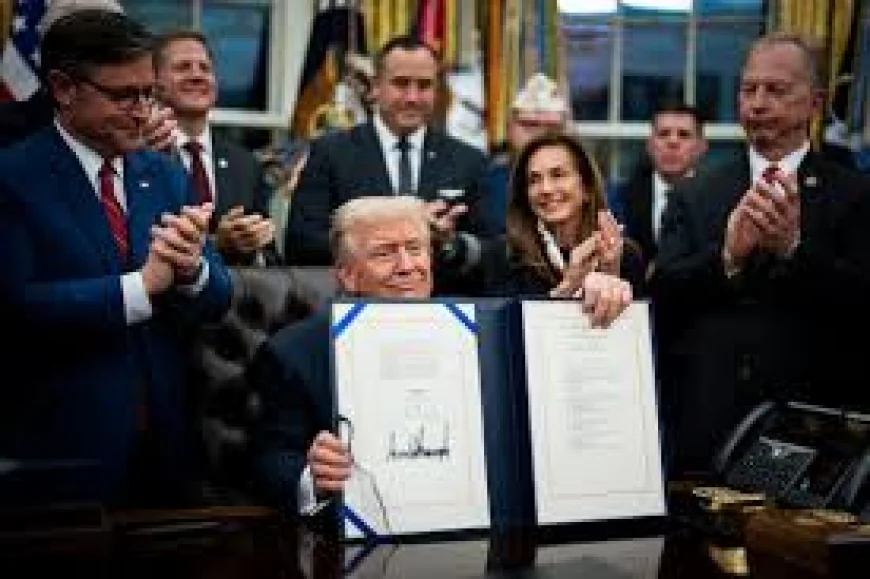
President Donald Trump has signed a funding bill that brings an end to the longest government shutdown in United States history. The signing restores pay for federal workers, reopens government agencies, and secures temporary funding for key programs, although the central political dispute over health care remains unresolved.
Shutdown for the Books
In a quiet but significant late night ceremony at the White House on 12 November 2025, President Donald Trump signed a long awaited spending bill that officially ended the 43 day government shutdown. The decision allows federal agencies to resume normal operations and brings relief to millions of Americans who were affected by the historic stoppage.
A shutdown by the numbers
The United States endured 43 days of frozen government activity, making this the longest shutdown in national history. During the standoff, millions of families felt the strain.
-
Hundreds of thousands of federal employees were furloughed or required to work without pay.
-
Food assistance programs such as SNAP experienced major disruptions.
-
Travel delays increased as staffing shortages hit airports and transportation services.
Economists estimate that the shutdown caused several billions of dollars in financial losses to the wider economy.
What the bill achieves
The newly signed bill covers the following:
-
Federal operations will remain funded through 30 January 2026 for most agencies.
-
Departments such as Agriculture and programs like SNAP are funded through September 2026.
-
Federal workers will receive all back pay owed to them.
-
Threatened layoffs across multiple agencies have been averted.
-
Lawmakers have agreed to hold a future vote on the extension of Affordable Care Act tax credits, though the bill itself does not include those extensions.
Political tensions behind the agreement
The House passed the measure with a 222 to 209 vote, with six Democrats joining Republicans. In the Senate, a handful of Democrats and one independent helped secure the breakthrough.
At the signing ceremony, President Trump blamed Democratic lawmakers for the shutdown and criticized the extended standoff as unnecessary.
National polling, however, suggested that many Americans held Republicans responsible for the prolonged impasse, signaling political consequences for both parties.
Unresolved issues
Even with the government reopened, significant matters remain unsettled.
-
The core dispute over health care subsidies and ACA premium tax credits remains active.
-
Federal agencies may need days or weeks to fully restore normal operations.
-
Analysts warn that similar funding standoffs could recur due to ongoing partisan divisions.
Why this matters
The end of the shutdown brings relief to federal workers who faced weeks without income. Millions of Americans who rely on federal services and benefits can expect a return to stability.
Politically, the resolution resets the stage for renewed debates about health care spending, budget priorities, and the upcoming midterm elections.
The shutdown also serves as a reminder of how political gridlock can directly affect everyday life for citizens.
Timeline at a glance
|
Date |
Event |
|
Late September 2025 |
Shutdown begins after Congress misses a funding deadline. |
|
10 to 11 November 2025 |
Senate negotiators reach a compromise and send the bill to the House. |
|
12 November 2025 |
The House passes the bill. President Trump signs it late Wednesday night. |
|
13 November 2025 |
Federal agencies begin the process of reopening. |
Sources:
The Washington Post/AP News/ DW tv News
What's Your Reaction?
 Like
0
Like
0
 Dislike
0
Dislike
0
 Love
0
Love
0
 Funny
0
Funny
0
 Wow
0
Wow
0
 Sad
0
Sad
0
 Angry
0
Angry
0
Shirley Ama Acquah Content Creator | Copywriting Specialist | Digital Content Strategist A dynamic storyteller with a sharp editorial eye, I craft compelling content that engages audiences and drives meaningful conversations. With a background in [persuasive writing, digital media,social media marketing], I specialize in high-impact copywriting, from SEO-driven articles and persuasive marketing copy to in-depth entertainment reviews and trend analysis. My work bridges creativity and strategy, whether dissecting the latest streaming trends, developing brand narratives, or optimizing content for maximum reach. I don’t just write; I create experiences that resonate with readers and convert casual viewers into loyal followers. Key Strengths: ✔ Versatile Content Creation (blogs, scripts, social media, SEO) ✔ Entertainment & Pop Culture Analysis (TV, film, streaming trends) ✔ Brand & Audience-First Writing (tone-adaptive, platform-optimized) ✔ Data-Informed Storytelling (analytics meets creativity) Let’s collaborate or connect: [amaboah23@gmail.com]














Comments (0)