

Gulf Under Fire: How a Strike on Iran’s Supreme Leader Sparked Regional Chaos
The Middle East has plunged into its most explosive crisis in decades after U.S. President Donald Trump announced the death of Iran’s Supreme Leader, Ayatollah Ali Khamenei, in coordinated U.S.–Israeli strikes. What followed was swift and unprecedented: ballistic missiles and drones launched across Israel and deep into the Gulf, including direct attacks on Dubai, Abu Dhabi, Kuwait, and Bahrain. This is the timeline of how a targeted strike turned into a regional firestorm.
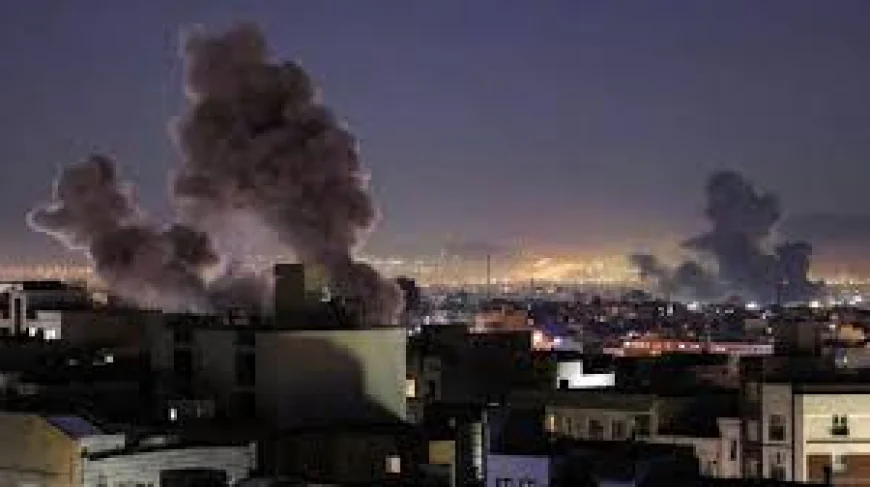
How Khamenei's Death Ignited a Missile War Across the Gulf
One announcement changed everything.
When U.S. President Donald Trump confirmed that Iran’s Supreme Leader, Ayatollah Ali Khamenei, had been killed in coordinated U.S.–Israeli strikes, the Middle East shifted from simmering tension to open confrontation within hours.
What followed was not symbolic retaliation — it was ballistic.
Missiles crossed borders. Drones filled Gulf skies. Explosions rattled airports in Dubai and Abu Dhabi. Regional airspace shut down. Oil markets trembled.
Here is how the escalation unfolded.
February 28: The Strike That Shook Tehran
Joint U.S. and Israeli forces launched precision strikes across Iran, targeting senior leadership sites, Revolutionary Guard facilities, and missile infrastructure.
Iranian state media later confirmed the death of Ali Khamenei, the country’s most powerful political and religious authority.
Shortly after, Donald Trump publicly declared the operation a success, framing it as a decisive blow against Iran’s military leadership.
The killing of Khamenei marked the most dramatic escalation between Iran and its adversaries in modern history.
Hours Later: Iran Launches “Truthful Promise 4”
Iran’s retaliation was immediate and wide-ranging.
Tehran announced a major counteroffensive, unleashing waves of ballistic missiles and long-range drones targeting:
-
Israel
-
U.S. military bases in the Gulf
-
Bahrain
-
Kuwait
-
Qatar
-
The United Arab Emirates
Iran warned that any nation hosting U.S. military infrastructure would be considered part of the battlefield.
Dubai and Abu Dhabi Under Fire
For the first time in years, the United Arab Emirates, long seen as a safe commercial hub came under sustained attack.
Explosions were reported near Dubai International Airport and parts of Abu Dhabi as air defense systems intercepted incoming threats.
Reported Developments:
-
Ballistic missiles detected over UAE airspace
-
Hundreds of drones launched toward the country
-
Civilian casualties confirmed
-
Fires sparked by falling debris
-
Temporary closure of UAE airspace
-
Massive flight cancellations
Dubai’s skyline — symbolic of Gulf stability and economic ambition — became a backdrop to air defense interceptions and falling debris.
Financial markets reacted sharply, and regional trading floors saw volatility as uncertainty deepened.
Kuwait and Bahrain Hit
The escalation did not stop in the UAE.
Kuwait
Drone strikes reportedly targeted infrastructure near Kuwait International Airport and military-linked facilities.
Bahrain
Authorities reported debris damage and emergency responses in multiple districts after incoming projectiles were intercepted.
The Gulf, once removed from direct confrontation, was suddenly in the line of fire.
Hezbollah Opens a Northern Front
In Lebanon, Hezbollah launched missiles into northern Israel in solidarity with Tehran.
Israel responded with heavy airstrikes in Beirut and the Bekaa Valley, widening the war footprint and raising fears of a prolonged multi-front conflict.
Airspace Shut, Markets Rattle
As missiles streaked across borders:
-
Regional airspace closures stranded thousands of travelers
-
Major airlines rerouted flights away from Gulf corridors
-
Oil markets reacted nervously to threats near the Strait of Hormuz
-
Gulf stock exchanges recorded steep volatility
The economic ripple effects extended far beyond the battlefield.
A Region Redefined
The killing of Khamenei did more than remove a leader, it shattered a fragile deterrence balance.
For years, Israel and Iran operated in a shadow conflict of covert strikes and proxy battles. But missile exchanges over Dubai and Abu Dhabi mark a new chapter: direct, visible, state-level confrontation affecting global trade and civilian populations.
The question now is not whether the region has changed — it has.
The question is whether escalation can still be contained.
Sources:
The Guardian/ Reuters/ euro news/Times of Dubai
What's Your Reaction?
 Like
0
Like
0
 Dislike
0
Dislike
0
 Love
0
Love
0
 Funny
0
Funny
0
 Wow
0
Wow
0
 Sad
0
Sad
0
 Angry
0
Angry
0

Shirley Ama Acquah Content Creator | Copywriting Specialist | Digital Content Strategist A dynamic storyteller with a sharp editorial eye, I craft compelling content that engages audiences and drives meaningful conversations. With a background in [persuasive writing, digital media,social media marketing], I specialize in high-impact copywriting, from SEO-driven articles and persuasive marketing copy to in-depth entertainment reviews and trend analysis. My work bridges creativity and strategy, whether dissecting the latest streaming trends, developing brand narratives, or optimizing content for maximum reach. I don’t just write; I create experiences that resonate with readers and convert casual viewers into loyal followers. Key Strengths: ✔ Versatile Content Creation (blogs, scripts, social media, SEO) ✔ Entertainment & Pop Culture Analysis (TV, film, streaming trends) ✔ Brand & Audience-First Writing (tone-adaptive, platform-optimized) ✔ Data-Informed Storytelling (analytics meets creativity) Let’s collaborate or connect: [amaboah23@gmail.com]
















Comments (0)