

Germany’s Arms Exports Fall Sharply
Germany’s arms export approvals fell sharply in 2025, marking a significant shift after two years of record-breaking figures driven by the war in Ukraine.
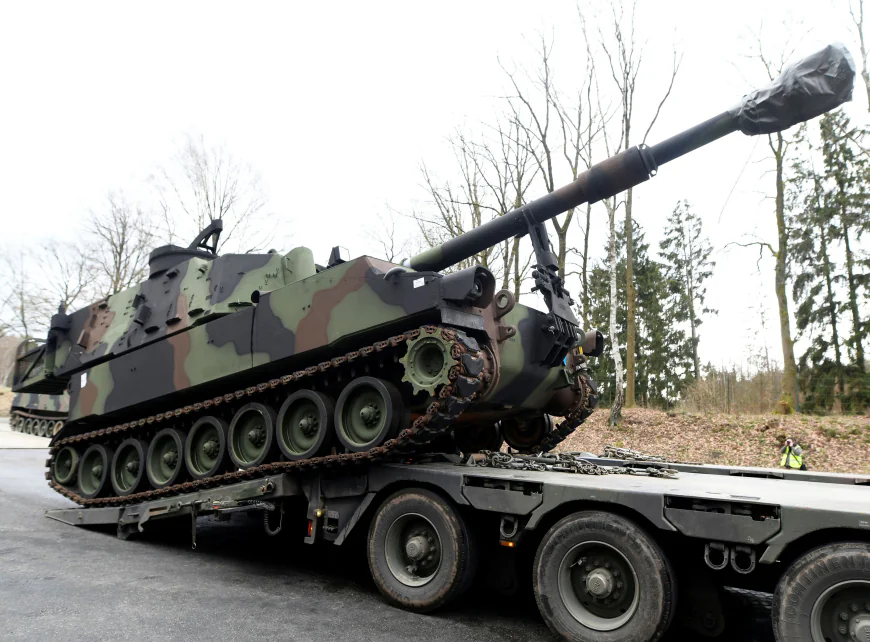
Licences issued between January and early December totalled €8.4 billion, down from more than €13 billion in each of the previous two years — a decline that has reignited debate over the country’s defence industry, foreign policy priorities, and political messaging.
Although the decline looks sharp, it mainly reflects a return to more normal decision-making after an unusual period of emergency approvals, rather than a sudden pullback from arms production.
Even so, the slowdown matters. It could impact Germany’s defence industry, shape political debate under the new conservative-led government, and raise broader questions about how Berlin balances security needs, economic interests, and its commitment to a values-based foreign policy.
Economic Journey
Germany’s arms export approvals dropped sharply in 2025, with licences worth €8.4 billion ($9.9 billion) issued between January and early December — a notable decline from €13.33 billion in 2024 and €12.15 billion in 2023.
This contraction comes after an exceptional, conflict-driven surge rather than a normal business cycle.
Following Russia’s full-scale invasion of Ukraine in 2022, Germany dramatically expanded its arms export approvals as part of a broader shift in security policy, often described as a Zeitenwende (turning point).
Defence licences “ballooned” during this period because Berlin fast-tracked approvals for weapons, ammunition, air-defence systems, and military vehicles destined for Ukraine and allied countries replenishing their own stocks.
These approvals were politically framed as urgent security assistance rather than commercial exports. There is a discrepancy that this move allowed previous administrations to justify the high volumes of exports.
The record figures seen in 2023 and 2024 were not indicative of a permanently higher baseline for German arms exports, but rather reflected a temporary response to wartime demand.
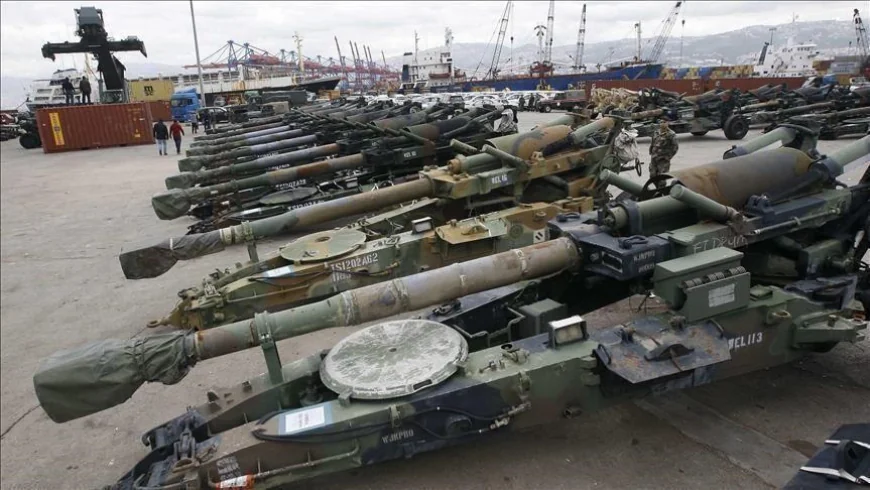
However, moving towards 2025, the scope for new approvals has narrowed, particularly in relation to the previously largest Ukraine-related licences that were granted.
The current decline, therefore, represents a normalisation after emergency-level policymaking, rather than a sudden policy reversal or collapse in Germany’s defence industry.
In other words, export volumes are falling back from an artificial peak created by war-driven urgency, highlighting how closely Germany’s arms export figures are tied to geopolitical shocks rather than steady long-term trends.
From an economic standpoint, the reduction in new export licences could influence Germany’s defence industrial base.
Arms exports contribute to industrial output, sustain high-tech manufacturing jobs, and support research and development in aerospace, land systems, and armaments.
When arms export licences decline, it can be a warning sign for the future. Licences are permissions that allow companies to manufacture and export military equipment.
If fewer licences are granted, defence firms may face fewer new orders down the line, which can eventually lead to slower production, reduced investment in new facilities or technologies, and more cautious hiring decisions in parts of Germany’s defence industry.
However, the Economy Ministry is stressing that this effect is not immediate. Arms production and delivery often take years, and many current shipments are still being fulfilled under licences approved in previous years, particularly during the surge linked to Ukraine.
As a result, even if new authorisations are granted today, companies may continue to deliver equipment — and earn revenue — based on earlier approvals.
Political Implications Within Germany
Politically, the drop in export licences has become a talking point in debates over Germany’s defence and foreign policy direction.
Under the conservative-led government of Chancellor Friedrich Merz, which took office in May 2025, about €5.39 billion of the 2025 exports can be attributed to decisions made by the current administration.
This includes unusually high approvals to Turkey (€726 million) — the highest level since 1999 — as well as continued significant exports to Norway (€1.31 billion).
The Left Party, known in German as Die Linke, is a democratic socialist political party in Germany that sits on the left wing of the political spectrum. It was formed in 2007 through a merger between the Party of Democratic Socialism (the successor to East Germany’s former ruling communist party) and a breakaway faction from the Social Democrats (SPD) opposed to labour-market and welfare reforms.
Ideologically, Die Linke is strongly critical of militarisation, NATO, and arms exports. The party consistently advocates for strict limits — or outright bans — on weapons exports, particularly to countries involved in active conflicts or accused of human rights violations. It promotes a foreign policy centred on diplomacy, international law, and conflict prevention rather than military engagement.
In the context of arms exports, the Left Party has long argued that Germany’s stated commitment to a “values-based” foreign policy is undermined when strategic or alliance considerations take precedence over this commitment.
Party representatives frequently warn that exporting weapons to geopolitical partners risks entangling Germany in conflicts and eroding its credibility as a proponent of human rights.
While Die Linke has limited influence on government policy at the federal level, it plays a significant role in parliamentary oversight and public debate, particularly by highlighting ethical contradictions in defence and export policy.
Critics from the Left party argue that arms exports are being used strategically to support political allies regardless of human rights concerns, reflecting continuity and change in Berlin’s approach to export policy.
From their perspective, weapons deliveries are used strategically to support political and military allies, even when recipient countries face serious allegations of human rights abuses.
According to Yahoo News, "Die Linke, Germany’s democratic socialist Left Party, has repeatedly criticised arms export policy on ethical grounds — with leaders calling aspects of the government’s approach ‘moral depravity’ and urging stricter controls or bans on weapons sales to countries accused of rights violations, arguing that current policy places geopolitical interests above a values‑based foreign policy".
Record Exports to Turkey Highlight Policy Shift
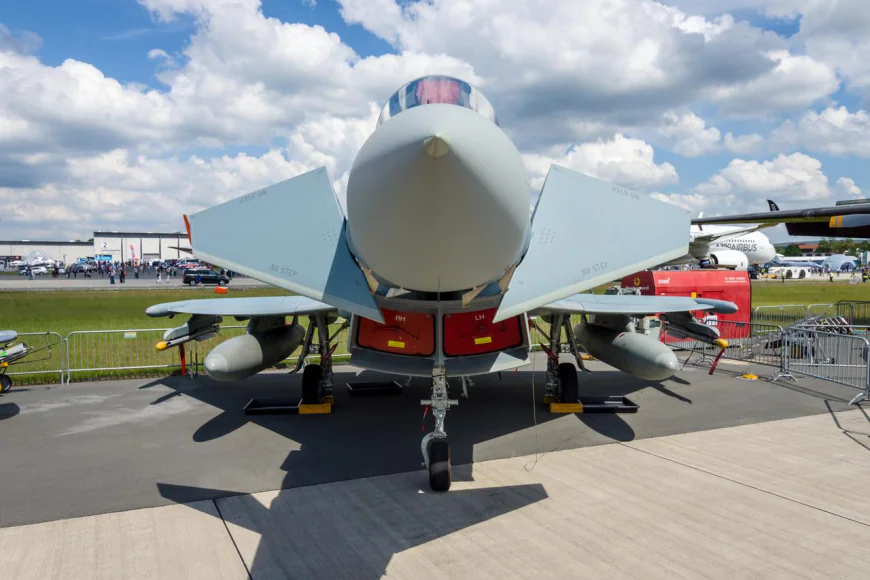
A Eurofighter Typhoon multirole fighter jet of the German Air Force (Luftwaffe) during the Exhibition ILA Berlin Air Show 2016 in Berlin, Germany, June 2, 2016. (Adobe Stock Photo)
One notable feature of Germany’s 2025 export figures is the surge in licences for arms exports to Türkiye, with approved deals totalling €726 million, the highest level since 1999, according to Türkiye Today
Under the administration of Chancellor Friedrich Merz, this marked a significant departure from previous years’ patterns: earlier in 2025, the previous government had approved only about €230 million in exports to Ankara.
A significant portion of this increase was attributed to the approval of Eurofighter Typhoon combat aircraft sales, a long-delayed and politically sensitive decision that reflects the evolving strategic ties with the NATO partner.
The prominence of Türkiye in Germany’s export roster — coming second only to Norway — underscores how Berlin’s arms licensing is shaped not just by economic factors but by geopolitical considerations and alliance politics.
Critics argue that this trend reinforces concerns that export decisions may prioritise strategic relationships over consistency with stated human rights values, as large NATO allies receive increasingly significant approvals.
What's Your Reaction?
 Like
0
Like
0
 Dislike
0
Dislike
0
 Love
0
Love
0
 Funny
0
Funny
0
 Wow
0
Wow
0
 Sad
0
Sad
0
 Angry
0
Angry
0

I’m a freelance writer with a passion for business, lifestyle, and opinion pieces that explore culture, trends, and real-world insights. I bring a perspective that blends professional knowledge with cultural awareness, drawing on my experience in real estate and a keen interest in South Asian lifestyle and culture. I hold a Master’s in Popular Music Practice, and outside of writing, I enjoy playing the flute and reading about philosophy and psychology. I love crafting engaging, thought-provoking stories and am always excited to pitch fresh ideas or take on features that connect communities, trends, and the bigger picture.















Comments (0)