

Saudi Arabia Commits Billions to Syria in Landmark Post-Sanctions Investment Package
As US sanctions ease, Saudi Arabia is moving fast — committing billions to airports, telecoms and energy projects that could redefine Syria’s economic future.
Key Facts, Dates and Details
In early February 2026, Syria and Saudi Arabia signed a major investment package, marking a significant step in economic and political ties.
The agreements were formalised on February 7, 2026, in Damascus, during a ceremony attended by senior officials from both sides. The package represents one of the most substantial international economic engagements with Syria in years following the lifting of US sanctions in late 2025, which opened the door for renewed foreign investment.
At the centre of the deal is a multibillion-dollar Saudi investment commitment spanning infrastructure, aviation, telecommunications, energy and transport.
A key component is a USD 2 billion pledge through Saudi Arabia’s newly launched Elaf investment fund, which has been created to support large-scale development projects in Syria in partnership with Saudi private-sector investors.
Among the flagship projects is the planned development of two airports in Aleppo, designed to handle a combined annual passenger capacity of around 12 million, significantly expanding Syria’s civil aviation infrastructure.
Another major pillar of the agreement is the SilkLink telecommunications project, expected to attract approximately USD 1 billion in investment.
The project involves laying approximately 4,500 kilometres of fibre-optic cables and constructing new data centres, with the intention of improving Syria’s digital connectivity and integrating it more closely into regional and global communications networks.
The package also includes the establishment of a new joint airline, Flynas Syria, developed in cooperation between Saudi low-cost carrier Flynas and the Syrian Civil Aviation Authority.
The airline is expected to begin operations by late 2026, supporting increased passenger movement and regional connectivity.
In addition, agreements were signed in water and energy infrastructure, including cooperation with major Saudi firms, reflecting a broad-based approach to Syria’s reconstruction needs, including agreements with Saudi firms such as ACWA Power and the Saudi Water Transmission Company.
These agreements build on a wider Saudi investment push that began in 2025, when deals worth more than 40 billion Saudi riyals (over USD 10 billion) were signed across dozens of projects involving more than 100 companies.
The current investment package is being pursued under the leadership of President Ahmad al-Sharaa, who came to power following the removal of Bashar al-Assad in December 2024, and signals a new phase in Syria’s engagement with regional partners.
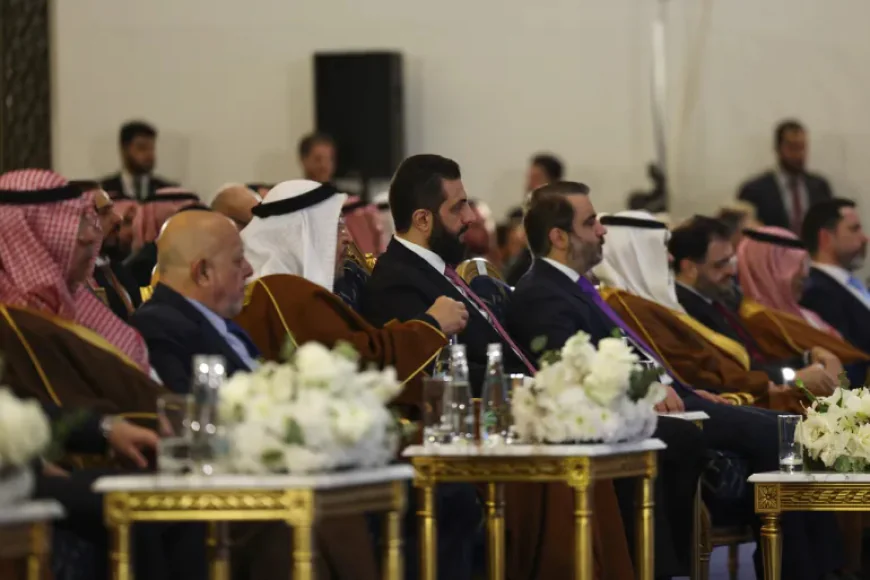
President Ahmed al-Sharaa attends a signing ceremony between Syria and Saudi Arabia in Damascus on Saturday
Economic Implications
Implications for Syria
For Syria, the investment package represents a critical opportunity to accelerate economic reconstruction and recovery after more than a decade of conflict.
The scale of Saudi capital entering sectors such as aviation, telecommunications and energy marks one of the largest inflows of foreign investment since sanctions were lifted.
These projects are expected to help rebuild damaged infrastructure, improve basic services and restore economic functionality in key regions.
The SilkLink telecommunications initiative could be particularly transformative, strengthening Syria’s digital capacity and positioning the country as a potential transit point for regional data flows between Asia, Europe and the Middle East.
Improved digital infrastructure may also support the growth of private enterprise, financial services and technology-based industries, all of which are essential for long-term economic stability.
In addition, projects such as the joint airline and airport developments are likely to generate employment opportunities, stimulate related sectors such as tourism and logistics, and encourage broader private-sector activity.
The use of investment funds that combine state backing with private participation suggests growing confidence among Saudi investors that Syria offers commercially viable opportunities rather than solely humanitarian or aid-driven engagement.
Implications for Saudi Arabia
For Saudi Arabia, the investment package represents a strategic expansion of its economic and political influence in the Levant.
By entering the Syrian market early, Saudi firms gain access to sectors with significant growth potential as the country reopens to regional and global trade.
Investments across multiple industries also allow Saudi Arabia to diversify its regional economic footprint while supporting the objectives of Vision 2030, which emphasises overseas investment and economic diversification.
More broadly, Saudi Arabia’s role in Syria’s reconstruction enhances its position as a regional economic leader and a key architect of post-conflict recovery efforts in the Middle East. The agreements signal Riyadh’s intention to shape Syria’s reintegration into the regional economy through sustained economic engagement rather than short-term diplomacy.
Global Implications
Regional and Global Economic Integration
The Syria–Saudi Arabia investment package carries wider implications for regional economic integration.
As Syria begins to reconnect with international markets, projects focused on aviation, transport and digital infrastructure could help reintegrate the country into regional trade and connectivity networks.
Improved transport and telecommunications links may eventually support new commercial corridors linking the Middle East with Europe and Asia.
Saudi Arabia’s visible commitment also sends a strong signal to international investors, suggesting that Syria is gradually re-entering the global economic system.
While many of the projects remain at early or developmental stages, the scale and visibility of the agreements help reduce perceived investment risk and may encourage further participation from Gulf, Asian and European markets.
Geopolitical Significance
Geopolitically, the deal reflects a broader realignment in Middle Eastern diplomacy, with regional powers taking a more active role in shaping Syria’s post-war future.
Saudi Arabia’s engagement underscores a shift from isolation toward economic reintegration and highlights the use of investment as a tool of influence and stabilisation.
At the same time, analysts caution that the success of the investment package will depend on effective implementation, political stability and regulatory clarity.
While the agreements mark an important symbolic and strategic milestone, their long-term economic impact will be determined by how quickly projects move from commitments to operational reality.
What's Your Reaction?
 Like
0
Like
0
 Dislike
0
Dislike
0
 Love
0
Love
0
 Funny
0
Funny
0
 Wow
0
Wow
0
 Sad
0
Sad
0
 Angry
0
Angry
0

I’m a freelance writer with a passion for business, lifestyle, and opinion pieces that explore culture, trends, and real-world insights. I bring a perspective that blends professional knowledge with cultural awareness, drawing on my experience in real estate and a keen interest in South Asian lifestyle and culture. I hold a Master’s in Popular Music Practice, and outside of writing, I enjoy playing the flute and reading about philosophy and psychology. I love crafting engaging, thought-provoking stories and am always excited to pitch fresh ideas or take on features that connect communities, trends, and the bigger picture.















Comments (0)