

US Opens Criminal Probe into Fed Chair Jerome Powell
In a dramatic escalation of tensions between the White House and the U.S. central bank, federal prosecutors have launched a criminal investigation into Federal Reserve Chair Jerome Powell — a move that has rattled markets, drawn fierce criticism from economic leaders, and sparked a broader debate over the independence of U.S. monetary policy.
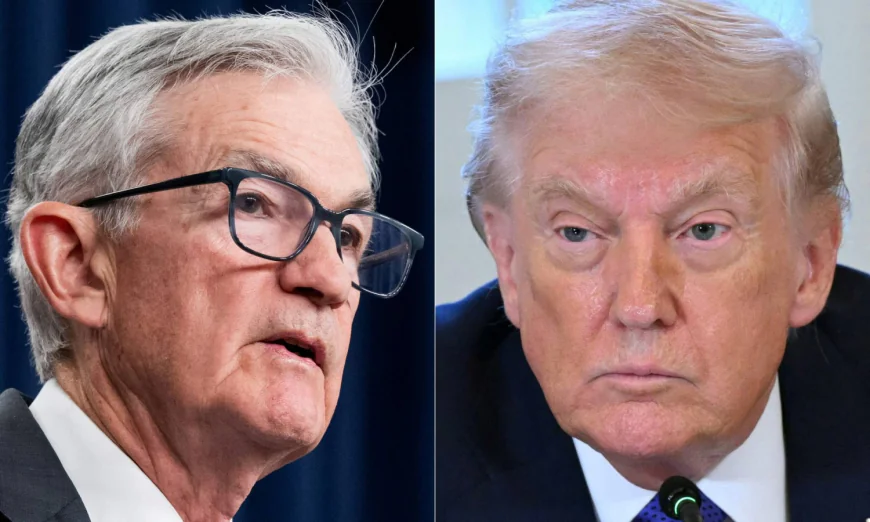
On January 11 2026, the U.S. Department of Justice opened a criminal inquiry into Powell, issuing grand jury subpoenas linked to his congressional testimony last June about a $2.5 billion renovation of the Federal Reserve’s headquarters in Washington, D.C. The probe reportedly centres on whether Powell made false or misleading statements about the project’s scope and cost.
An Unprecedented Escalation
The criminal investigation marks a remarkable escalation in the long-running tensions between President Donald Trump and Federal Reserve Chair Jerome Powell — a conflict rooted in fundamental disagreements over monetary policy and central bank independence.
Powell, who was first appointed by Trump in 2017 and later reappointed to a second term, has consistently resisted political pressure to make aggressive interest-rate cuts in line with the president’s wishes.
In response to the Justice Department’s decision to serve grand jury subpoenas and threaten a possible criminal indictment over his testimony about a roughly $2.5 billion renovation of the Federal Reserve’s Washington headquarters, Powell pushed back forcefully.
In a video statement released by the Fed, he framed the legal threat as part of a broader campaign of pressure rather than a legitimate accountability effort.
“This is about whether the Fed will be able to continue to set interest rates based on evidence and economic conditions – or whether, instead, monetary policy will be directed by political pressure or intimidation,” Powell said, adding that the focus on the renovation project was a distraction from what he described as the real issue: whether monetary policy will be decided on economic evidence or political preference.
“The threat of criminal charges is a consequence of the Federal Reserve setting interest rates based on our best assessment of what will serve the public, rather than following the preferences of the President,” he said, dismissing the investigation into his testimony as a “pretext.”
Powell reiterated that the potential indictment was not genuinely about the building project. “This is about whether the Fed will be able to continue to set interest rates based on evidence and economic conditions — or whether instead monetary policy will be directed by political pressure or intimidation,” he said, underscoring his belief that the independence of the U.S. central bank is at stake.
(Quotes taken from US Fed Chair Powell says he’s under investigation, will not bow to Trump | Donald Trump | Al Jazeera)
Economic Community Reaction
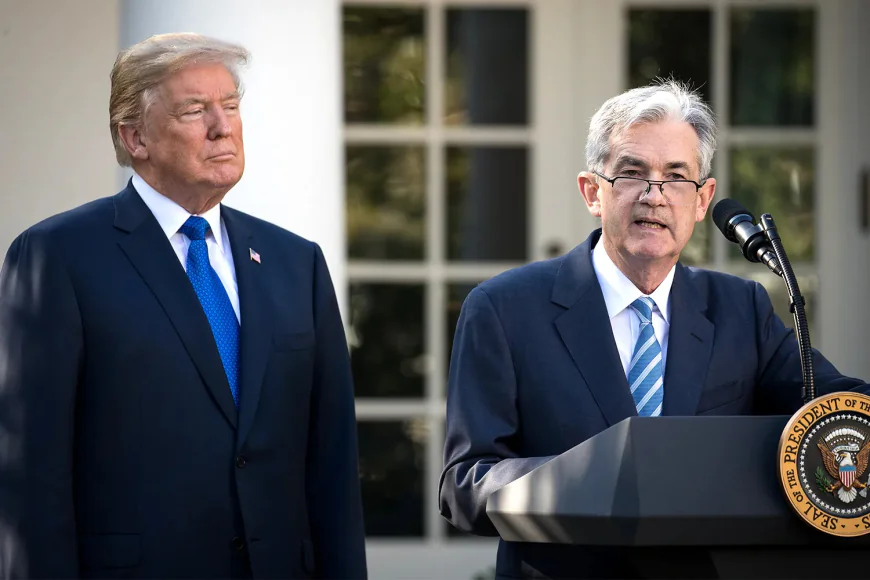
The investigation drew sharp criticism from a broad segment of the economic community, including former Federal Reserve chairs, senior economic policymakers, and leading analysts, who warned that it could undermine central bank independence—a cornerstone of effective monetary policy.
In a joint statement, a coalition of past Fed chairs and Treasury secretaries — among them Janet Yellen, Ben Bernanke, and Alan Greenspan — called the criminal inquiry “an unprecedented attempt to use prosecutorial attacks to undermine [the Fed’s] independence.”
They argued that such a tactic “has no place in the United States, whose greatest strength is the rule of law” and warned that it resembles practices in countries with weaker institutional frameworks, where political pressure on monetary policy can lead to higher inflation and broader economic instability.”
Economists outside government voiced similar concerns. Jan Hatzius, chief economist at Goldman Sachs, said the indictment threat “reinforced worries that Fed independence is going to be under the gun,” stressing that confidence in the central bank’s ability to base decisions on economic data — not political pressure — is critical for markets.
These warnings reflect a deep fear among economic experts: central bank independence matters because it helps anchor expectations around inflation and supports predictable monetary policy decisions.
In emerging markets with weak institutional safeguards, politicised monetary policy has often contributed to runaway inflation and financial volatility — a comparison the former officials explicitly drew in their statement.
The reaction also crossed political lines. Some Republican lawmakers, such as Senator Thom Tillis, broke ranks with the administration, describing the probe as a “huge mistake” and pledging to block any Federal Reserve nominees until the issue is resolved, underscoring fears that the action could hinder the Fed's ability to function independently.
Trump Administration
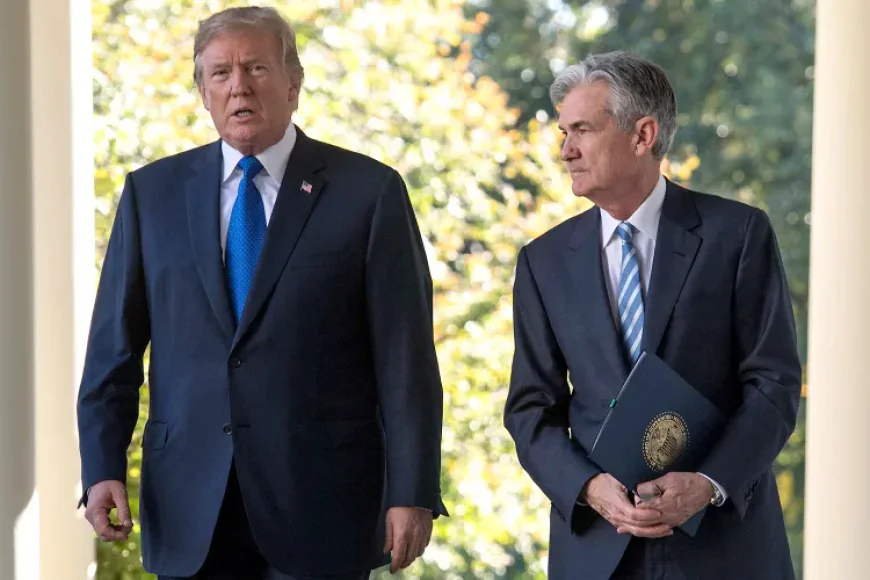
Although President Donald Trump has sought to distance himself from the Justice Department’s criminal investigation into Fed Chair Jerome Powell, his broader criticisms and actions toward Powell make clear that the clash is deeply political and rooted in long-standing disagreements over monetary policy.
Trump has publicly denied any direct involvement in the Justice Department’s decision to open the probe.
In an interview on NBC News, he said he “doesn’t know anything about it” and insisted the investigation is unrelated to interest rate policy, even as he continued to criticise Powell’s performance. “He’s certainly not very good at the Fed, and he’s not very good at building buildings,” Trump quipped, seeming to deflect attention toward the renovation controversy rather than monetary policy, while still reinforcing his overall dissatisfaction with Powell’s leadership.
The feud stretches back to at least the previous year, when Trump openly demanded that the Fed cut interest rates more sharply than Powell believed was economically warranted.
Powell’s cautious stance, aimed at balancing inflation and employment objectives, frustrated the president, who repeatedly called for policy that would stimulate faster economic growth.
Trump went beyond rhetorical attacks. In late December, he suggested legal action against Powell, discussing the possibility of a lawsuit over the cost and scope of the Federal Reserve’s $2.5 billion headquarters renovation — the same matter that became the focus of the criminal investigation. He has also described Powell as “grossly incompetent,” directly tying his disapproval to both policy and performance.
The broader context of these manoeuvres has raised concerns that the White House is trying to exert influence over an institution that, by design, operates independently of political control.
On one level, Trump is attempting to distance himself from what would be a striking use of federal prosecutorial power against a central bank leader; on another, he continues to reinforce his longstanding policy disagreements and dissatisfaction with the Fed’s direction.
What's Your Reaction?
 Like
0
Like
0
 Dislike
0
Dislike
0
 Love
0
Love
0
 Funny
0
Funny
0
 Wow
0
Wow
0
 Sad
0
Sad
0
 Angry
0
Angry
0

I’m a freelance writer with a passion for business, lifestyle, and opinion pieces that explore culture, trends, and real-world insights. I bring a perspective that blends professional knowledge with cultural awareness, drawing on my experience in real estate and a keen interest in South Asian lifestyle and culture. I hold a Master’s in Popular Music Practice, and outside of writing, I enjoy playing the flute and reading about philosophy and psychology. I love crafting engaging, thought-provoking stories and am always excited to pitch fresh ideas or take on features that connect communities, trends, and the bigger picture.
















Comments (0)