

German Factory Orders Jump 5.6% in November
Data suggest Germany’s manufacturing sector may be stabilising, but a sustained recovery will depend on whether short-term order gains translate into consistent demand across domestic and export markets.
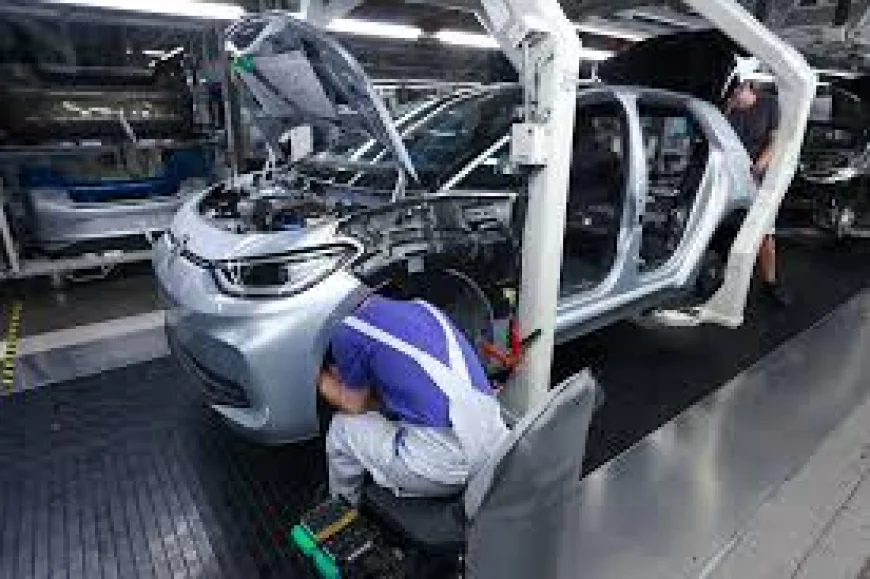
Germany’s manufacturing sector delivered an unexpectedly strong signal at the end of 2025 with factory orders climbing 5.6% in November, far exceeding forecasts for a decline and marking the most substantial monthly rise in nearly a year.
For business leaders, investors, and policymakers, this data is especially important because it examines orders placed with factories, rather than what those factories have already produced. In other words, it measures future work that manufacturers are being asked to do, rather than goods that have already left the production line.
As companies typically place orders weeks or months before production begins, factory orders are considered an early indicator of demand — a way to gauge whether customers are becoming more confident and willing to spend.

When orders rise, it often means factories will run more machines, hire more workers, and increase output in the months ahead. When orders fall, it can signal slower activity and weaker economic growth.
The figures, however, need to be interpreted carefully. A sharp rise in orders does not automatically mean the economy has fully recovered. Some increases can be driven by large, one-off contracts — such as defence or infrastructure deals — that may not be repeated. That is why analysts look not only at the headline number but also at what is driving it.
According to Jens-Oliver Niklasch, senior economist at Landesbank Baden-Württemberg, “finally, there is a figure from the German economy that leaves little room for complaint,” noting that higher orders were welcome but not a guarantee of sustained growth.
Orders Up — But What’s Driving the Spike?
The main headline number — a 5.6% increase compared with the previous month — was published by Germany’s official statistics agency, the Federal Statistical Office (Destatis).
This result surprised analysts because most had expected orders to fall by about 1.0%, not rise. When economic data moves sharply against expectations, it often attracts attention because it can change how businesses and markets assess the economic outlook.
Examining the source of the growth more closely helps explain the jump. Orders for fabricated metal products, which include items such as industrial components, machinery parts and construction-related metals, rose by 25.3%. This suggests a surge in demand from industries that rely on heavy manufacturing and infrastructure projects.
Orders for transport equipment — a broad category that covers aircraft, military vehicles, trains and related systems — increased by 12.3%. These types of orders are often large in size and placed irregularly, which means they can significantly lift the overall figure in a single month without necessarily indicating a lasting trend.
To get a clearer picture of underlying demand, statisticians also calculate the data excluding large, irregular contracts. When those are removed, orders still increased by 0.7%, showing that growth was not limited solely to one-off deals, but was more modest across the broader manufacturing sector.
Demand from within Germany played a major role. Domestic orders increased by approximately 6.5%, suggesting that German companies and public institutions were more willing to invest and spend. Foreign orders also increased, indicating improving demand from overseas customers, albeit at a more restrained pace.
However, when economists look beyond a single month and examine three-month average figures, the picture becomes more cautious. These averages smooth out short-term spikes and dips, showing that momentum remains moderate rather than strong.
This suggests that while the end of 2025 brought encouraging signs for industry, the data does not yet confirm a sustained or broad-based industrial recovery.
(Figures provided by German industrial orders log surprise 5.6% jump in November | Reuters)

Context: A Sector Under Strain
To understand why the strong rise in factory orders in November is significant, it is helpful to examine what Germany’s manufacturing industry had been experiencing beforehand.
Throughout much of 2025, German factories went through uneven and often weak periods of demand. At various points during the year, companies received fewer new orders, meaning customers were holding back on spending.
This was especially noticeable in export markets — sales to other countries — which are critical for Germany’s economy. When exports slow, factories tend to cut back production, delay investment and reduce hiring.
Other measures of industrial health also sent mixed signals. For example, industrial output — the amount of goods factories actually produced — rose slightly by 0.8% in November, indicating some improvement in activity.
At the same time, however, exports fell unexpectedly, resulting in fewer German-made goods being sold abroad. This mismatch suggests that demand was uneven: factories were producing more, but not all markets were absorbing that output at the same pace.
Business surveys conducted throughout the year added to the picture of strain. Many companies reported that they were suffering from a lack of sufficient orders, even as late as October. In practical terms, this means factories did not have enough confirmed work lined up to fully use their capacity — a sign of caution among customers and ongoing uncertainty in the economy.
Against this backdrop of hesitant demand, weak exports and cautious business sentiment, the sharp rise in November’s factory orders stands out as a notable — though not yet definitive — shift in momentum.
What's Your Reaction?
 Like
0
Like
0
 Dislike
0
Dislike
0
 Love
0
Love
0
 Funny
0
Funny
0
 Wow
0
Wow
0
 Sad
0
Sad
0
 Angry
0
Angry
0

I’m a freelance writer with a passion for business, lifestyle, and opinion pieces that explore culture, trends, and real-world insights. I bring a perspective that blends professional knowledge with cultural awareness, drawing on my experience in real estate and a keen interest in South Asian lifestyle and culture. I hold a Master’s in Popular Music Practice, and outside of writing, I enjoy playing the flute and reading about philosophy and psychology. I love crafting engaging, thought-provoking stories and am always excited to pitch fresh ideas or take on features that connect communities, trends, and the bigger picture.
















Comments (0)