

Ukraine Vs Russia in a Financial War
From frozen Russian funds to soaring global markets, the financial war over Ukraine is shaking economies far beyond the battlefield.
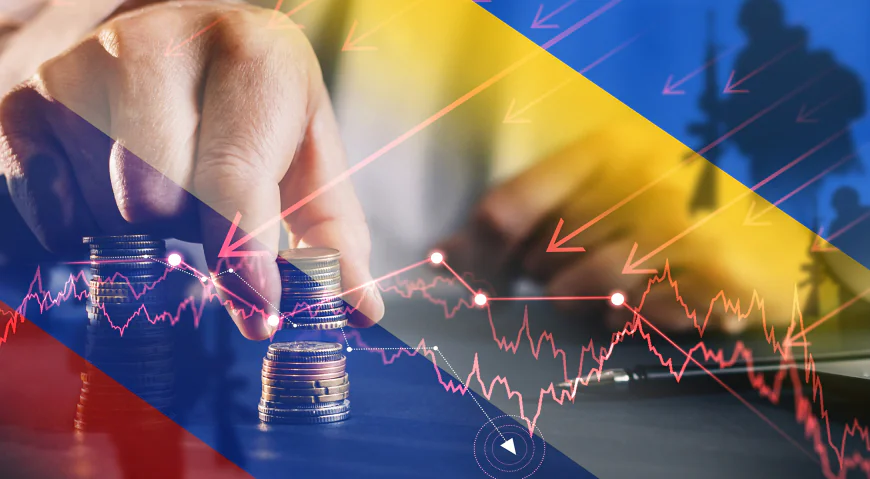
The war in Ukraine is not just being fought on the battlefield — it is also unfolding in bank accounts, stock markets, and international finance.
As Russia struggles to fund its military operations under sanctions, and Ukraine relies heavily on international aid, frozen Russian assets in Europe have become a new frontline.
This financial war has introduced innovative but legally complex measures, with both sides leveraging money, law, and global institutions to gain the upper hand.
What Is Unfolding with the Ukraine vs. Russia Financial War?
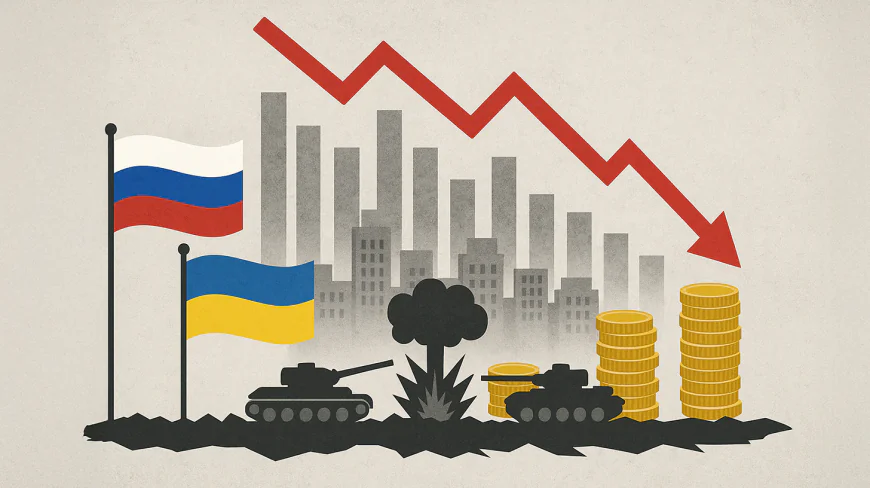
The economic struggle between Ukraine and Russia has evolved into a high-stakes financial war that mirrors the intensity of fighting on the battlefield.
Russia’s economy — long viewed as resilient despite sanctions — is showing signs of deep stress due to prolonged military expenditure, global sanctions, and structural weaknesses.
Analysts note that rising inflation, widening budget deficits, and declining oil and gas revenue have significantly impacted Moscow’s capacity to fund the war.
Prices inside Russia are rising (inflation), meaning everyday goods cost more, and the government has to spend more just to keep things running. At the same time, the government is spending far more than it earns, creating a growing gap in its budget (a budget deficit).
Additionally, Russia is generating less revenue from oil and gas due to sanctions and price caps, which have reduced profits from energy exports. Together, these problems mean Russia has less cash available to fund the war in the way it has traditionally done.
Russia’s oil export earnings, once a reliable backbone of the budget, have plummeted drastically — with revenues falling to less than 4% of GDP from 7.6% year-on-year due to U.S. sanctions targeting major producers, such as Rosneft and Lukoil, as well as broader market discounts.
Hence, despite continued exports, these declining earnings have strained government finances and reduced the state’s war-funding capacity, according to Business Insider.
Meanwhile, Ukraine’s economy, heavily reliant on international financial support, continues to operate under severe stress.
Ukraine’s economy is under intense pressure because the war has disrupted normal business activity and destroyed infrastructure. The country relies heavily on financial aid from other nations and international organisations to sustain its economy.
The war makes the future uncertain; economists have lowered their expectations for Ukraine’s economic growth.
At the same time, the government is spending far more than it earns, creating large budget gaps, as it channels huge amounts of money into military needs and support for civilians affected by the conflict.
External financing remains crucial for sustaining Ukraine’s economy and state functions amid the ongoing conflict.
Behind the scenes, intelligence reports from Ukraine indicate that Russia’s war spending is far higher than official figures suggest, with substantial unreported defence costs and rising non-performing loans that threaten broader financial stability.
According to Ukraine’s Foreign Intelligence Service, Russia has incurred roughly $550 billion in war-related expenditures since 2022, a sum equivalent to decades’ worth of federal health or education budgets, while problematic loans could trigger systemic stress across Russian banks.
Is Europe Trying to Seize Russian Money from Banks?
One of the most contentious financial battlegrounds relates to frozen Russian assets held in Europe. Since Russia’s full-scale invasion of Ukraine in 2022, Western countries immobilised an estimated €210 billion of Russian state and central bank assets within the EU as part of sanctions, according to The Guardian.
These funds — essentially frozen sovereign reserves — have become central to debates over how to help Ukraine while navigating international legal constraints.
The European Union has seized control of substantial Russian funds held in European banks and has decided to keep them frozen for an indefinite period, rather than renewing the sanctions every six months as it had previously done.
This change is significant because it enables the EU to utilise the interest and profits generated from these frozen Russian assets as financial backing for a planned €90 billion loan to Ukraine over the next two years.
In simple terms, Europe is not spending the Russian money itself, but is using it as a guarantee to help fund Ukraine’s wartime support.
Frozen Assets
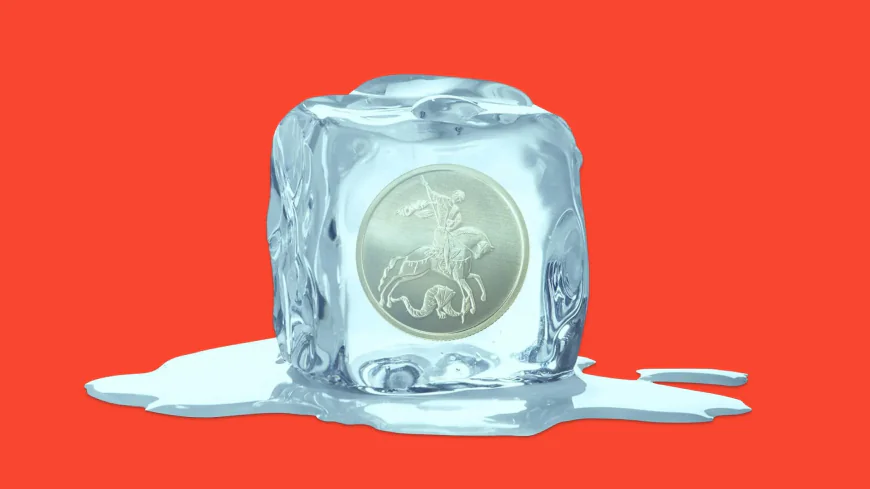
Using frozen Russian assets to directly pay for Ukraine’s support is still highly controversial and legally complicated. International law generally protects a country’s state-owned assets from being taken by other governments, even during conflicts.
The freezing and potential repurposing of Russian central bank reserves — though still constrained by international law — sets an example for how the international financial system responds to aggression.
Governments and banks are devising innovative ways to utilise frozen Russian funds without technically violating the law. One idea is to use these “immobilised” assets as a guarantee for loans — for example, providing Ukraine with a large loan that is backed by Russia’s frozen funds. This is like saying, “We’ll lend you money now, and if there’s a problem, we can fall back on these frozen assets.”
These kinds of arrangements are a type of financial engineering — clever methods for moving and managing money under tricky legal or political constraints.
Experts say this approach could be used in future wars or situations where one country owes reparations to another, showing a new way that finance can influence global conflicts.
Due to this, EU leaders have so far avoided fully confiscating Russia’s money, fearing it could break legal norms, trigger court challenges, or set a precedent that might later be used against European countries themselves.
Russian Response
Russia’s central bank has responded aggressively, filing lawsuits in Moscow against Euroclear — the Belgian financial infrastructure firm that holds much of the immobilised cash — and condemning Western plans as “illegal,” reflecting Moscow’s view that such actions constitute theft.
When European leaders discuss using Russia’s frozen sovereign assets to help fund Ukraine, the Kremlin has responded with a combination of legal threats and broader retaliation warnings. Russian officials have made it clear that Moscow views any attempt to use or confiscate those funds as unlawful.
For example, Russia’s central bank stated that “direct or indirect use of the assets of the Bank of Russia … is illegal and contrary to international law,” and said it plans to challenge proposed uses of frozen assets in courts around the world, including filing a lawsuit in Moscow against Euroclear, the Belgian institution holding much of the cash.
Kremlin allies like Dmitry Medvedev, deputy chairman of Russia’s Security Council, warned that if Europe attempts to seize frozen assets to back a “reparations loan” for Ukraine, those actions “may be classified as a special casus belli — a formal justification for war,” potentially leading to broader conflict consequences.
President Vladimir Putin himself has attacked European plans as tantamount to theft or robbery, saying Western efforts to take control of the frozen funds are “not succeeding” and warning of serious repercussions for those involved, including damage to confidence in the euro and legal claims.
Taken together, these statements show that frozen assets have become more than just a financial tool: they are now a flashpoint in diplomatic and legal confrontation between Russia and Western nations, with Moscow using both judicial threats and broader geopolitical warnings to try to deter Europe from moving forward with plans to leverage those assets in support of Ukraine.
Global Financial Stakes and Market Impact
The financial dimension of the Ukraine–Russia war is not confined to Eastern Europe — it reaches into global markets, influencing inflation, trade, commodity prices, and investor confidence worldwide.
According to analysts, the conflict has disrupted normal economic patterns and increased uncertainty across markets, prompting investors to reassess risk and driving volatility in key sectors such as energy and financial services.
One expert, Joyce Chang, Chair of Global Research, has observed that the Ukraine war has revealed “extreme tension between European energy security and the region’s primary energy supplier,” highlighting how deeply interconnected global markets have become.
International institutions have also emphasised the broader economic consequences. Kristalina Georgieva, Managing Director of the International Monetary Fund (IMF), warned that the conflict in Ukraine remains a major barrier to global economic growth and stressed that ending the war sooner “would be better for the global economy” — a statement reflecting how prolonged geopolitical instability can slow growth, elevate prices, and dampen investment worldwide.
Commodity markets have also been affected. Prices for oil, gas and agricultural products have fluctuated widely in response to supply disruptions and sanctions, with ongoing geopolitical uncertainty continuing to shape investor expectations.
In essence, the financial war over frozen assets, sanctions, and military spending has become embedded in global economic trends.
These developments have not only reshaped national budgets and banking systems but have also reverberated through currency markets, trade flows, energy prices, and investor confidence, illustrating that the conflict’s impact on the global financial system extends far beyond the immediate battlefield.
What's Your Reaction?
 Like
0
Like
0
 Dislike
0
Dislike
0
 Love
0
Love
0
 Funny
0
Funny
0
 Wow
0
Wow
0
 Sad
0
Sad
0
 Angry
0
Angry
0

I’m a freelance writer with a passion for business, lifestyle, and opinion pieces that explore culture, trends, and real-world insights. I bring a perspective that blends professional knowledge with cultural awareness, drawing on my experience in real estate and a keen interest in South Asian lifestyle and culture. I hold a Master’s in Popular Music Practice, and outside of writing, I enjoy playing the flute and reading about philosophy and psychology. I love crafting engaging, thought-provoking stories and am always excited to pitch fresh ideas or take on features that connect communities, trends, and the bigger picture.














Comments (0)