

Israel and Hamas Agree on Hostage Release Plan
Israel and Hamas have reached a breakthrough agreement that could see the release of all remaining hostages in Gaza and a phased ceasefire; a move that, if upheld, may mark the most significant step toward peace since the war’s outbreak. The deal, brokered by the U.S., Egypt, and Qatar, includes a large prisoner swap, Israeli troop withdrawals, and humanitarian provisions. Its success could reshape the region’s political landscape and bring long-awaited relief to civilians, but experts warn that its fragility cannot be underestimated.
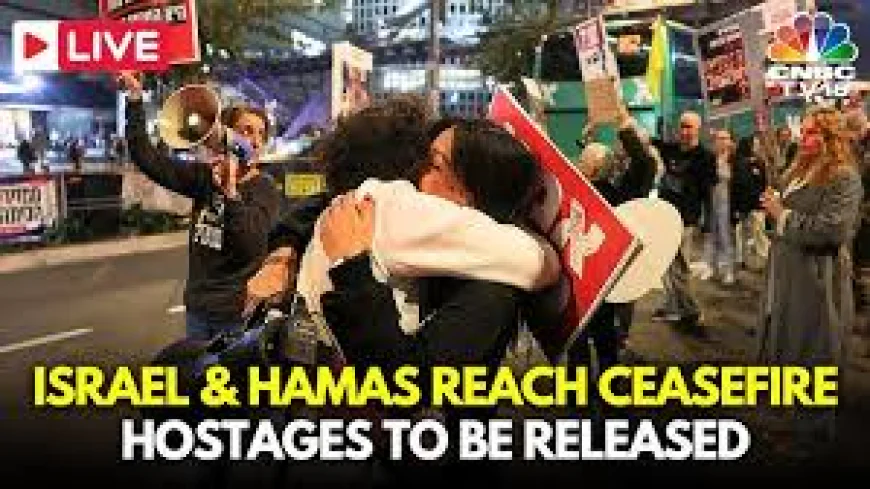
Israel and Hamas Reach Landmark Hostage Deal: A Potential Turning Point for Peace
The Agreement
In a landmark announcement, U.S. President Donald Trump revealed that Israel and Hamas had agreed to the first phase of a comprehensive peace plan to end the Gaza conflict.
The deal stipulates:
-
Release of all remaining hostages held by Hamas both living and deceased within 72 hours of final ratification.
-
Israeli withdrawal from key areas of Gaza to a mutually agreed “initial line.”
-
Prisoner exchange involving the release of around 1,700 Palestinian detainees.
-
Implementation of a temporary ceasefire, monitored by international mediators.
The agreement is expected to serve as the foundation for a broader peace framework, setting the stage for future negotiations on Gaza’s governance, reconstruction, and security arrangements.
Humanitarian and Emotional Relief
For the families of Israeli hostages, the deal offers long-awaited hope. Many have endured years of anguish and uncertainty. A verified release, even of remains, would bring closure to an emotional chapter that has deeply scarred Israeli society.
In Gaza, a ceasefire could allow much-needed humanitarian aid to flow freely again. Thousands of civilians have been displaced, and the enclave’s infrastructure is in ruins. If the deal holds, international agencies could begin large-scale relief operations and medical evacuations almost immediately.
Political and Diplomatic Stakes
The agreement also carries high political weight. For Israel’s leadership, securing the hostages’ release is a moral and political imperative. For Hamas, the exchange represents a strategic victory that could bolster its legitimacy among Palestinians and the wider Arab world.
Diplomatically, the deal underscores the pivotal role of Egypt, Qatar, Turkey, and the United States in mediating Middle Eastern conflicts. It’s a visible win for Washington, whose administration has sought to reassert its influence after years of regional skepticism.
In the longer term, the deal could reshape alliances from Arab states reconsidering normalization with Israel, to Western governments re-evaluating aid and reconstruction plans for Gaza.
Fragility and Risks
While the news has been greeted with optimism, the path forward is uncertain. Similar ceasefires and prisoner swaps have collapsed under pressure in the past.
Analysts highlight several potential risks:
-
Hardline resistance within Israel’s coalition government, which may view the concessions as too lenient.
-
Internal divisions within Hamas, where splinter groups could defy ceasefire terms.
-
Implementation delays, especially regarding Israeli troop withdrawal or the sequencing of prisoner releases.
-
External interference from actors like Hezbollah or Iran that might seek to derail the peace process.
Without strict monitoring and international guarantees, even a minor violation could reignite fighting and unravel the fragile trust built through negotiations.
Global and African Significance
For the global community — including Egypt and Africa — the deal’s success would signal that diplomacy can still prevail where war has failed. African leaders, many of whom have advocated for peaceful resolution to global conflicts, are watching closely.
A sustained ceasefire could:
-
Encourage African Union support for post-war humanitarian operations.
-
Open doors for African-led NGOs to participate in Gaza’s reconstruction.
-
Serve as a case study for conflict mediation and hostage diplomacy across the continent.
If it fails, however, it may reinforce global skepticism about the durability of Middle East peace efforts.
If the Deal Holds
Should the parties follow through, the consequences would be historic:
-
Hostages reunited with families — ending one of the war’s most painful sagas.
-
Ceasefire sustained — potentially leading to a long-term end to hostilities.
-
Humanitarian relief accelerated, easing civilian suffering in Gaza.
-
Political momentum for future peace talks between Israel and Palestinian representatives.
But if implementation falters, the backlash could be severe deepening distrust and fueling another cycle of violence.
Conclusion
The Israel–Hamas hostage release deal represents more than a diplomatic handshake; it’s a test of will, credibility, and compassion on both sides. For millions yearning for peace, it’s a glimmer of hope in a landscape defined by loss.
Whether that hope endures now depends not on what was signed, but on what will be done in the crucial days and weeks ahead.
Source:
TheNewYorkTimes/Reuters/IsraelTimes/CNBCNews
What's Your Reaction?
 Like
0
Like
0
 Dislike
0
Dislike
0
 Love
0
Love
0
 Funny
0
Funny
0
 Wow
0
Wow
0
 Sad
0
Sad
0
 Angry
0
Angry
0

Shirley Ama Acquah Content Creator | Copywriting Specialist | Digital Content Strategist A dynamic storyteller with a sharp editorial eye, I craft compelling content that engages audiences and drives meaningful conversations. With a background in [persuasive writing, digital media,social media marketing], I specialize in high-impact copywriting, from SEO-driven articles and persuasive marketing copy to in-depth entertainment reviews and trend analysis. My work bridges creativity and strategy, whether dissecting the latest streaming trends, developing brand narratives, or optimizing content for maximum reach. I don’t just write; I create experiences that resonate with readers and convert casual viewers into loyal followers. Key Strengths: ✔ Versatile Content Creation (blogs, scripts, social media, SEO) ✔ Entertainment & Pop Culture Analysis (TV, film, streaming trends) ✔ Brand & Audience-First Writing (tone-adaptive, platform-optimized) ✔ Data-Informed Storytelling (analytics meets creativity) Let’s collaborate or connect: [amaboah23@gmail.com]


















Comments (0)