

Fire, Finance, and Friction: Inside COP 30’s Turbulent Finish in Belém
Brazil’s hosting of COP 30 in Belém brought landmark commitments on adaptation finance, just transition, forest conservation, and climate-resilient governance, but the summit ended with disappointment after negotiators failed to agree on a fossil fuel phase-out and watered down scientific language. A fire at the venue, soaring accommodation costs, and Brazil’s own environmental contradictions added tension to an already contentious conference.
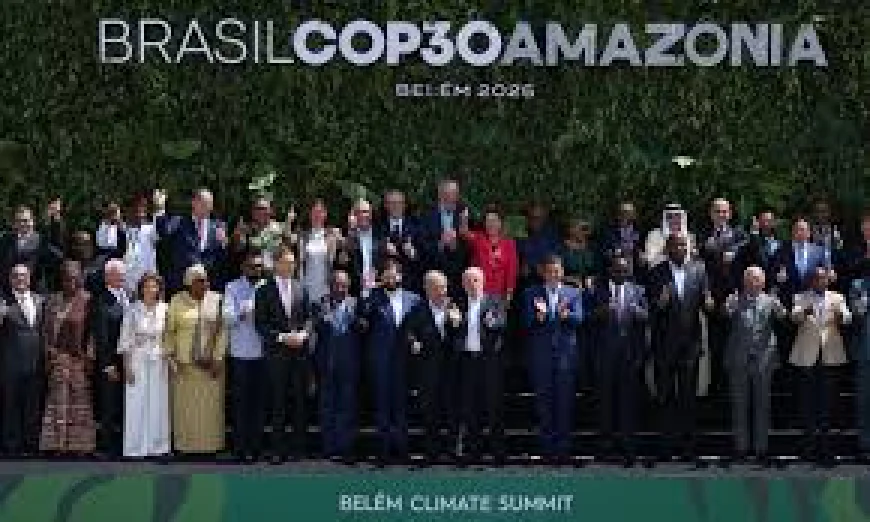
Brazil's COP 30 Summit Delivers Ambition and Anxiety as Nations Clash Over Fossil Fuels and Finance
COP 30 opened in Belém, Brazil, with high expectations and urgent warnings as world leaders gathered under the canopy of the Amazon to confront accelerating climate disasters. Positioned as a summit of implementation rather than negotiation, the conference aimed to transform long-standing promises into concrete climate action and Brazil, as host, sought to project global leadership while grappling with internal contradictions. By the time the talks ended, countries had secured progress on adaptation funding, just transition frameworks, and forest finance, but divisions over fossil fuels, scientific consensus, and Indigenous protections exposed the fragile fabric of international climate cooperation.
Historic Gains on Adaptation — But Compromises Loom Large
One of the most significant outcomes was the decision to triple global adaptation finance by 2035, a move championed by climate-vulnerable nations. Delegates also finalized 59 new indicators under the Global Goal on Adaptation (GGA), offering a clearer roadmap to measure resilience efforts.
Despite this, negotiators watered down baseline commitments and extended timelines prompting activists to warn that the gains risk becoming “ambition on paper.”
A New Just Transition Mechanism Takes Shape
COP 30 formally established a just transition mechanism, the first to be integrated into UN climate architecture. The framework links climate action to labor rights, equity, and social protections, acknowledging that millions of workers in traditional industries need support as economies shift to renewable energy.
Brazilian officials hailed the mechanism as “a milestone for fairness,” though its implementation details remain to be determined.
Fossil Fuel Fight Ends in a Stalemate
Hopes for a historic pledge to phase out fossil fuels quickly unraveled.
While the final text recognizes the dangers of overshooting the 1.5 °C threshold, negotiators failed to produce a fossil fuel roadmap largely due to pressure from oil-producing nations.
Brazil backed a parallel initiative guiding fossil fuel transition, but because it was outside the official UN text, campaigners dismissed it as symbolic, not binding.
Brazil Pushes Forest Protection, But Deforestation Language Softens
The host country showcased the Tropical Forests Forever Facility, a major financing instrument aimed at protecting rainforests through long-term payments and Indigenous inclusion. Billions were pledged.
Yet strong language on zero deforestation by 2030 was dropped. Environmental groups said the watered-down text “undercuts the urgency” of Amazon protection.
Trade, Methane, and Housing Take Center Stage
For the first time, the COP included trade-related climate dialogues, acknowledging the growing collision between decarbonization and global commerce.
New initiatives also emerged:
-
No Organic Waste (NOW) Plan to reduce methane emissions
-
Belém Call for Action on climate-resilient, affordable housing
-
Belém Health Action Plan backed by more than 80 governments
These programs reflect a shift toward linking climate action with public health, housing, and food systems.
Fire and Controversy Shake the Summit
A dramatic fire inside a COP 30 pavilion forced evacuations and left 13 people treated for smoke inhalation, fueling concerns about rushed venue construction.
Beyond the blaze, Belém’s limited accommodation capacity triggered outrage. Delegates reported soaring hotel prices, and Brazil rejected UN appeals for broad subsidies, raising fears about the summit’s inclusivity.
Scientific Tensions and Indigenous Concerns
In a surprise move, the final text failed to reaffirm the IPCC as the gold standard for climate science.
Instead, it referenced “regional scientific bodies,” a shift scientists called “dangerous” and “politicized.”
Indigenous leaders central to Amazon conservation said they were sidelined in key negotiations despite their contributions to several finance mechanisms.
A Summit of Momentum and Missed Opportunities
COP 30 ultimately delivered a suite of practical tools for adaptation, transition, and forest stewardship but avoided confronting the core driver of global warming: fossil fuels.
Brazilian officials praised the outcomes as a “collective leap forward,” but many observers say future COPs must close the widening gap between climate ambition and political reality.
Source:
The Guardian/ Reuters/ AP News
What's Your Reaction?
 Like
0
Like
0
 Dislike
0
Dislike
0
 Love
0
Love
0
 Funny
0
Funny
0
 Wow
0
Wow
0
 Sad
0
Sad
0
 Angry
0
Angry
0

Shirley Ama Acquah Content Creator | Copywriting Specialist | Digital Content Strategist A dynamic storyteller with a sharp editorial eye, I craft compelling content that engages audiences and drives meaningful conversations. With a background in [persuasive writing, digital media,social media marketing], I specialize in high-impact copywriting, from SEO-driven articles and persuasive marketing copy to in-depth entertainment reviews and trend analysis. My work bridges creativity and strategy, whether dissecting the latest streaming trends, developing brand narratives, or optimizing content for maximum reach. I don’t just write; I create experiences that resonate with readers and convert casual viewers into loyal followers. Key Strengths: ✔ Versatile Content Creation (blogs, scripts, social media, SEO) ✔ Entertainment & Pop Culture Analysis (TV, film, streaming trends) ✔ Brand & Audience-First Writing (tone-adaptive, platform-optimized) ✔ Data-Informed Storytelling (analytics meets creativity) Let’s collaborate or connect: [amaboah23@gmail.com]
















Comments (0)