

Kojo Forex Reacts to GH¢1 Fuel Price Reduction, Urges Long-Term Economic Reforms
Ghanaian forex trader Kojo Forex acknowledges the GH¢1 per liter fuel price reduction but emphasizes the need for structural reforms to stabilize the cedi and promote sustainable economic growth.
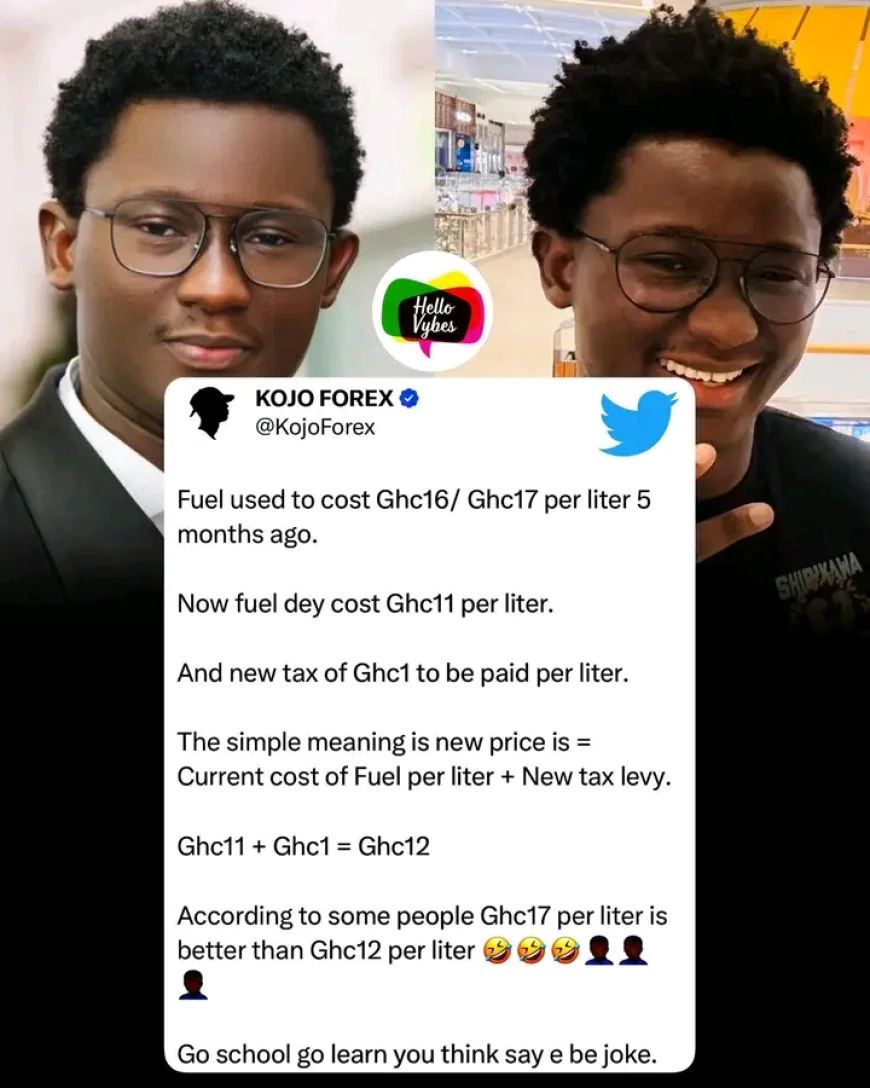
Ghanaian forex trader and financial influencer Kojo Forex has weighed in on the recent GH¢1 per liter reduction in fuel prices, calling it a welcome but temporary measure. While the decision provides immediate relief to consumers, Kojo insists that long-term solutions are needed to address the underlying economic issues driving the crisis.
Short-Term Relief for Consumers
The Ghana Chamber of Bulk Oil Distributors (CBOD) announced a significant reduction in fuel prices, expected to reach up to GH¢1 per liter, following successful foreign exchange negotiations with the Bank of Ghana. This move is aimed at easing the burden on consumers amid rising transportation and living costs.
Kojo Forex praised the development, noting that it would offer some relief to everyday Ghanaians. However, he stressed that such interventions are short-lived if deeper economic challenges remain unaddressed.
Cedi Depreciation at the Core
Kojo pointed out that the persistent depreciation of the Ghanaian cedi, which has reportedly fallen to US$15.40, is a core driver behind high fuel prices and import-induced inflation. He emphasized that as long as the currency continues to weaken, fuel prices and the overall cost of living will remain unstable.
Despite liquidity support measures from the Bank of Ghana, the cedi’s fall continues to erode purchasing power, contributing to economic instability.
A Call for Structural Change
In a strongly worded message, Kojo Forex urged the government to prioritize structural reforms over short-term relief. These reforms should include:
-
Boosting local production to reduce import dependency
-
Implementing fiscal discipline
-
Strengthening the industrial and manufacturing sectors
-
Diversifying the economic base
According to Kojo, these actions will help build a resilient and self-sustaining economy, better able to withstand external shocks and global volatility.
Conclusion: A Voice for Reform
Kojo Forex’s response to the GH¢1 per liter fuel price reduction reinforces the need for informed public discourse on Ghana’s economic trajectory. While temporary relief is welcome, the country must look beyond stopgap measures and focus on systemic solutions.
His remarks serve as a timely reminder that economic recovery and growth require visionary leadership, policy consistency, and a commitment to structural reform.
Date: June 5, 2025
By: The Hub Web News Desk
What's Your Reaction?
 Like
0
Like
0
 Dislike
0
Dislike
0
 Love
0
Love
0
 Funny
0
Funny
0
 Wow
0
Wow
0
 Sad
0
Sad
0
 Angry
0
Angry
0

Padmore Yankey is a young researcher and writer with a growing interest in policy, leadership, governance, and social development. His work focuses on exploring ideas that shape society, influence public discourse, and inspire young people to engage in meaningful change. Through research and writing, he seeks to contribute to conversations on development, education, and youth participation across Africa. He is passionate about using words and research as tools for impact, advocacy, and intellectual engagement. Padmore continues to build his experience through academic, leadership, and professional platforms that allow him to communicate ideas, analyze issues, and contribute to policy-oriented discussions.
















Comments (1)