
World Cup 2026 Controversy: USA Blocks Fans from Iran and Haiti
As the world prepares for one of its most inclusive events, a defining question emerges: Can the U.S. uphold the spirit of the World Cup while enforcing restrictive travel policies?
 Kamilah Abbas
The 2026 FIFA World Cup, set to be hosted across the United States, Canada, and Mexico, was expected to be a landmark event showcasing global unity, cultural exchange, and sporting celebration.
However, recent U.S. immigration policy—specifically Proclamation 10949—has sparked controversy by restricting visa issuance to citizens from twelve countries, including Iran and Haiti.
The Story Behind the Ban
In June 2025, President Trump signed Proclamation 10949, expanding a travel ban to fully restrict visa issuance for citizens from 12 countries, including Haiti and Iran
According to Forbes, the Trump administration’s rationale was that these countries pose national security risks, have high visa overstay rates, or lack adequate screening systems.
However, athletes, coaches, support staff, and immediate family travelling for major events — such as the 2026 World Cup — are exempt, meaning teams from Iran and Haiti can participate
According to the Washington Examiner, Haitian soccer fans are explicitly excluded from waiver allowances — they “may still submit visa applications … but … may be ineligible for visa issuance … except in very rare ‘national-interest’ cases.”
Additionally, a Yahoo Sports analysis makes clear that while players and a narrow circle of team personnel are exempt, “thousands of supporters … face almost automatic denial of entry” — particularly from Haiti and Iran, which have already secured World Cup qualification.
The policy has drawn sharp criticism because it undermines the idea of the World Cup being an inclusive, global event.
Political Implications & U.S. Position Globally
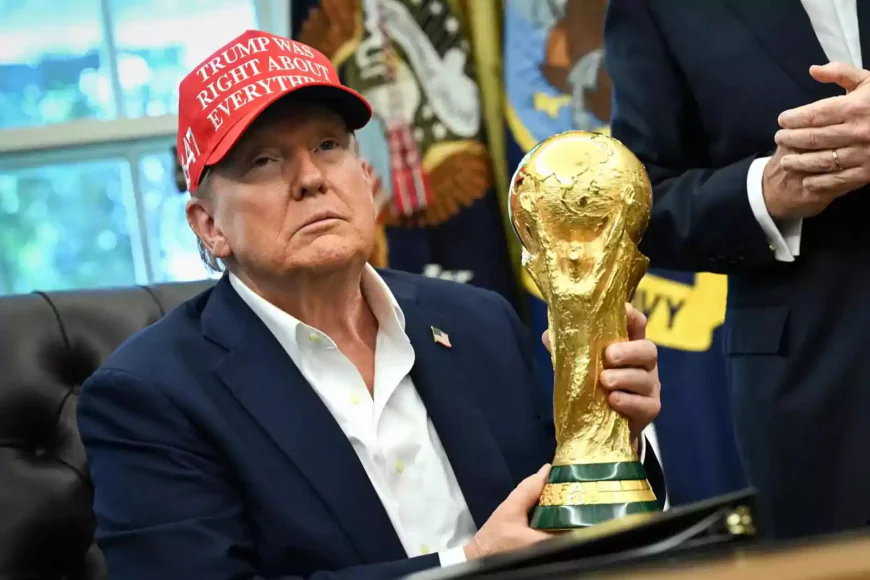
Image from La Derecha Diario
The exclusion of fans from Haiti and Iran risks commodifying the World Cup as a political tool rather than a purely sporting event.
For Iran, especially, this decision has sparked outrage. Iranian voices argue that political differences shouldn’t translate into discrimination against ordinary citizens
Behnam Jafarzadeh, writer for Varzesh3, notes, “If the US government has issues with the Iranian regime … it should not result in discrimination against Iranian citizens … If someone hasn’t committed any illegal activity, why should they be punished?”
Some commentators warn that blocking fans from certain nations could damage the U.S.’s image as a global host, particularly at a moment when the world will be watching.
As The Guardian noted, “If strict entry rules remain … we should focus on protecting football. This is supposed to be a celebration of sport.”
This sentiment reflects a growing concern that the World Cup — traditionally a symbol of unity, cultural exchange, and inclusivity — could instead become entangled in political tensions, visa disputes, and accusations of selective hospitality.
The exclusion of ordinary fans, especially from qualified nations like Iran and Haiti, risks creating the uncomfortable image of a World Cup that welcomes teams for commercial and diplomatic gain, but not their supporters — the soul and energy of international football.
Many Haitian supporters feel excluded from what should be a shared moment of national pride.
There is anger and disappointment that, despite their team making it to the World Cup, many fans cannot physically support them in the U.S.
On a diplomatic level, these restrictions feed into broader narratives that the U.S. applies its immigration rules selectively, favouring political allies while disadvantaging others.
For countries affected — particularly those already critical of U.S. policy — this could reinforce perceptions of American unilateralism and selective engagement with the global community.
American unilateralism refers to when the United States takes actions or makes decisions on its own—without seeking approval, cooperation, or agreement from other countries or international organisations.
It often means the U.S. follows its own interests and policies, even if other countries disagree or prefer a more cooperative, global approach.
Reactions and Future Steps

Human rights groups, football fans, and media outlets have condemned the travel ban’s impact on Iran and Haiti, framing it as antithetical to the spirit of the World Cup.
These critics argue that the World Cup is meant to be a celebration of global unity, inclusivity, and cultural exchange.
By excluding fans from entire nations due to political or immigration restrictions, the U.S. is seen as undermining these core principles. Human rights advocates say this violates fairness and equality, while football fans emphasise that passion for the game should transcend politics.
“‘Sports diplomacy can act as a strong catalyst… It could be a great opportunity to help advance diplomacy…,’ says Mohammad Reza Manafi, political commentator and fan. Yet the U.S. ban on Iranian and Haitian fans threatens to squander this chance to build bridges through football.”
FIFA officials, including President Gianni Infantino, have echoed inclusive rhetoric (“fans from all over the world will be welcome”), but the U.S. policy undercuts this promise.
FIFA publicly claims that all nations’ supporters should be able to attend the tournament.
However, U.S. immigration restrictions directly contradict this and create tension between FIFA’s global values and the practical realities of hosting in a country with strict immigration controls.
Some suggest that matches involving Iran could be scheduled in Mexico or Canada (the co-hosts) to circumvent the effects of the ban.
Since the 2026 World Cup is jointly hosted by the U.S., Mexico, and Canada, one proposed solution is to hold Iran’s matches in Mexico or Canada, where travel restrictions are less severe.
This would allow Iranian fans to attend games — but it raises logistical challenges and highlights the awkwardness of hosting a “global” event in a country imposing national bans.
If fans from Iran and Haiti are largely barred, it could spark boycotts, negative press, and damage to the legitimacy of the World Cup as a global event.
Excluding the supporters of certain nations could provoke an international backlash, with potential calls for boycotts by teams, sponsors, or fan groups.
Moreover, media coverage would likely focus on political controversy rather than sport, overshadowing the tournament.
As the 2026 World Cup approaches, the travel restrictions affecting supporters from Iran and Haiti pose more than just logistical challenges—they raise fundamental questions about inclusivity, fairness, and the role of politics in global sport.
There is a risk of overshadowing the tournament’s celebratory purpose, painting a picture of a World Cup that welcomes the teams but shuts out the people who give the game its heart: the fans.