

White House Unveils Gaza Peace Plan: Ceasefire, Hostages and a Trump-Led ‘Board of Peace’
The White House has unveiled a 20-point Gaza peace blueprint promising an immediate ceasefire, hostage releases within 72 hours, prisoner exchanges, Gaza’s demilitarization, and a new international governance framework led by a U.S.-chaired “Board of Peace.” While Israel has backed the plan and Arab states have cautiously welcomed it, critics warn it sidelines Palestinian sovereignty and gives foreign leaders outsized control over Gaza’s future.
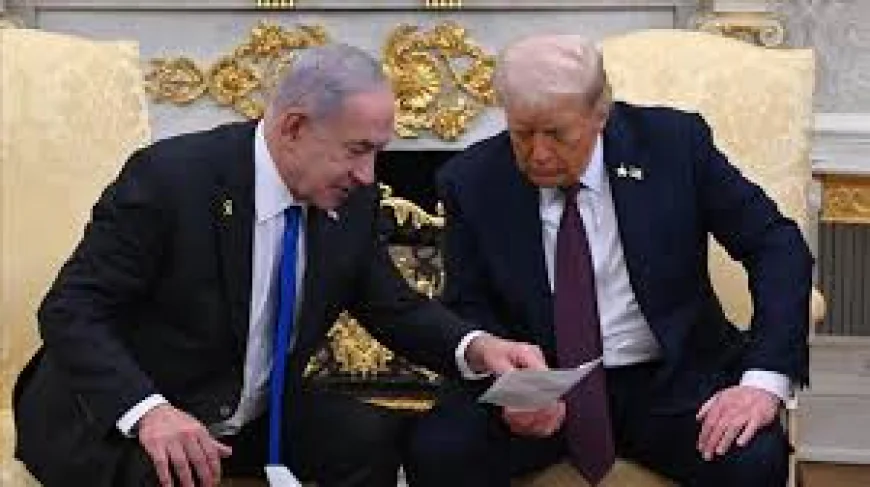
Inside the U.S. 20-Point Gaza Deal: Ceasefire, Prisoner Swap and Reconstruction
The White House has laid out a sweeping 20-point plan it says could stop the war in Gaza “immediately” if both Israel and Hamas agree. Presented by President Donald Trump alongside Israeli Prime Minister Benjamin Netanyahu, the proposal outlines a pathway from ceasefire to reconstruction, anchored by strict conditions on security, governance, and funding.
Ceasefire and hostage deal
At the heart of the proposal is an immediate cessation of hostilities. Once accepted, all hostages held in Gaza estimated at around 48 would be released within 72 hours. In exchange, Israel would free thousands of Palestinian prisoners, including some serving life sentences. U.S. officials describe this as a vital confidence-building measure.
Security and demilitarization
The plan demands the dismantling of Hamas’s military infrastructure, including tunnels, rocket stockpiles, and command centers. An International Stabilization Force and independent monitors would oversee compliance. Hamas members who surrender weapons would be offered amnesty or safe passage out of Gaza, a measure aimed at reducing armed resistance.
Governance under a “Board of Peace”
In a controversial move, Gaza would not be handed to Hamas or the Palestinian Authority immediately. Instead, a technocratic Palestinian committee would manage daily governance, overseen by an international “Board of Peace” chaired by President Trump and including figures such as former UK Prime Minister Tony Blair.
The board would control reconstruction funds, security reform, and political transition until Palestinian institutions meet new standards. Supporters argue this ensures neutrality; critics say it undermines Palestinian sovereignty and risks creating a Western-led trusteeship.
Reconstruction and aid
Billions in aid are earmarked for Gaza’s rebuilding, with funds tied to strict verification of demilitarization and governance reforms. The U.S. says international oversight will prevent money from being diverted to armed groups. Proposed projects include infrastructure rebuilding and economic initiatives to create jobs and stabilize Gaza’s economy.
Regional and international reactions
Israel has endorsed the proposal, while Egypt and Qatar have welcomed it and shared the text with Hamas negotiators. Jordan, the UAE, Saudi Arabia, and Turkey also expressed cautious support.
Hamas is reviewing the plan but has signaled resistance to disarming and ceding authority. Human rights groups and Palestinian advocates criticized the governance structure, saying it excludes Hamas and places too much control in foreign hands.
Key criticisms
Observers point to unresolved issues:
-
Representation: Excluding Hamas may undermine legitimacy.
-
Sovereignty: Foreign-led governance risks fueling resentment.
-
Verification: Enforcement of demilitarization remains unclear.
-
Humanitarian urgency: Aid is delayed by conditional reforms.
What’s next
Regional mediators, including Qatar and Egypt, are expected to intensify negotiations with Hamas in the coming weeks. The White House is also lobbying allies to commit reconstruction funds.
For now, the plan is the most detailed U.S. attempt yet to chart a comprehensive endgame for Gaza, one that promises hostages freed, rockets silenced, and rebuilding underway, but only if both sides make painful concessions.
Source:
DWNews
What's Your Reaction?
 Like
0
Like
0
 Dislike
0
Dislike
0
 Love
0
Love
0
 Funny
0
Funny
0
 Wow
0
Wow
0
 Sad
0
Sad
0
 Angry
0
Angry
0

Shirley Ama Acquah Content Creator | Copywriting Specialist | Digital Content Strategist A dynamic storyteller with a sharp editorial eye, I craft compelling content that engages audiences and drives meaningful conversations. With a background in [persuasive writing, digital media,social media marketing], I specialize in high-impact copywriting, from SEO-driven articles and persuasive marketing copy to in-depth entertainment reviews and trend analysis. My work bridges creativity and strategy, whether dissecting the latest streaming trends, developing brand narratives, or optimizing content for maximum reach. I don’t just write; I create experiences that resonate with readers and convert casual viewers into loyal followers. Key Strengths: ✔ Versatile Content Creation (blogs, scripts, social media, SEO) ✔ Entertainment & Pop Culture Analysis (TV, film, streaming trends) ✔ Brand & Audience-First Writing (tone-adaptive, platform-optimized) ✔ Data-Informed Storytelling (analytics meets creativity) Let’s collaborate or connect: [amaboah23@gmail.com]
















Comments (0)