

‘We Can Finally Breathe’: Gazans Journey Back Home After Ceasefire Begins
After months of relentless conflict, a fragile ceasefire between Israel and Hamas took effect today, prompting thousands of displaced Palestinians to make their way back to Gaza. Many return to find their homes in ruins but cling to hope that this truce could mark the first real step toward peace and reconstruction.
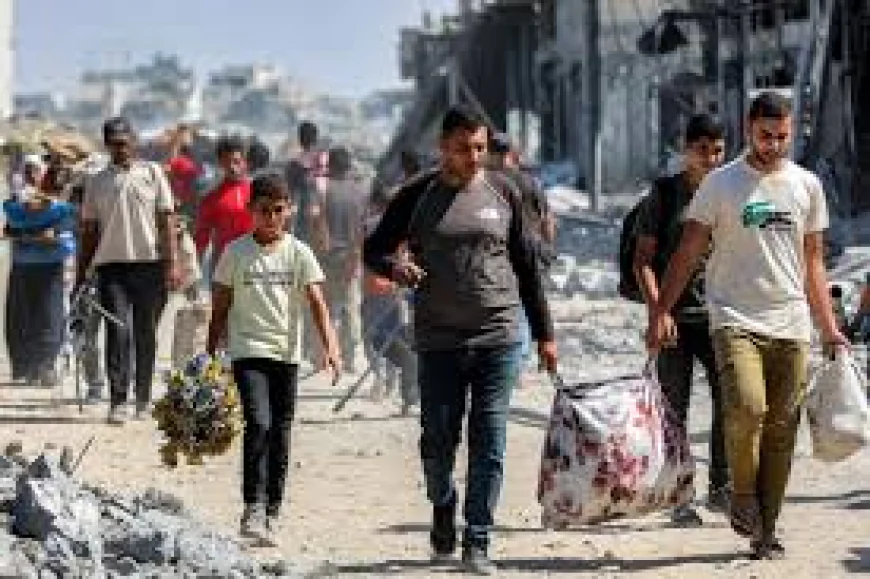
Thousands of Palestinians Return Home as Gaza Ceasefire Takes Hold
Under a pale morning sky, thousands of weary Palestinians began the long walk back to Gaza today; some clutching children, others dragging bags of belongings. For the first time in months, the distant sound of shelling has fallen silent. A ceasefire between Israel and Hamas has finally taken effect, offering a fragile pause in a war that has displaced millions and left Gaza in ruins.
Ceasefire Begins, Troops Pull Back
A long-awaited ceasefire between Israel and Hamas officially began at noon on Friday, October 10, 2025, bringing a cautious sense of relief to millions across the region. The agreement, brokered by the United States, Egypt, and Qatar, aims to end one of the bloodiest phases of the conflict and initiate a prisoner-hostage exchange.
Under the deal:
-
Hamas will release approximately 20 Israeli hostages within 72 hours.
-
Israel will free 250 long-term Palestinian prisoners and over 1,700 detainees captured during the recent fighting.
-
Israeli forces will withdraw from major urban centers in Gaza, though they will retain control of key buffer zones.
-
Humanitarian aid will resume at full scale, with hundreds of trucks expected to enter Gaza daily.
The Israeli military confirmed that its troops have started pulling back from Gaza City and Khan Younis, marking the first major troop withdrawal in months.
A Painful Homecoming
As word of the ceasefire spread, thousands of displaced Palestinians began trekking back north, some on foot, others by donkey carts or crowded vehicles. Families carried plastic bags, jerry cans, and blankets, all they had left after months of bombardment.
In northern Gaza, Ismail Zayda, a resident of Sheikh Radwan, said, “My house is still standing, but the street is gone. Everything else has turned to dust.”
For many, returning home is bittersweet. The ruins of Gaza City, Beit Hanoun, and Khan Younis stand as grim reminders of the human cost of war. Entire neighborhoods have vanished, and essential services; water, electricity, and sanitation remain crippled.
Still, for those who have endured months of displacement, the ability to walk back onto their land is deeply emotional. Some knelt to kiss the soil, whispering prayers of gratitude and grief.
Humanitarian and Political Stakes
Humanitarian organizations are racing to deliver aid, food, and medical supplies as Gaza teeters on the brink of collapse. The United Nations has warned that over 80% of Gaza’s infrastructure has been damaged or destroyed, making reconstruction a monumental task.
Politically, the ceasefire represents a crucial test for both sides. For Israel, Prime Minister Benjamin Netanyahu faces mounting domestic pressure to ensure that Hamas is disarmed before any permanent peace is established. For Hamas, adherence to the truce could redefine its standing both regionally and internationally.
Observers caution that a single violation; a stray rocket or airstrike could unravel the fragile peace.
A Glimmer of Hope Amid the Rubble
Despite the uncertainty, many Gazans say the ceasefire offers a chance to start again. “We’ve lost everything, but at least we can breathe again,” said Layla Hassan, a mother of three from Rafah.
International monitors are expected to oversee the ceasefire’s implementation, while rebuilding plans backed by Qatar, the EU, and the UN, begin to take shape.
For the first time in months, Gaza’s skies are quiet. Whether this marks the end of war or merely a pause remains to be seen, but for now, Palestinians are walking home, carrying both grief and hope.
Source:
Reuters/TheGuardian/DailyMail
What's Your Reaction?
 Like
0
Like
0
 Dislike
0
Dislike
0
 Love
0
Love
0
 Funny
0
Funny
0
 Wow
0
Wow
0
 Sad
0
Sad
0
 Angry
0
Angry
0

Shirley Ama Acquah Content Creator | Copywriting Specialist | Digital Content Strategist A dynamic storyteller with a sharp editorial eye, I craft compelling content that engages audiences and drives meaningful conversations. With a background in [persuasive writing, digital media,social media marketing], I specialize in high-impact copywriting, from SEO-driven articles and persuasive marketing copy to in-depth entertainment reviews and trend analysis. My work bridges creativity and strategy, whether dissecting the latest streaming trends, developing brand narratives, or optimizing content for maximum reach. I don’t just write; I create experiences that resonate with readers and convert casual viewers into loyal followers. Key Strengths: ✔ Versatile Content Creation (blogs, scripts, social media, SEO) ✔ Entertainment & Pop Culture Analysis (TV, film, streaming trends) ✔ Brand & Audience-First Writing (tone-adaptive, platform-optimized) ✔ Data-Informed Storytelling (analytics meets creativity) Let’s collaborate or connect: [amaboah23@gmail.com]


















Comments (0)