

Rethinking Diaspora Parenting and Youth Crime in the UK: A Case of the Ghanaian Community
Summary This article argues that a crisis of youth crime involving young people of Ghanaian descent in the UK is a symptom of deeper systemic failures within the diaspora. It posits that the root causes are not simply individual moral failings but a combination of factors: unprepared immigrant parents facing economic hardship, the collapse of the traditional extended family support system, a high rate of family breakdown that leaves single mothers isolated, and a destructive cultural collision between authoritarian Ghanaian parenting styles and British laws and social norms. The author contends that this combination of economic marginalisation, cultural dislocation, and broken homes creates a vacuum that gang culture fills, leading to tragic outcomes documented in recent criminal cases. Description Rethinking Diaspora Parenting and Youth Crime in the UK: A Case of the Ghanaian Community by Kofi Ofori-Mensah examines the alarming trend of serious crimes committed by British-Ghanaian youth, including murder, robbery, and fraud. Moving beyond surface-level explanations, the article delves into the lived realities of Ghanaian immigrants, highlighting how economic pressure forces families into high-crime areas and how the absence of a communal village-style upbringing leaves parents isolated. It critically examines the breakdown of traditional marriages within the diaspora, the role of single mothers struggling to raise sons alone, and the legal and cultural conflicts that arise when Ghanaian disciplinary practices meet British child protection laws. Through case studies and academic research, the piece issues a stark warning and calls for community-led interventions, including parenting programmes and support for single mothers, to address what it describes as a preventable crisis.

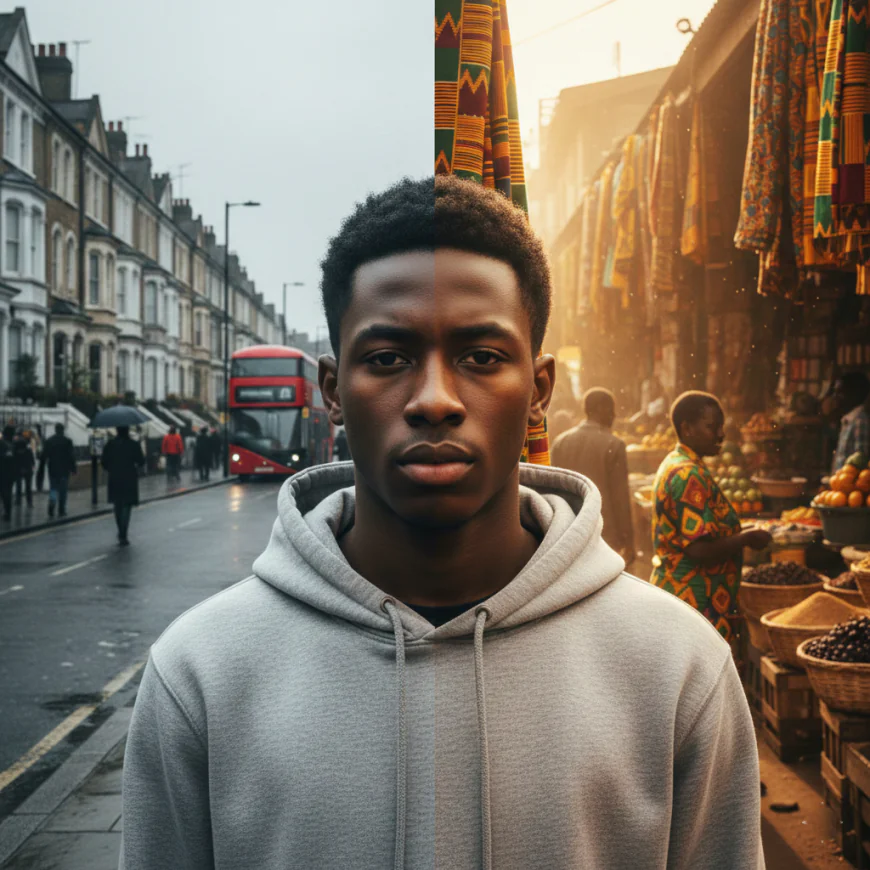
The statistics are stark. The names are becoming tragically familiar. In recent months, British courts have convicted multiple young people of Ghanaian descent for offences ranging from murder and gun crime to cryptocurrency robbery and violent assault. These are not isolated incidents but symptoms of a deepening crisis within the Ghanaian diaspora in the United Kingdom, rooted in failed preparation, economic marginalisation, and the collapse of traditional family structures.
The Grim Roll Call
The evidence is now overwhelming. In February 2026, 18-year-old Neo Duodu-Watson was found guilty of the premeditated daylight murder of 16-year-old Lathaniel Burrell in Stockwell (reported by BBC News, London, February 2026). Duodu-Watson approached his victim disguised as a food delivery rider, shot him with a converted firearm, and fled the scene. Police described it as gang-related (BBC News, London, February 2026).
That same month, Omar Prempeh, 33, was also convicted in connection with the same killing (The Guardian, London, February 2026).
Earlier, a 17-year-old boy of Ghanaian parentage received a life sentence with a minimum term of 23 years for the murder of 15-year-old Elianne Andam in Croydon (reported by BBC News, London, January 2024), a fatal stabbing that shocked south London.
Then there is Daniel Boakye. In 2023, then 18, Boakye was part of a gang that carried out violent knifepoint robberies across London, stealing mobile phones and accessing cryptocurrency worth over £155,000 (reported by Evening Standard, London, August 2023). Victims were threatened with knives and forced to unlock their devices. Boakye received a sentence of six years and five months (Evening Standard, London, August 2023). In February 2026, he escaped from HMP Feltham during a hospital visit, triggering a London-wide manhunt before being recaptured in Thamesmead (BBC News, London, February 2026).
Princess Owusu-Ansah, 18, from Hertfordshire, poured boiling water over her friend's body, stabbed her in the leg, and filmed the attack. The footage went viral on Snapchat. She received three years (BBC News, Hertfordshire, 2024).
And beyond these violent crimes, five men described as being of Ghanaian descent were recently jailed for operating an elaborate online romance fraud and money-laundering scheme that defrauded victims of over £2 million (The Guardian, London, 2024). This is not a random pattern. This is a community in crisis.
The Root Cause: Unprepared Immigrants, Unstable Foundations
The uncomfortable truth is that many Ghanaian immigrants arriving in the UK are unprepared for the realities of Western parenthood. They come with dreams of economic prosperity but lack the cultural, psychological, or practical tools to raise children in an environment hostile to traditional African parenting methods.
The first-generation immigrant experience is brutal. Parents arrive and face relentless economic pressure. They work multiple jobs, often in low-paid, precarious employment, and put in long hours. They live in high-crime areas because those are the only places they can afford, where gang culture is endemic, and their children are exposed to violence, drugs, and criminal exploitation from an early age.
One Ghanaian mother in the UK captured the constant terror: "When I expect my child to return from school at 3:30 and he or she isn't home at that time, I begin to panic. So many things go on in the country that make you very afraid when your child is out at a certain time. It is stressful raising children in the UK" (The Conversation, UK edition, 2023).
In Ghana, an extended family network provides backup: grandparents, aunts, uncles, and neighbours all share responsibility for a child's upbringing. In the UK, that support system vanishes. Parents are isolated, exhausted, and left alone to manage teenagers who rapidly absorb Western values that contradict everything their parents believe.
The Broken Home Epidemic
Perhaps the most destructive force driving young Ghanaian men into criminality is the epidemic of family breakdown within the diaspora. The rate of separation and divorce among Ghanaian couples in the UK is devastating communities and leaving single mothers unequipped to control and protect their sons.
The crisis is so severe that it has spawned its own grim vocabulary. Stories circulate on WhatsApp and social media: husbands sponsor wives to join them, only to be reported to the police during marital disputes and thrown out of their homes (community accounts reported in diaspora media such as GhanaWeb, London bureau, 2024).
In one typical case, a Ghanaian man who worked tirelessly to regularise his family's immigration status while remaining undocumented himself found himself homeless after his wife called the police during an argument (reported in diaspora community media, GhanaWeb, 2024). He had secured residency for her and the children. They slept indoors. He slept on the streets.
In another case, a Nigerian businessman was deported after his wife called the police during a fight. He retaliated by reporting her documents as fraudulent. She was deported too. Two children left behind. One family obliterated (BBC News, London, 2023).
The pattern is unmistakable: traditional African marriage, which relied on family elders, mediation, and reconciliation, has been replaced by police intervention, restraining orders, and family court. As one commentator observed, "Police have replaced elders. Courts have replaced family meetings. Lawyers have replaced counsellors" (commentary in The Voice, London, 2024).
What happens to the boys growing up in these environments? They watch their fathers removed from homes, sometimes deported, sometimes criminalised. They are raised by single mothers working multiple jobs just to keep food on the table, mothers who cannot be home at 3:30 pm when school ends, cannot monitor who their sons associate with, and cannot patrol the streets where gang recruiters operate.
The Cultural Collision: When Ghanaian Parenting Hits British Law
There is another layer to this tragedy that few discuss openly. Ghanaian parenting, in its traditional form, is authoritarian by Western standards. Discipline is strict. Respect for elders is absolute. Physical punishment, while controversial, has historically been normalised.
But in the UK, that parenting style is not just ineffective; it is illegal. And children know it.
British-born Ghanaian children quickly learn that they have rights their parents do not understand. They learn that they can call social services. They learn that they can threaten to report their parents. The power dynamic inverts completely. A 15-year-old who would never dare talk back in Accra learns that in London, he holds the cards.
The recent High Court case of a 14-year-old boy who sued his own parents to force his return from Ghana to the UK illustrates this inversion perfectly (reported by BBC News, London, 2024). The boy, unhappy at boarding school in Ghana, obtained publicly funded lawyers and took his parents to court in London. His mother's response was heartbreaking: "I feared and continue to fear if he were to come back now, that he could end up dead. I know he does not see it like that" (BBC News, London, 2024).
A mother is terrified her son will be killed in the UK, and the son is using British courts to force his return. This is the cultural collision in a microcosm.
Economic Strangulation and No Recourse
The economic reality for many Ghanaian families makes everything worse. Research published in The Conversation documents the lived experience of families like Serwah's, a Ghanaian mother in London with "limited leave to remain" and "no recourse to public funds" (The Conversation, UK edition, 2023). Her family lived in a flat with broken heating, a blocked sink requiring manual draining, and lights that had not worked for over a year. Her children missed meals regularly. One child asked researchers: "How can we help my mum? She really struggles. I worry that we don't have enough money for food" (The Conversation, UK edition, 2023).
These children are expected to perform academically, avoid gangs, and navigate the pressures of British adolescence while going hungry. The wonder is not that some turn to crime; the wonder is that more do not.
The Psychological Legacy
Academic research on British-Ghanaians reveals the deep psychological scars of this cultural dislocation. A 2010 thesis by Louise Owusu-Kwarteng at the University of Greenwich examined the socio-emotional outcomes for children raised between two cultures (University of Greenwich repository, London, 2010). The study found that authoritarian parenting, imported directly from Ghana, created significant socio-emotional problems for British-raised children.
Children of Ghanaian immigrants often describe themselves as living "between two lives," neither culture fully accepting them (University of Greenwich repository, London, 2010). In adolescence, that identity vacuum is easily filled by the counterfeit belonging that gangs offer.
Conclusion: The Reckoning
The evidence is before us. Young people of Ghanaian descent are disproportionately represented in serious crime statistics in the UK (as reported in BBC News and The Guardian, London, 2023–2026). The causes are not mysterious: unprepared immigrant parents, economic marginalisation forcing families into high-crime areas, the collapse of traditional marriages leaving single mothers overwhelmed, and a mismatch between Ghanaian parenting methods and British cultural and legal realities.
We can continue to wring our hands and express shock each time another Ghanaian-descent teenager is convicted of murder or robbery. Or we can face the uncomfortable truth: the community is failing its children, and those failures have consequences measured in stolen lives, shattered families, and life sentences.
Recommendations
First, Ghanaian community organisations in the UK must establish mandatory parenting preparation programmes for new immigrants.
Second, churches and community leaders must treat marital breakdown as the crisis it is.
Third, single mothers raising sons need targeted support: mentoring programmes, positive male role models, and after-school provision.
Frank conversations are needed about the incompatibility of certain traditional practices with British law.
The alternative to these interventions is more of the same: more funerals, more life sentences, more Ghanaian mothers weeping in British courtrooms while their sons are led away in handcuffs. The choice, as always, belongs to the community itself.
Kofi Ofori-Mensah is a Ghanaian commentator based in London and a postgraduate student at the University of Roehampton. With academic training in finance and professional experience in marketing and risk management, he focuses on diaspora identity, youth crime, economic mobility, and the evolving challenges facing African immigrant communities in the West.
What's Your Reaction?
 Like
0
Like
0
 Dislike
0
Dislike
0
 Love
0
Love
0
 Funny
0
Funny
0
 Wow
0
Wow
0
 Sad
0
Sad
0
 Angry
0
Angry
0













Comments (0)