

Merck’s Leadership Shift: Can a New CEO Drive Growth in a Changing Global Economy?
Merck’s new CEO signals continuity at a time of global uncertainty—but whether it delivers growth or prolongs stagnation remains the key question.
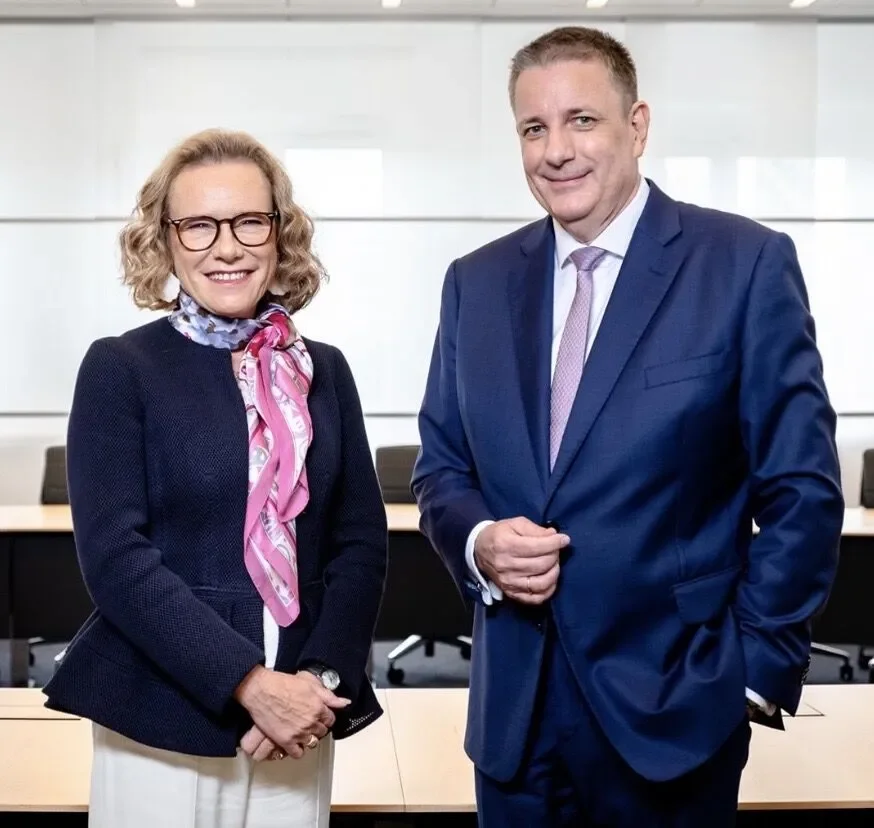
The appointment of a new chief executive at Merck KGaA marks a significant transition for one of Germany’s most prominent science and technology groups. As Kai Beckmann officially takes over leadership in May 2026, the move comes at a critical moment—not only for the company, but for the industries it operates in, including pharmaceuticals, life sciences, and semiconductors.
While the leadership change appears smooth on the surface, it raises deeper questions about strategy, growth, and the challenges facing global technology firms.
A New Era Begins at Merck
Merck has formally appointed Kai Beckmann as its new Chief Executive Officer, effective 1 May 2026. He succeeds Belén Garijo, who has led the company since 2021 and is stepping down at the end of her contractual term.
Beckmann is not an external hire but a long-standing insider. He has been with Merck for more than three decades, joining the executive board in 2011 and most recently leading the company’s electronics division.
The transition itself has been carefully managed. Beckmann had already been serving as Deputy CEO prior to taking full control, ensuring continuity and stability in leadership.
Garijo’s tenure is widely seen as transformative. She guided the company through the COVID-19 period, restructured parts of the business, and strengthened its position across healthcare, life sciences, and electronics. However, the company has also faced slowing growth following the pandemic-era boom, with missed revenue targets and increasing pressure on profitability.
This context makes the leadership change more than routine—it represents a strategic inflection point.
Inside the Succession Strategy
The transition to Beckmann reflects a deliberate internal succession strategy rather than a reactive leadership change. Merck’s board selected a “homegrown” candidate with deep institutional knowledge and sector expertise, particularly in electronics and semiconductors—areas that are becoming increasingly central to the company’s future.
Beckmann’s career trajectory helps explain the decision. Since taking over the electronics division in 2017, he has overseen its transformation into a key supplier for the global semiconductor industry. This is particularly significant given the growing importance of chips in everything from artificial intelligence to advanced manufacturing.
The timing of the transition is also shaped by broader external factors. Merck operates at the intersection of two strategically sensitive industries: pharmaceuticals and semiconductors. Both sectors are increasingly influenced by geopolitical tensions, particularly between the United States and China.
In this environment, leadership requires not only operational expertise but also the ability to navigate regulatory uncertainty, supply chain disruptions, and shifting global alliances. By appointing an experienced internal leader, Merck appears to be prioritising stability and continuity over radical change.
At the same time, the departure of Garijo is not linked to a crisis but to a planned transition. Her move to lead another major pharmaceutical company reflects her strong reputation, while also creating an opportunity for Merck to recalibrate its strategic direction.
Thus, the leadership change can be seen as both a continuation of existing strategy and a response to evolving external pressures.
A Safe Bet or Strategic Risk?
Whether Beckmann’s appointment is a strong strategic move depends on how effectively he can address the challenges facing Merck’s core business model.
On the one hand, the decision has clear advantages. Continuity in leadership reduces uncertainty for investors, employees, and partners. Beckmann’s long tenure within the company means he already understands its operations, culture, and strategic priorities. This lowers the risk typically associated with leadership transitions.
Moreover, his background in electronics aligns with a key growth area. The semiconductor industry is expected to expand significantly in the coming years, driven by demand for AI, digital infrastructure, and advanced technologies. By placing a leader with expertise in this sector at the helm, Merck is signalling a strategic emphasis on future-oriented industries.
However, this approach also carries risks. An internal appointment may limit the potential for radical strategic change. While continuity can provide stability, it may also reinforce existing weaknesses. Merck has already faced slowing growth following the pandemic, with revenues falling short of its €25 billion target and recent performance indicating only modest expansion.
This raises a key concern: can a leader who has been part of the existing structure deliver the transformation needed to reignite growth?
Another challenge lies in the company’s diversified business model. Merck operates across pharmaceuticals, life sciences, and electronics—each with distinct market dynamics. While diversification provides resilience, it also complicates strategic focus. Beckmann will need to balance investment across these sectors while ensuring that none fall behind in an increasingly competitive global landscape.
Geopolitical risk further complicates the outlook. As tensions between major economies intensify, companies operating in semiconductors and healthcare face increasing regulatory scrutiny and potential trade restrictions. Beckmann’s experience in the electronics sector may prove valuable here, but the scale of these challenges should not be underestimated.
From a broader economic perspective, Merck’s leadership change reflects a wider trend among European industrial and technology firms. As global competition intensifies and growth slows, companies are increasingly turning to internal leadership to maintain stability while navigating structural transformation.
If successful, Beckmann’s leadership could position Merck to capitalise on long-term trends such as digitalisation, biotechnology innovation, and AI-driven demand for semiconductors. This would not only strengthen the company’s competitive position but also contribute to Germany’s industrial resilience in a rapidly changing global economy.
However, failure to adapt could have the opposite effect. Continued stagnation in growth or missed strategic opportunities would weaken Merck’s position relative to global competitors, particularly in the United States and Asia.
Final thoughts
The appointment of Kai Beckmann as CEO represents both continuity and opportunity for Merck. It reflects confidence in internal leadership and a strategic focus on high-growth sectors such as semiconductors and advanced technologies.
Yet the success of this plan is far from guaranteed. Beckmann inherits a company navigating post-pandemic slowdown, intensifying competition, and geopolitical uncertainty. His ability to balance stability with transformation will determine whether this leadership change becomes a platform for renewed growth—or a missed opportunity in an increasingly competitive global landscape.
In this sense, Merck’s decision is not simply about leadership succession. It is a test of whether established industrial giants can adapt quickly enough to remain relevant in a world defined by technological disruption and economic uncertainty.
What's Your Reaction?
 Like
0
Like
0
 Dislike
0
Dislike
0
 Love
0
Love
0
 Funny
0
Funny
0
 Wow
0
Wow
0
 Sad
0
Sad
0
 Angry
0
Angry
0

I’m a freelance writer with a passion for business, lifestyle, and opinion pieces that explore culture, trends, and real-world insights. I bring a perspective that blends professional knowledge with cultural awareness, drawing on my experience in real estate and a keen interest in South Asian lifestyle and culture. I hold a Master’s in Popular Music Practice, and outside of writing, I enjoy playing the flute and reading about philosophy and psychology. I love crafting engaging, thought-provoking stories and am always excited to pitch fresh ideas or take on features that connect communities, trends, and the bigger picture.












Comments (0)