

France and India Cement Strategic Partnership with $15 Billion Trade and Defence Deals
France and India’s expanding partnership signals a bold shift toward shared technological innovation and strategic independence in an increasingly multipolar global economy.
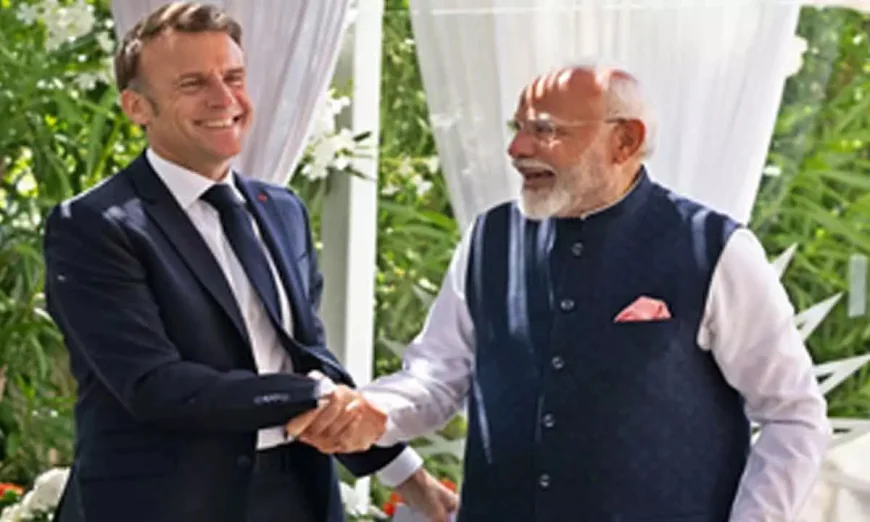
France and India have recently elevated their bilateral relationship into a “Special Global Strategic Partnership,” marking a significant expansion of cooperation across defence, trade, technology and innovation.
The renewed momentum follows high-level talks between President Emmanuel Macron and Prime Minister Narendra Modi, as both countries navigate global economic uncertainty and geopolitical realignment.
Modi emphasised the strength and scope of the bilateral relationship, saying: “India and France share a very special relationship. France is one of India’s oldest strategic partners. Together with President Macron, we have given this strategic partnership unprecedented depth and energy. Based on this trust and shared vision, today we are establishing our relationship as a Special Global Strategic Partnership". The prime minister said in his media statement.
In a press briefing after their meeting, Macron said, "Our bilateral relationship is truly exceptional and unique. Throughout today’s discussions, we have reaffirmed that our partnership is based on trust, openness and ambition. We have decided to elevate it to a Special Strategic Partnership and give it a new status."
What the Deals Are
At the core of the renewed engagement is a series of economic and strategic agreements spanning multiple sectors, with defence cooperation playing a central role.
India is in advanced discussions to purchase up to 114 Rafale fighter jets from France, building on previous acquisitions and deepening long-term defence industry ties.
Alongside this venture, the partnership will produce a private helicopter final assembly line for H125 helicopters, inaugurated in Karnataka, reflecting efforts to localise advanced manufacturing.
India’s Bharat Electronics Ltd and French defence firm Safran will also manufacture HAMMER precision-guided missiles in India.
In addition, the two countries have renewed their defence cooperation pact for another decade, including reciprocal deployments of army officers and expanded co-development plans.
Beyond defence, trade and economic integration have gained fresh impetus.
Bilateral trade between the two countries has surpassed $15 billion, with France now one of India’s leading trading partners within the European Union.
The double taxation avoidance agreement (DTAA) — a treaty between two countries designed to prevent individuals and companies from being taxed twice on the same income — has been amended to ease dividend taxation and facilitate smoother financial flows.
Dividend taxation refers to the taxes imposed on profits distributed by companies to shareholders, and changes to these rules can directly affect the attractiveness of cross-border investments to investors.
By reducing tax burdens and clarifying how income earned in one country is treated in the other, the revised agreement aims to remove financial friction and create greater certainty for businesses.
This, in turn, is intended to encourage cross-border investment, thereby increasing capital flows between France and India for business expansion, joint ventures, and long-term economic cooperation.
Financial integration is also deepening through the expansion of India’s Unified Payments Interface into France, signalling growing fintech cooperation and digital connectivity.
The two governments have launched the India-France Year of Innovation 2026, which will support centres focused on artificial intelligence, health sciences, digital research and aeronautics training.
Cooperation is also expanding in civil nuclear energy, space technology, critical minerals and sustainable energy. Startup ecosystem partnerships, including collaborations between innovation hubs in both countries, further reinforce a shared commitment to future-oriented growth.
Implications for Each Economy
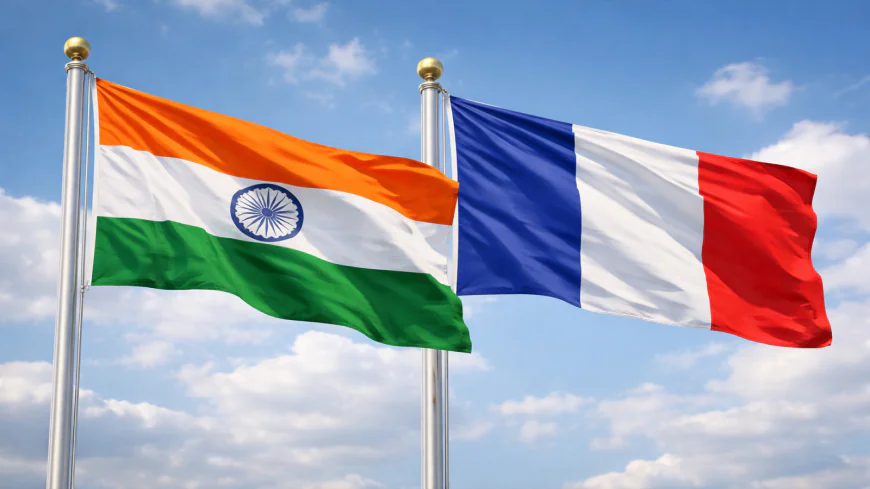
For India, the implications are substantial. Expanded defence manufacturing and technology transfer support the country’s “Make in India” ambitions by strengthening domestic industrial capacity, creating skilled jobs and boosting export potential.
Greater trade integration with France and, by extension, the European Union, helps diversify India’s economic partnerships and reduce reliance on a limited number of markets.
Initiatives in AI and advanced research accelerate India’s positioning as a major digital and technological power.
By collaborating on emerging technologies, research institutions and private firms in both countries can share expertise, funding and infrastructure, helping India strengthen its capacity in high-value, knowledge-driven industries.
Strategically, closer ties with France reinforce India’s broader approach to multipolar engagement — a foreign policy strategy that seeks to build strong relationships with multiple global powers rather than aligning exclusively with one bloc.
This approach enhances India’s autonomy, meaning its ability to make independent decisions in global economic and security matters without over-reliance on any single country or alliance.
For France, the partnership provides strengthened access to one of the world’s fastest-growing major economies.
Defence contracts and industrial cooperation agreements offer sustained revenue opportunities while deepening industrial linkages.
By consolidating its relationship with India, France enhances its role as a key European bridge to Asian markets, potentially supporting wider EU-India trade ambitions.
Future Actions and What’s Next
Looking ahead, both countries are expected to focus on implementation.
The initiatives announced for 2026 will require operational frameworks, funding commitments and sustained private-sector engagement.
In defence, negotiations surrounding fighter jet procurement and further localisation of production are likely to continue, with technology transfer remaining a strategic priority for India.
On the trade front, the amended tax treaty is expected to encourage new waves of French investment into sectors such as aerospace, pharmaceuticals and renewable energy.
Continued diplomatic engagement at global forums, including cooperation within the G7 and other multilateral platforms, suggests that the partnership will extend beyond bilateral trade into broader global governance discussions.
Overall, the deepening ties between France and India signal more than isolated agreements. They represent a deliberate effort to embed trade, defence, innovation and strategic alignment within a long-term framework of cooperation.
As both economies adapt to shifting global dynamics, this evolving partnership could emerge as a defining example of strategic economic collaboration in the coming decade.
What's Your Reaction?
 Like
0
Like
0
 Dislike
0
Dislike
0
 Love
0
Love
0
 Funny
0
Funny
0
 Wow
0
Wow
0
 Sad
0
Sad
0
 Angry
0
Angry
0

I’m a freelance writer with a passion for business, lifestyle, and opinion pieces that explore culture, trends, and real-world insights. I bring a perspective that blends professional knowledge with cultural awareness, drawing on my experience in real estate and a keen interest in South Asian lifestyle and culture. I hold a Master’s in Popular Music Practice, and outside of writing, I enjoy playing the flute and reading about philosophy and psychology. I love crafting engaging, thought-provoking stories and am always excited to pitch fresh ideas or take on features that connect communities, trends, and the bigger picture.













Comments (0)