

German Industrial Orders Fall in Early 2026, Raising Economic Concerns
Germany’s manufacturing sector has started 2026 on a weak note, as falling industrial orders and slowing production raise fresh concerns about the strength of Europe’s largest economy.
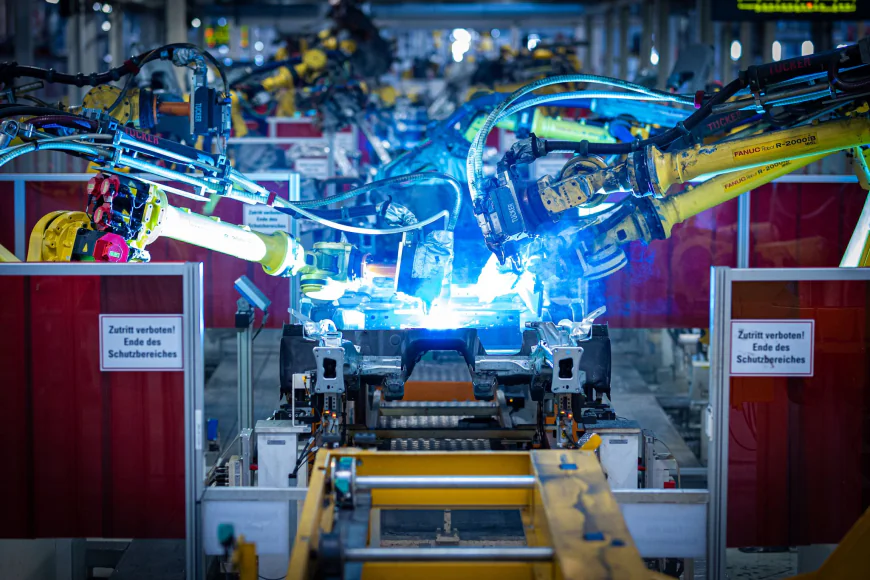
Germany’s manufacturing sector began 2026 on a weak footing, raising concerns about the resilience of Europe’s largest economy.
New data shows a sharp decline in industrial orders and a surprise drop in production, suggesting that the country’s fragile economic recovery may be losing momentum.
Industrial Orders Fall Sharply
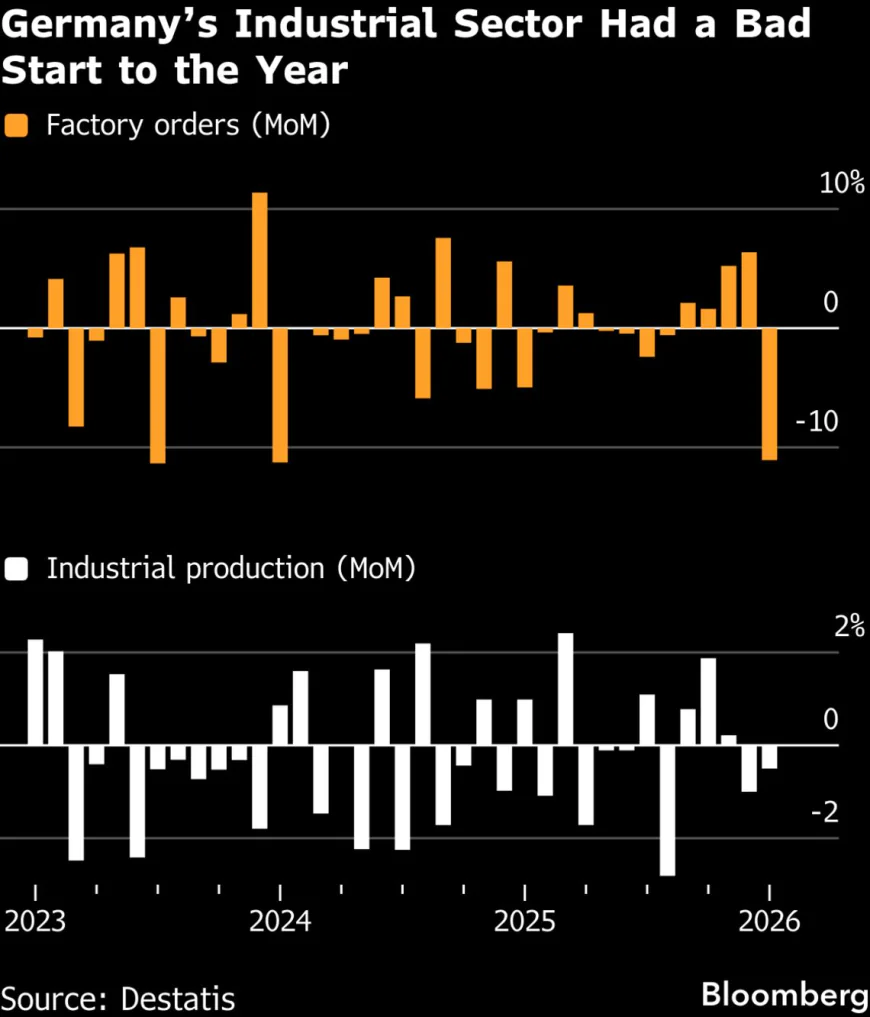
According to Germany’s federal statistics office, industrial orders fell 11.1% in January compared with the previous month, a much steeper decline than economists had predicted.
Analysts surveyed had expected a drop of about 4.5%, making the latest data a significant negative surprise for markets.
The fall follows a strong rise in orders at the end of 2025, when demand had surged due to several large-scale contracts.
However, economists note that the latest figures highlight the volatility of Germany’s manufacturing sector and the challenges facing the country’s export-driven economy.
Industrial orders can fluctuate significantly from month to month, particularly when large contracts—such as those for aircraft, machinery, or infrastructure equipment—are placed or delayed. As a result, a strong rise in one month can often be followed by a sharp drop in the next.
At the same time, Germany’s economy relies heavily on exports of manufactured goods, including cars, industrial machinery, and chemical products.
When global demand weakens or international competition increases, German manufacturers are particularly exposed.
Slower growth in key markets such as China and parts of Europe has therefore amplified the impact of falling orders, making it harder for the country’s industrial sector to sustain steady growth.
Domestic demand weakened particularly sharply. Orders from within Germany dropped more than 16%, while foreign orders also declined by over 7%, reflecting slower global demand for German goods.
Industrial Production Also Declines
The decline in industrial production suggests that economic activity in the manufacturing sector is weakening, which can have wider consequences for the broader economy. In Germany, manufacturing plays a crucial role in driving growth, employment, and exports. When industrial output falls—even slightly—it can signal that factories are producing fewer goods due to lower demand or rising costs.
A drop of 0.5% in January, especially when economists had expected growth, may indicate that companies are becoming more cautious about production levels. Businesses may reduce output to avoid building up excess inventory if orders are slowing. Over time, this could affect supply chains, investment decisions, and hiring across related industries.
Germany is the largest economy in Europe, so a slowdown in its industrial sector can also have ripple effects across the wider European economy, particularly for countries that depend on German manufacturing exports and industrial supply networks.
Several sectors contributed to the decline. Output in fabricated metal products fell by more than 12%, while production also dropped in industries such as pharmaceuticals, electronics, and computer equipment.
Although energy production increased due to colder winter weather, the broader manufacturing slowdown outweighed these gains.
External Pressures on German Industry
Analysts attribute the downturn to a combination of global and domestic pressures affecting German manufacturers.
Weak international demand—particularly from China and parts of Europe—has reduced export orders for German companies. At the same time, rising competition from Chinese manufacturers has placed additional pressure on Europe’s industrial powerhouse.
According to the Financial Times, Brzeski wrote in a note to clients that “our optimism about Germany’s growth prospects has taken a hit,” adding that manufacturers were facing pressure from US tariffs and competition from Chinese rivals
Energy costs have also emerged as a major concern for manufacturers. The recent surge in oil prices linked to geopolitical tensions in the Middle East—particularly involving Iran and the United States—has pushed up the cost of fuel, electricity and transportation.
For an industrial economy such as Germany, where factories rely heavily on energy to power machinery and supply chains, higher prices can significantly raise operating costs.
Energy-intensive sectors such as chemicals, metals, automotive manufacturing, and heavy machinery are especially vulnerable. When energy prices rise, companies may face difficult choices: absorb the higher costs, raise prices for customers, or reduce production levels. In many cases, firms delay investment or scale back output to protect profit margins.
This pressure comes at a challenging time for German industry, which is already dealing with weaker global demand and increased competition from manufacturers in countries such as China. As a result, rising energy costs could further slow industrial activity and weigh on the country’s broader economic recovery.
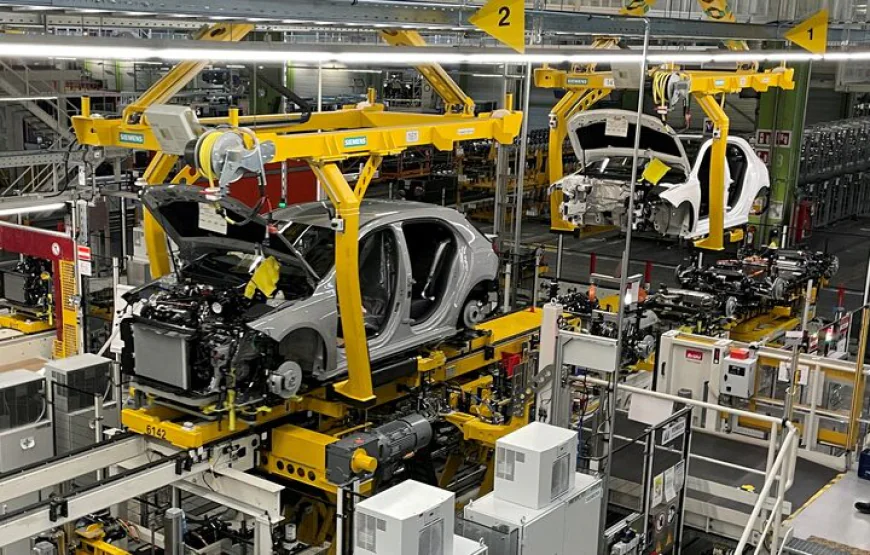
A general view of a production line of German car manufacturer Mercedes-Benz at a factory in Rastatt, Germany, June 4, 2025.
Fragile Economic Recovery
The disappointing data comes at a delicate moment for the German economy. After several years of stagnation and recession risks, the country recorded modest economic growth in 2025.
However, economists warn that the latest industrial figures could slow the country’s recovery. As Alexander Krueger, chief economist at Hauck Aufhaeuser Lampe, noted, “The spark from fuller order books hasn’t yet ignited production.”
The German government has introduced large-scale investment plans—worth hundreds of billions of euros—to support infrastructure and defence spending, hoping to stimulate industrial demand. Yet analysts say the impact of these policies may take time to filter through the broader economy.
Outlook for 2026
Despite the sharp drop in January, some economists remain cautiously optimistic. They argue that much of the decline reflects volatility in large-scale industrial orders rather than a sustained collapse in demand.
Nevertheless, uncertainty remains high. Global trade tensions, rising energy prices, and slowing growth in key export markets could continue to weigh on Germany’s manufacturing sector throughout 2026.
For now, the latest figures highlight a broader challenge facing the country: maintaining its position as Europe’s industrial powerhouse amid an increasingly uncertain global economy.
What's Your Reaction?
 Like
0
Like
0
 Dislike
0
Dislike
0
 Love
0
Love
0
 Funny
0
Funny
0
 Wow
0
Wow
0
 Sad
0
Sad
0
 Angry
0
Angry
0

I’m a freelance writer with a passion for business, lifestyle, and opinion pieces that explore culture, trends, and real-world insights. I bring a perspective that blends professional knowledge with cultural awareness, drawing on my experience in real estate and a keen interest in South Asian lifestyle and culture. I hold a Master’s in Popular Music Practice, and outside of writing, I enjoy playing the flute and reading about philosophy and psychology. I love crafting engaging, thought-provoking stories and am always excited to pitch fresh ideas or take on features that connect communities, trends, and the bigger picture.

















Comments (0)