

Germany’s Pursuit to Cutting Red Tape: Will the 200-Point Plan Deliver?
In December 2025, the leaders of Germany’s 16 states agreed on a comprehensive 200-point plan aimed at cutting bureaucracy and modernising public administration.

Germany has long been recognised for its strong administrative structures, yet its extensive bureaucratic processes have increasingly become a barrier to efficiency, economic growth, and public satisfaction.
Excessive “red tape” — characterised by complex procedures, lengthy approval times, and a reliance on paper-based documentation — has hindered both citizens and businesses, contributing to delays in public services and slowing down innovation.
In response to these mounting pressures, the leaders of Germany’s federal states have agreed on an ambitious 200-point plan aimed at modernising the public administration, reducing administrative burdens, and accelerating decision-making processes.
This initiative marks a significant step in Germany’s broader efforts to digitise governance, streamline public services, and remove structural obstacles that undermine competitiveness.
The following sections explore the nature and impact of red tape, outline the key components and beneficiaries of the 200-point reform package, and assess the wider implications and potential next steps in Germany’s administrative transformation.
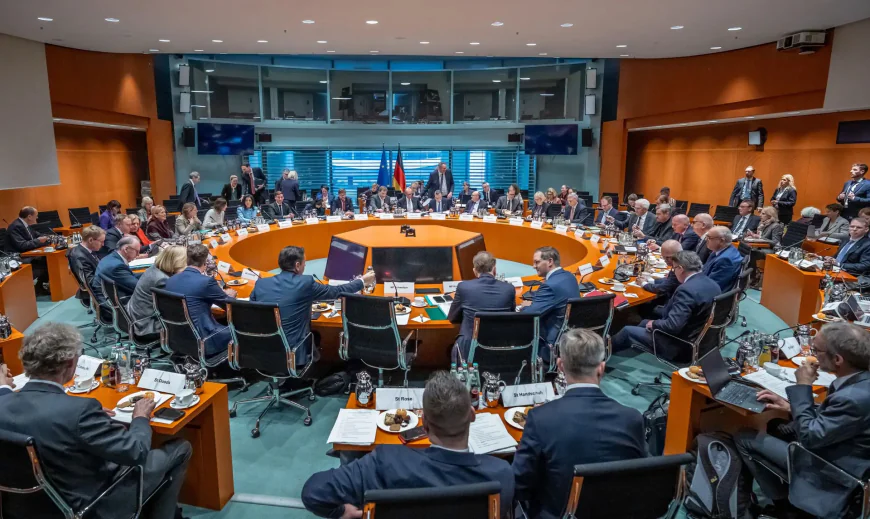
German Chancellor Friedrich Merz opens the Minister Presidents’ Conference with the heads of the federal states.
“Red Tape”? — Influence and Consequences
Red tape refers to excessive bureaucracy: cumbersome administrative procedures, long wait times, heavy paperwork, overlapping regulations, and administrative inefficiency.
In Germany — often criticised for its complex bureaucracy — red tape affects both citizens and businesses: obtaining identity documents, registering a move, applying for permits, or launching a business can involve multiple forms, visits to different offices, slow processing, and redundant data requests.
One of the consequences of such bureaucratic burdens includes an economic drag.
According to the IMF, Germany’s weak economic performance — including shrinking growth among G7 peers — is not only the result of external shocks (energy prices, global demand shifts), but also of structural constraints, of which “too much red tape” is a key factor.
The IMF argues that sluggish productivity growth — long masked by past industrial success — poses a threat to medium-term growth prospects. Among the obstacles: underinvestment in public infrastructure and regulations that hinder both investment and the creation of new businesses.
By removing bureaucratic barriers, Germany could become more attractive for investment, innovation, and entrepreneurship — helping address stagnating productivity and demographic challenges
Delayed investments and bureaucratic bottlenecks
The IMF highlights concrete examples: for instance, projects such as onshore wind farms can take five to six years to receive approval; obtaining a business licence might take 120 days — more than double the average among OECD countries.
Such delays discourage investors and entrepreneurs, tying up capital that could be deployed productively elsewhere. They raise the risk, the cost, and the uncertainty of long-term planning, especially in sectors that depend on speed and flexibility (renewable energy, infrastructure, housing, startups).
If a company requires five different managers to sign off on a simple purchase, waiting for each approval can create a bureaucratic bottleneck.
Lost economic output and wasted labour resources
Independent researchers confirm the scale of the drag. A recent study by the ifo Institute estimates that excessive bureaucracy costs Germany up to €146 billion per year in lost economic output.
To put that in perspective: that’s a significant share of national economic output — resources that could be invested in innovation, infrastructure, or public services, but are instead absorbed by paperwork, delays, regulatory compliance, and redundant documentation.
Faster, more transparent public services can enhance citizens’ trust in government, reduce frustration, and foster a more responsive and modern state.
Businesses are losing time & resources to compliance
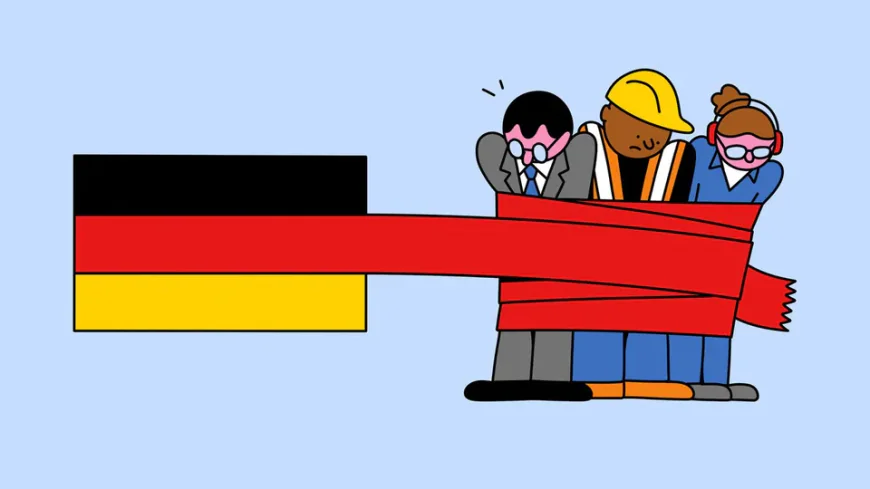
A company survey by the ifo Institute found that around 22% of working time is spent on bureaucratic tasks — reporting, documentation, and regulatory compliance rather than productive work.
Fragmented IT systems across states and municipalities limit data sharing and automation, forcing citizens and businesses to repeatedly submit the same documents or navigate multiple offices for routine tasks.
Municipalities are the smallest administrative units of government within a country. They typically govern a local area such as a city, town, village, or district, and are responsible for providing public services and managing local affairs.
Cultural factors also play a role: the principle of legal certainty (“Rechtssicherheit”) underpins bureaucratic practices, meaning that administrations are cautious to avoid mistakes or liability, even if this results in delays.
Additionally, businesses estimate that bureaucracy can cost them an average of 6% of turnover (through staff time, external advisers, and slower processes), particularly burdening small and medium-sized enterprises (SMEs) that lack the internal capacity to manage a heavy administrative load.
Easing procedures will simplify everyday administrative tasks, such as issuing ID cards, updating address registrations, and managing residence registrations/deregistrations.
This saps flexibility, limits innovation, and reduces competitiveness — especially in fast-moving or regulated sectors such as energy, real estate, construction, or manufacturing.
If successful, the 200-point plan may serve as a blueprint for further deregulation — simplifying planning law, environmental permits, construction approvals, and other historically slow sectors (housing, infrastructure, renewables). Indeed, reforms accelerating the adoption of renewables and construction have already been linked to reducing red tape.
Public frustration & inefficiency
Another consequence of bureaucratic burdens is that excessive red tape not only burdens businesses but also directly affects citizens' daily interactions with the public administration. When administrative procedures become overly complex, slow, or inconsistent, the result is widespread public frustration that can have deeper social and political consequences.
Long waiting times, confusing processes, and repeated documentation requirements leave citizens feeling discouraged and overwhelmed, particularly affecting vulnerable groups such as the elderly, migrants, and those with limited resources.
These inefficiencies erode trust in government institutions, creating a perception that the state is rigid, outdated, or unresponsive to the needs of its people. Over time, such barriers not only undermine the quality of public services but also contribute to social inequality and reduced civic engagement.
Public frustration with bureaucracy is more than a minor inconvenience: it weakens social cohesion, slows essential services, fosters political disillusionment, and contributes to unequal access to opportunities. By easing administrative burdens, governments can enhance trust, improve efficiency, and promote overall citizen well-being.
Final thoughts
Germany’s 200-point plan represents one of the most ambitious attempts in decades to overhaul the country’s administrative machinery.
By reducing red tape, accelerating approvals, and expanding digital public services, the reforms aim to address long-standing structural barriers that have hindered economic performance, slowed investment, and eroded public trust.
Whether the plan succeeds will depend on consistent implementation across all levels of government and sustained political commitment.
If carried out effectively, it could mark a turning point—strengthening Germany’s competitiveness, improving everyday interactions with the state, and laying the foundation for a more agile and future-ready public administration.
What's Your Reaction?
 Like
0
Like
0
 Dislike
0
Dislike
0
 Love
0
Love
0
 Funny
0
Funny
0
 Wow
0
Wow
0
 Sad
0
Sad
0
 Angry
0
Angry
0

I’m a freelance writer with a passion for business, lifestyle, and opinion pieces that explore culture, trends, and real-world insights. I bring a perspective that blends professional knowledge with cultural awareness, drawing on my experience in real estate and a keen interest in South Asian lifestyle and culture. I hold a Master’s in Popular Music Practice, and outside of writing, I enjoy playing the flute and reading about philosophy and psychology. I love crafting engaging, thought-provoking stories and am always excited to pitch fresh ideas or take on features that connect communities, trends, and the bigger picture.

















Comments (0)