

Greece Positions Itself at the Heart of Europe’s Post-Russia Gas Market
As Europe weans itself off its decades-long dependence on Russian gas, Greece is rapidly becoming a strategic energy gateway that could redefine the continent’s economic and geopolitical balance.
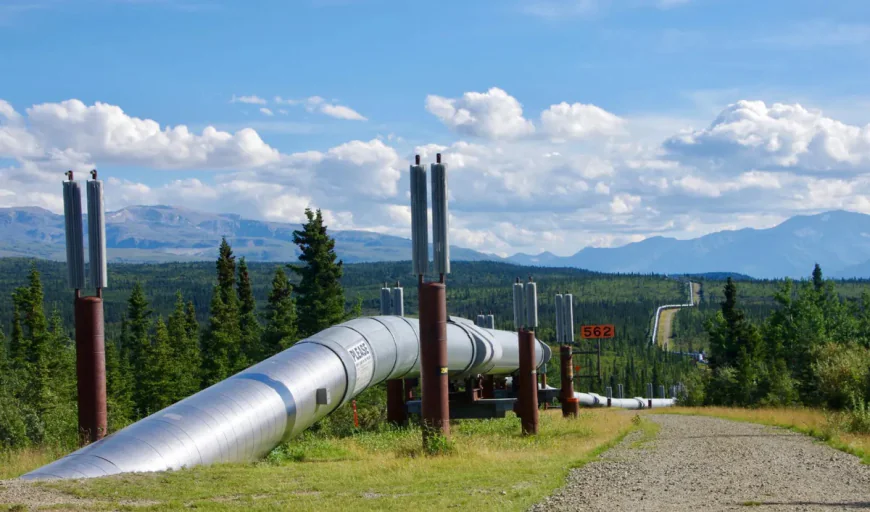
Greece’s expanding role in the liquefied natural gas (LNG) sector — natural gas cooled into liquid form so it can be transported globally by ship and then converted back into gas for energy use — signals a bold shift toward shared energy security and economic opportunity in a European market.
Russia used to be Europe’s biggest gas supplier, but after the Ukraine war, Europe stopped relying on it and found new suppliers — creating opportunities for countries like Greece to step in as energy hubs.
Europe prepares to phase out Russian gas entirely by 2027. Athens is leveraging its geographic location, positioned between major global shipping routes and has access to the intersection of Europe, Asia, and the Middle East.
Due to its upgraded infrastructure and strategic partnerships, especially with the United States, this has become a key gateway for LNG imports and energy transit.
Greece is also physically connected by pipelines to Balkan and Central European countries such as Bulgaria, Serbia, and Romania, which need alternative gas sources after reducing reliance on Russia.
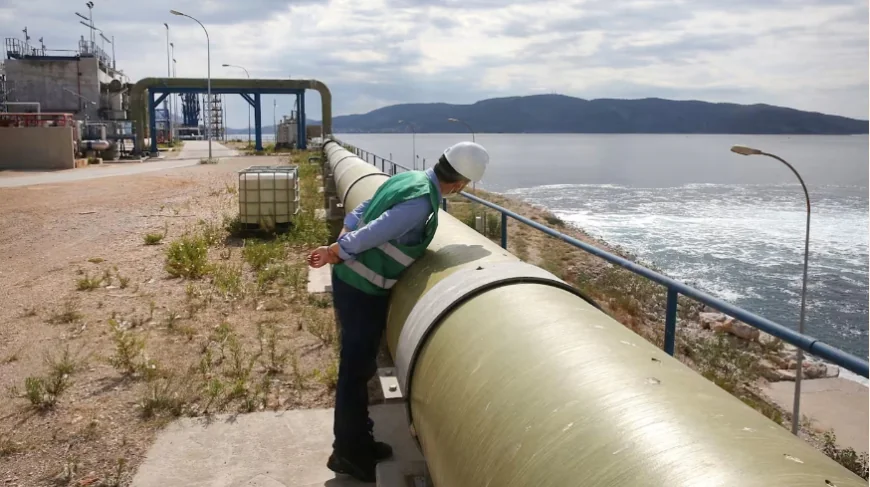 Greece’s main LNG terminal at Revithoussa, an island west of Athens © Orestis Panagiotou/EPA
Events Leading Up to Greece’s Strategic Shift
Before Russia’s full-scale invasion of Ukraine in 2022, Moscow supplied roughly 40 per cent of the European Union’s natural gas, making European energy systems heavily dependent on Russian pipeline deliveries.
By 2024, that figure had fallen to just about 11 per cent as Russian volumes were sharply curtailed in the wake of sanctions and geopolitical tensions, and Europe sought alternative sources, according to Caspian Post.
The energy disruption triggered price spikes, economic instability and urgent policy shifts across EU capitals.
In response, the EU launched initiatives to accelerate diversification of energy imports and reduce reliance on Russian fossil fuels, prompting a rapid expansion of LNG terminals, pipeline interconnectors and storage capacity across the continent.
Southern European states with seaboard access—including Greece—quickly identified an opportunity to step into a central transit role.
Greece had already laid some of the groundwork through earlier infrastructure projects such as the Trans Adriatic Pipeline (TAP), completed in 2020, which brings Caspian gas into Europe via Greece and across the Adriatic to Italy.
The pandemic and the energy crisis that followed highlighted the value of such infrastructure, setting the stage for Greece’s more expansive ambitions as European energy dynamics shifted.
What Happened: Greece’s LNG Expansion and Strategic Ambitions
Central to Greece’s strategy is the significant expansion of LNG infrastructure, including the revitalisation of the LNG terminal at Revithoussa and the operation of a floating storage and regasification unit (FSRU) in Alexandroupolis, which began commercial operations in October 2024.
The Alexandroupolis FSRU alone has a capacity of about 5.5 billion cubic metres per year, equating to roughly 50–55 typical LNG cargoes, and can supply markets throughout southeastern and central Europe, according to Euro News.
Greece’s energy minister, Stavros Papastavrou, highlighted the country’s role in Europe’s energy transformation, stating that Greece’s geography and infrastructure upgrades position it as a key southern gateway for LNG imports, with broader implications for Europe’s energy security architecture.
Regarding Greece, he emphasised that “this is a massive project of national importance, strategic in nature, and the country is becoming a gateway." According to Logos Press.
The development of the so-called “vertical corridor,” a south-to-north pipeline network connecting Greek LNG terminals to the gas systems of Bulgaria, Romania, Moldova and Ukraine, further strengthens Greece’s transit capability.
This network can potentially supply landlocked Balkan and central European markets with LNG originally sourced from the United States and other global suppliers.
In addition, discussions are underway to expand pipeline connectivity so that LNG imported into Greece can flow through Italy and beyond, enhancing the country’s reach into the broader European grid.
Plans are also advancing for a second FSRU at Alexandroupolis to deepen Greece’s capacity as a regional hub.
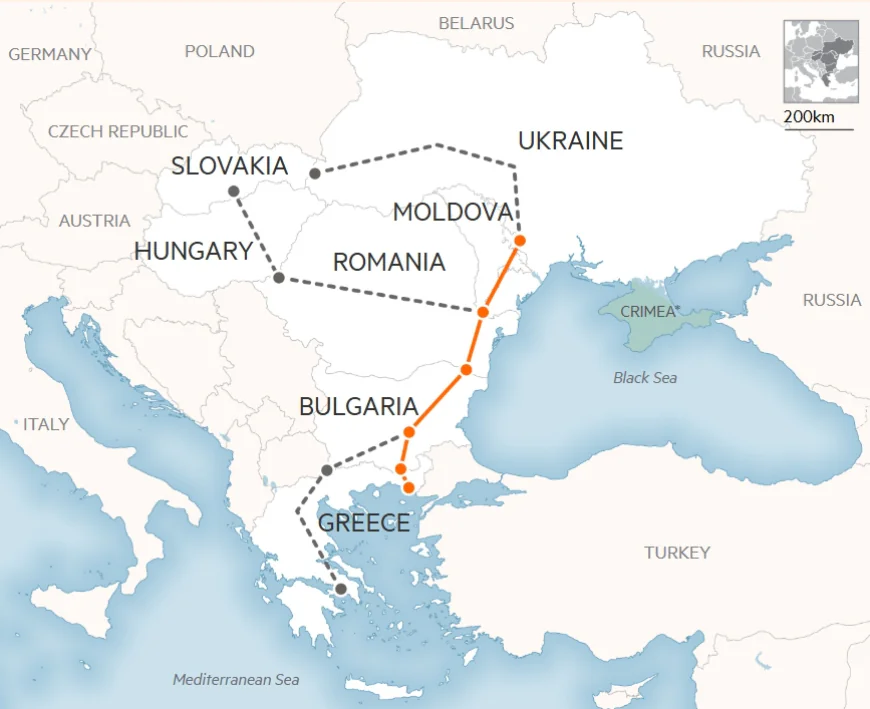 Greece’s vertical gas corridor linking to Ukraine
Implications for the Economies
Economic Benefits for Greece
Greece’s pivot to become an LNG hub brings substantial economic opportunity.
Investments in infrastructure attract foreign capital and create jobs in construction, logistics and energy services.
Transit fees, trade revenues and the development of energy services contribute to GDP growth and expand Greece’s economic footprint in the European energy market.
Boosting its role as an energy gateway also strengthens Greece’s geopolitical influence within the EU, providing strategic leverage in discussions over energy policy and investment.
By exporting energy infrastructure and services, Greece enhances its long-term economic resilience and diversifies its national revenue streams.
Benefits for Southeastern and Central Europe
For countries in southeastern and central Europe traditionally reliant on Russian pipeline gas, Greece’s LNG corridor offers a viable alternative supply route.
This diversification improves energy security, stabilises supply costs and reduces vulnerability to geopolitical disruption. Stable gas supplies are particularly important for manufacturing, power generation and industrial sectors, where reliable baseload energy is critical.
By fostering competition among suppliers and linking new infrastructure across borders, Greece’s LNG expansion helps integrate European energy markets and encourages more competitive pricing, benefiting consumers and businesses alike.
Broader European Economic and Strategic Impact
At the continental level, Greece’s emergence as a key LNG transit hub is a concrete manifestation of Europe’s shift away from Russian energy dependence.
It reinforces EU strategies to diversify supply and integrate energy markets across member states. The increased prominence of LNG—especially U.S. LNG, which now accounts for a large share of European LNG imports—reflects a broader global realignment in energy trade patterns.
However, this transition also presents challenges. LNG is generally more expensive than Russian pipeline gas, which could translate into higher long-term energy costs.
Infrastructure investments require substantial financing, and market participants will need to manage global price volatility.
Furthermore, some analysts warn that heavy reliance on U.S. LNG could create its own forms of geopolitical dependency.
Despite these risks, Greece’s central positioning in the post-Russia gas landscape strengthens European energy resilience overall and contributes to a more diversified and flexible supply network.
Final Thoughts
Greece’s strategic investments and diplomacy in the LNG sector exemplify how European nations are reinventing their energy systems in the wake of Russia’s retreat from the market.
By capitalising on geography, deepening infrastructure and fostering international partnerships, Greece is emerging as a pivotal energy gateway that could shape Europe’s energy security and economic landscape for years to come.
What's Your Reaction?
 Like
0
Like
0
 Dislike
0
Dislike
0
 Love
0
Love
0
 Funny
0
Funny
0
 Wow
0
Wow
0
 Sad
0
Sad
0
 Angry
0
Angry
0

I’m a freelance writer with a passion for business, lifestyle, and opinion pieces that explore culture, trends, and real-world insights. I bring a perspective that blends professional knowledge with cultural awareness, drawing on my experience in real estate and a keen interest in South Asian lifestyle and culture. I hold a Master’s in Popular Music Practice, and outside of writing, I enjoy playing the flute and reading about philosophy and psychology. I love crafting engaging, thought-provoking stories and am always excited to pitch fresh ideas or take on features that connect communities, trends, and the bigger picture.















Comments (0)