

Russia and Europe: Conflict, Economy, U.S. Influence and the Greenland Question
As Russia’s war in Ukraine rattles Europe, economic strain, NATO tensions, and the Arctic’s strategic spotlight on Greenland reveal a continent navigating a new era of uncertainty.

Europe is once again confronting profound geopolitical uncertainty — instability in international relations driven by shifting power balances, military conflict, and unclear alliances.
Russia’s ongoing war in Ukraine has moved beyond a regional conflict (a war limited to neighbouring states) and evolved into a broader test of European security (the continent’s ability to defend its borders and populations), economic resilience (the capacity of economies to absorb shocks such as energy shortages or sanctions), and transatlantic unity (the political and military partnership between Europe and the United States).
As Moscow escalates military pressure on Ukraine — including missile strikes, drone attacks, and targeting of critical infrastructure — while simultaneously signalling openness to renewed dialogue with parts of Europe, fractures are emerging within the European Union.
These fractures reflect disagreements among EU member states over how to engage with the Kremlin: whether to pursue continued isolation through sanctions and military support for Ukraine, or to explore diplomatic engagement aimed at de-escalation.
At the same time, questions are being raised about the durability of U.S. leadership in Europe, meaning whether Washington can or will continue to act as Europe’s primary security guarantor through NATO.
These doubts have intensified as tensions surface over Arctic security — the protection of strategic northern territories, shipping routes, and energy resources — and the strategic future of Greenland, a semi-autonomous Danish territory whose location makes it militarily and economically significant to both NATO and rival powers.
Taken together, these overlapping crises — war in Eastern Europe, economic strain across the EU, shifting U.S. foreign policy priorities, and renewed interest in the Arctic — suggest that Europe is entering a new strategic era, defined by greater uncertainty and a reassessment of alliances. Understanding what is happening, why, and what it means for Europe’s future is critical to assessing the continent’s political direction and economic stability.
What Is Happening and Why

Europe is at a pivotal moment — a critical turning point at which decisions taken now may have long-term consequences — as Russia’s long-running war in Ukraine continues to strain continental security, meaning Europe’s collective ability to protect its territory and populations, and political cohesion, the degree to which European states remain unified in policy, purpose, and response.
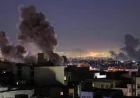
Moscow’s forces have intensified attacks on Ukraine’s critical infrastructure, especially power and energy networks — striking electrical grids and leaving major cities like Kyiv struggling without heat or power in extreme winter conditions. Reports describe Russia hitting Ukraine with a “hail of drones and missiles,” worsening an already dire energy emergency.
The war is no longer viewed by many analysts as a conflict confined to Ukraine’s borders; instead, its effects have rippled across Europe’s political orbit, influencing the wider network of European institutions, alliances, and governments.
This has raised concerns about spillover risks — the possibility that instability, violence, or economic disruption could spread beyond Ukraine — and prompted broader strategic recalibrations, including reassessments and adjustments of long-standing security policies, alliances, and defence priorities across Europe.
European states have debated the best approach to Russia, with some pushing for renewed dialogue and others insisting on continued isolation.
In Moscow, President Vladimir Putin has said Russia is “ready to restore” diplomatic relations with Europe to pre-war levels, on the condition of mutual respect for national interests and security concerns.
However, according to The Moscow Times, the Kremlin also views Western policies — especially sanctions and refusal to lift them — as evidence that the EU doesn’t genuinely want peace, accusing Brussels of undermining talks unless Moscow’s conditions are met.
Amid this, some EU states are signalling a shift toward resuming direct talks with Russia on Ukraine — a move Russian officials hailed as a “significant shift” from previous positions, particularly by Italy, France, and Germany.
Impact on the European Economy
The war’s economic repercussions for Europe have been severe and continue to unfold.
Disruptions to Ukrainian and Russian supply chains — especially in energy and agricultural exports — have amplified existing economic strains. Attacks on infrastructure, especially in cold weather, have increased costs for emergency heating and energy imports, squeezing household budgets and national accounts alike.
Sanctions aimed at squeezing Russian financial flows have also boomeranged, driving up energy prices and forcing governments to diversify supplies quickly. While the EU has dramatically reduced its reliance on Russian gas since the conflict began, energy security remains a vulnerability, with many nations still grappling with supply constraints and price volatility.
European industries — particularly those linked to construction, raw materials, and manufacturing — have been affected by rising import costs and tariff volatility, while agricultural producers have faced logistical bottlenecks as global markets adjust to sanctions and countermeasures.
Is the USA Losing Control?

A key emerging question in European strategy is whether the United States is losing its dominant position in shaping transatlantic policy. Frictions over Ukraine strategy, NATO commitments, and Arctic priorities have tested long-standing Western unity.
In particular, controversies over Greenland — a semi-autonomous Danish territory — have highlighted stress points in U.S.–European relations.
Former U.S. President Donald Trump’s public advocacy for acquiring Greenland for “national security” reasons triggered a wave of backlash in Europe, including warnings that such an action could signal a fracturing of NATO itself. One European commissioner said a U.S. military takeover of Greenland “would be the end of NATO,” reflecting deep concern about American unilateralism in alliance affairs.
These tensions have spurred Europeans to assert more autonomy on security matters.
Several countries have deployed small military contingents to Greenland in a symbolic show of solidarity with Denmark and to deter any unilateral action by the United States.
At the same time, the U.S. remains a key security partner. But debates over priority — whether supporting Ukraine with weapons or focusing on U.S. domestic issues — have occasionally strained relations, leading some European leaders to discuss increased strategic independence and co-leadership within NATO.
Greenland as a Possible Target

Greenland has, unexpectedly, become a flashpoint in broader geopolitical competition. While Russia itself stresses that the island “belongs to Denmark” and dismisses Western claims that Moscow poses a direct military threat there, the controversy has revealed deeper anxieties about Arctic influence and great-power rivalry.
According to the Wall Street Journal, the Arctic’s strategic importance rests on new shipping routes, energy resources, and military positioning. European states have responded to U.S. threats about Greenland by sending troops to the island to demonstrate shared defence commitments and to protect Danish sovereignty — a move that underscores the seriousness with which Europe views these Arctic disputes.
Moscow’s narrative on the issue is notable: Russian officials have accused the West of “militarising” the Arctic and even taunted Europe’s ability to defend Greenland, arguing that only Russia could “save” the island from outside domination.
At the same time, Denmark’s Arctic Command, which oversees security and defence operations in the Arctic, has stressed that Russia represents the region’s most significant military and strategic threat, not the United States.
Danish officials have also stated that no Russian or Chinese warships are currently threatening Greenland’s waters, referring to the surrounding maritime zones under Danish jurisdiction.
This assessment comes even as NATO boosts its military posture in the area — a phrase that denotes increased alliance activity such as troop deployments, surveillance, and joint exercises aimed at deterrence and preparedness.
The debate over Greenland — once a peripheral Cold War relic — now encapsulates broader tensions over sovereignty, alliance obligations, and the future balance of power in the Arctic.
Final Thoughts
Russia’s war in Ukraine remains a central driver of European geopolitical instability, reshaping economic landscapes and diplomatic alliances.
Europe’s growing unease, combined with nuanced shifts in the transatlantic relationship and new flashpoints like Greenland, signals a strategic environment in flux.
Whether Europe can navigate these tensions without further escalation — and how it balances its relationships with both the United States and Russia — will define the continent’s security and economic trajectory in the years ahead.
What's Your Reaction?
 Like
0
Like
0
 Dislike
0
Dislike
0
 Love
0
Love
0
 Funny
0
Funny
0
 Wow
0
Wow
0
 Sad
0
Sad
0
 Angry
0
Angry
0

I’m a freelance writer with a passion for business, lifestyle, and opinion pieces that explore culture, trends, and real-world insights. I bring a perspective that blends professional knowledge with cultural awareness, drawing on my experience in real estate and a keen interest in South Asian lifestyle and culture. I hold a Master’s in Popular Music Practice, and outside of writing, I enjoy playing the flute and reading about philosophy and psychology. I love crafting engaging, thought-provoking stories and am always excited to pitch fresh ideas or take on features that connect communities, trends, and the bigger picture.












Comments (0)