

KNUST College of Engineering Deepens Industry Partnerships to Drive Innovation and National Development
The College of Engineering at the Kwame Nkrumah University of Science and Technology (KNUST) has reaffirmed its commitment to advancing Ghana’s development by strengthening ties with industry partners.

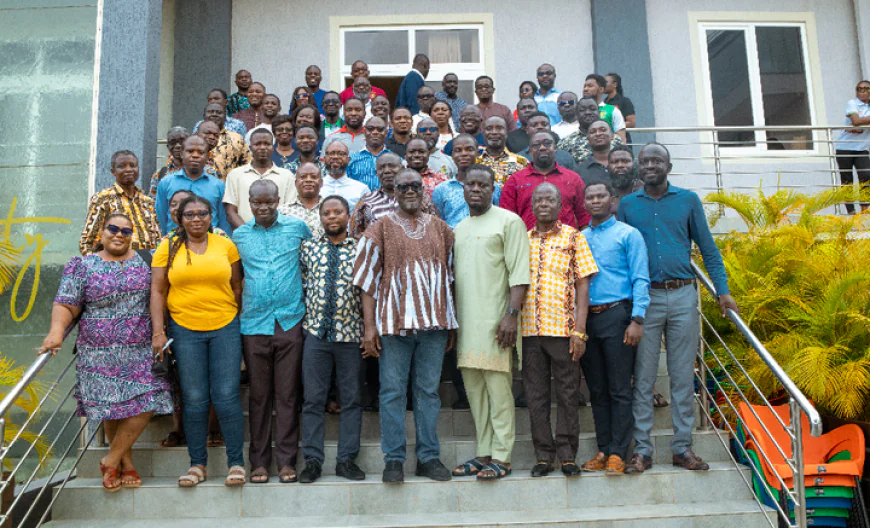
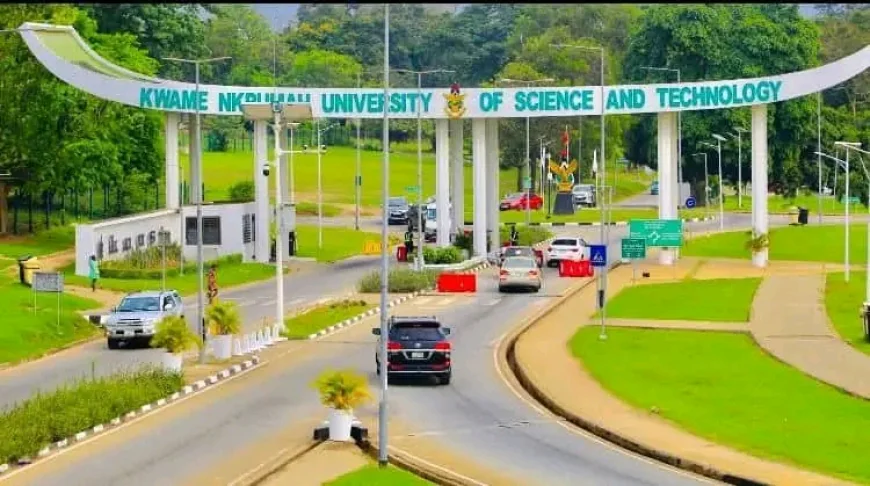
The College of Engineering at the Kwame Nkrumah University of Science and Technology (KNUST) has reaffirmed its commitment to advancing Ghana’s development by strengthening ties with industry partners. This initiative aims to accelerate innovation, enhance engineering education, and deliver practical solutions to pressing national challenges.
The renewed push was announced at the College of Engineering and Industry Symposium held at Kwawu-Nkwatia in the Eastern Region under the theme “Engineering Partnerships for Sustainable Innovation and Development.” The event brought together academics, industry leaders, and policymakers to explore long-term collaboration models.
Provost of the College, Prof. Kwabena Biritwum Nyarko, emphasized that closer engagement between academia and industry is critical as Ghana confronts challenges in infrastructure, energy transition, climate resilience, and industrial competitiveness.
“The complex issues of our time require solutions that are interdisciplinary, practical and context-appropriate. Collaboration between academia, industry and government is not optional; it is essential,” he said.
GRIDCo: Working with KNUST to address technical demands of Ghana’s evolving power transmission system, including renewable energy integration and grid digitalisation.
Bui Power Authority (BPA): Plans to deepen cooperation with universities to support hydropower optimisation, renewable energy integration, and advanced grid management.
Other Partners: Volta River Authority, Ghana Water Company Limited, and the Community Water and Sanitation Agency also highlighted opportunities for joint research and student placements.
Areas of focus include;
Student internships and national service placements
Substation study tours and practical training
Software development for load-flow analysis
Joint research on AI-based predictive maintenance
Shared laboratories and co-developed curricula
The College of Engineering currently has about 10,000 undergraduate students across 18 programmes and more than 1,000 postgraduate students across 69 programmes. It recently graduated over 2,300 engineers, including 49 doctoral graduates. Prof. Samuel Patrick Owusu-Ofori, who led a session on creativity and innovation, noted that industry-university collaboration provides the bridge needed to move research from laboratories into society. “Innovation improves on or makes significant contributions to what has already been invented, with the purpose of creating wealth,” he explained.
What's Your Reaction?
 Like
0
Like
0
 Dislike
0
Dislike
0
 Love
0
Love
0
 Funny
0
Funny
0
 Wow
0
Wow
0
 Sad
0
Sad
0
 Angry
0
Angry
0

















Comments (0)