

Parliament Approves GH¢1.6bn Budget — MPs Insist Allocation Inadequate
Ghana’s Parliament has approved a GH¢1.619 billion budget to finance its operations for the 2026 financial year, but Members of Parliament across the political divide have described the allocation as grossly inadequate for the legislature to function effectively and independently.

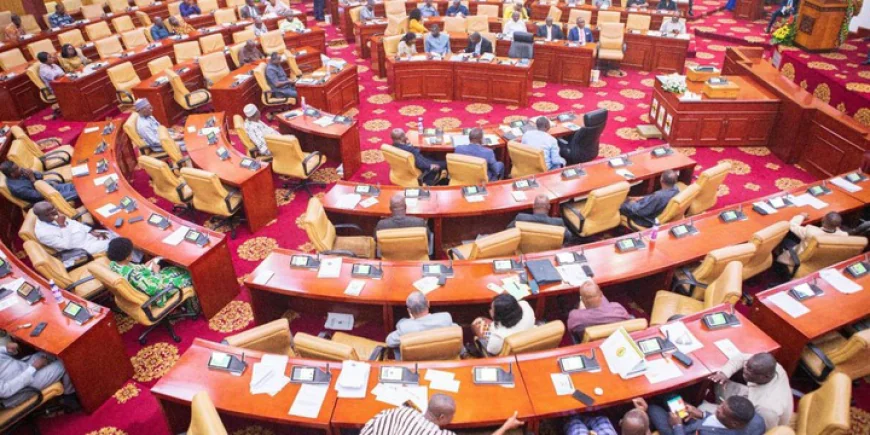
Ghana’s Parliament has approved a GH¢1.619 billion budget to finance its operations for the 2026 financial year, but Members of Parliament across the political divide have described the allocation as grossly inadequate for the legislature to function effectively and independently.
The approved funds will cater for:
Salaries and allowances for MPs and staff
Goods and services
Committee work
ICT and e-Parliament upgrades
Repairs and maintenance of facilities
Research support and documentation
Constituency-related activities
It also includes logistics to sustain Parliament’s legislative and oversight duties.
During debate on the Committee on Parliamentary Affairs’ report, lawmakers lamented long-standing operational constraints, including lack of constituency offices, deteriorating facilities in Job 600, and inadequate tools for oversight. The Committee stressed that the allocation was far below Parliament’s original proposal of GH¢4.6 billion, warning that the cuts undermine critical projects such as establishing constituency consultancy offices and repairing failing facilities like elevators and washrooms.
Kojo Oppong Nkrumah (Ofoase-Ayirebi) argued Parliament should be guaranteed a fixed percentage of national revenue, similar to the GETFund and NHIF. He criticized the chronic insufficiency of Parliament’s budget despite its central oversight role.
Dr Abdul Kabiru Tiah Mahama (Walewale) warned that Parliament was operating “at the mercy of the Executive,” receiving only about 40% of its requests. He also noted the institution was not disability-friendly compared to legislatures in Kenya and Nigeria.
Isaac Adongo (Bolgatanga Central) cautioned that resourcing challenges “cannot be fixed in a single year,” urging patience and incremental improvements over time.
Deputy Finance Minister Thomas Nyarko Ampem defended the allocation, describing it as equitable given Ghana’s limited fiscal space. He noted:
All ministries, departments, and agencies experienced cuts, including the Executive and Judiciary.
Parliament actually recorded the highest percentage increase in allocation — over 45% from 2025 to 2026.
Budget releases had improved significantly, with the full 2025 allocation disbursed, unlike in previous years.
While MPs insist the GH¢1.6bn allocation is inadequate, the government maintains it reflects fiscal realities. The debate underscores the tension between Parliament’s need for independence and the constraints of Ghana’s broader economic situation.
What's Your Reaction?
 Like
0
Like
0
 Dislike
0
Dislike
0
 Love
0
Love
0
 Funny
0
Funny
0
 Wow
0
Wow
0
 Sad
0
Sad
0
 Angry
0
Angry
0








Comments (0)