

BMW’s Response to Chinese Competition: Strategy, Innovation and Risk
Rather than scaling back due to risks—such as competition, trade tensions, or falling margins—BMW is increasing its investment, deepening partnerships, and expanding operations in China and in future technologies.
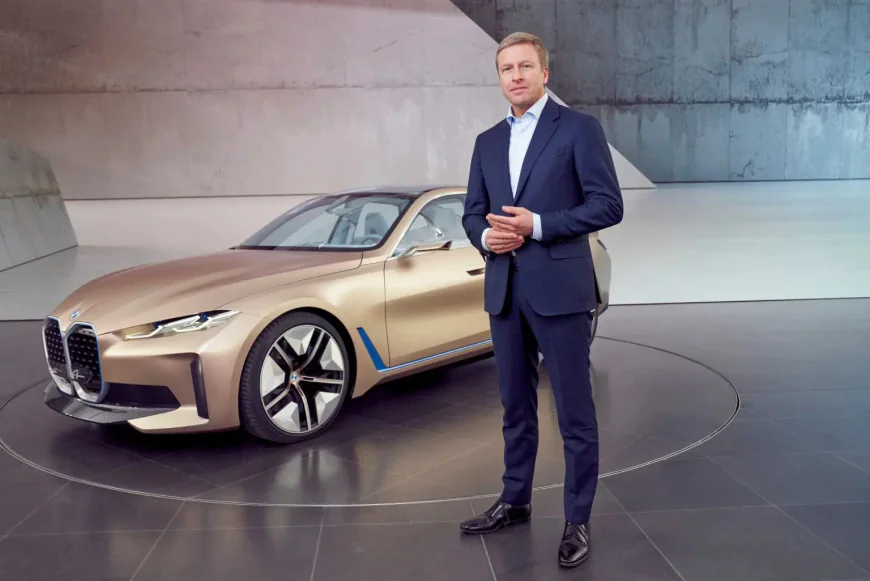
As Chinese automakers surge in EVs and digital technology, BMW is responding by deepening its presence in China and integrating local innovation into its global strategy.
BMW, under the leadership of CEO Oliver Zipse, is responding strategically by deepening its presence in China, forging local partnerships, and integrating Chinese innovation into its global product lines.
1. China remains central — and BMW is doubling down
Despite financial challenges, BMW is doubling down on long-term innovation rather than focusing solely on short-term profitability.
For BMW, China is not just another market — it remains a foundational pillar of its global strategy. As Zipse recently said: Speaking to Xinhua at the 2025 International Motor Show Germany in Munich,
“We have the largest footprint outside Germany in China. Since 2010, BMW has invested around 116 billion yuan … at our Shenyang production base, making it our largest investment outside Germany.”
He added that BMW is “deeply rooted in China, understanding customer needs and market dynamics,” and that “the combination of German engineering expertise with China’s extensive supplier network and local innovation creates a unique global advantage.”
Zipse tells Bloomberg in an interview that there will be room for international automakers to compete in China despite it having a "local" car market. "With our product, we are and we will be competitive even in China,".
Furthermore, in the interview, he noted that, “what is important about China is that there's a lot of local content in the car. It's not only the battery, but also a lot of software. We cooperate with a lot of Chinese partners over there, and I think that is also important to know there in China, it will also be a very Chinese product and it will be more Chinese than ever”.
In a 2025 speech at the China Development Forum, BMW reinforced this commitment under what it calls “Cooperation 2.0.” According to Zipse, the focus is on technological innovation and collaboration:
“We are committed to further investing in China and driving greater development.”
“AI is key to creating smarter, safer, and more human‑centric mobility solutions.”
The company operates R&D and innovation bases across Beijing, Shanghai, Shenyang, and Nanjing — its largest outside Germany — and partners with Chinese tech firms and battery makers to build what it calls “intelligent and sustainable mobility solutions.”
He specifically points to partnerships with Chinese battery makers (like CATL and EVE Energy) as part of BMW’s strategy to stay competitive, not just locally but globally.
Zipse further emphasised, in an interview with Xinhua with English News, that innovations emerging from China are crucial for BMW’s global product development:
“Currently, the biggest innovations we see come out of China. Combining our strengths allows us to develop products that set new standards globally.”
What this means: Rather than retreating from the challenge posed by Chinese automakers, BMW is leaning into collaboration — using China’s strengths to bolster its own. This suggests that BMW believes it can compete — not by ignoring Chinese manufacturers — but by integrating their strengths through partnerships and supply-chain integration.
2. Innovation Response: New Models, New Technologies, Neue Klasse
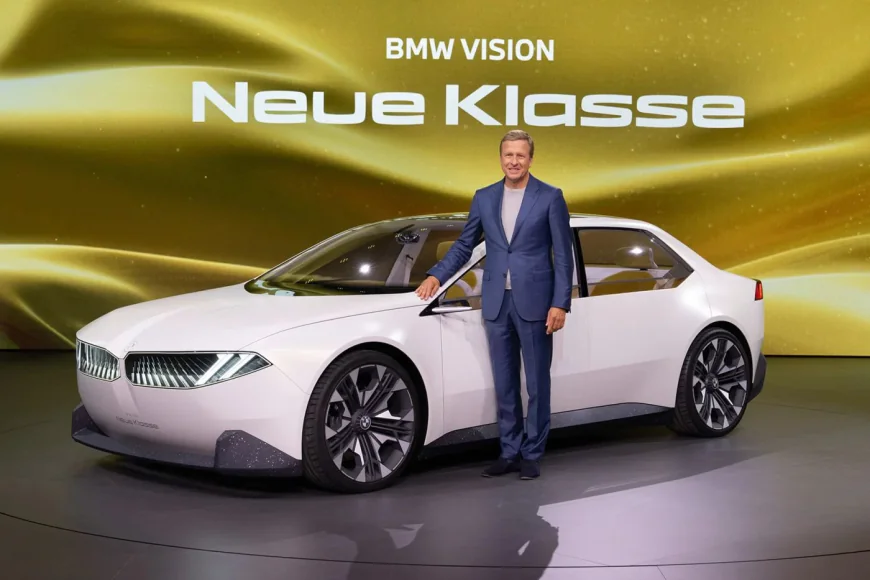
To remain competitive amid rising domestic Chinese rivals, BMW is responding with a mix of innovation, collaboration, and product development.
As part of its strategic response, BMW is preparing to launch a new generation of vehicles tailored for the evolving global and Chinese automotive market.
According to the company, its upcoming “Neue Klasse” vehicles will be produced in China (via the Shenyang plant), leveraging local supply chains, battery partners, and design teams.
In 2024, according to CBT News, it invested more than €18 billion in research and development (R&D) — one of its highest levels ever.
A significant portion of this investment is allocated to Neue Klasse, BMW’s next-generation digital vehicle platform. Neue Klasse represents not just new models, but an entirely new production and vehicle architecture focused on electric drivetrains, software integration, digital services, and advanced manufacturing techniques.
The first Neue Klasse model is set to launch later this year, with BMW planning to introduce over 40 new or updated vehicles by 2027, signalling an aggressive product offensive.
In addition to battery-electric vehicles (BEVs), BMW is continuing to explore hydrogen fuel-cell technology, with the aim of launching a hydrogen-powered electric vehicle in 2028. This shows BMW’s belief that the future of mobility may include multiple energy sources — not just battery-powered EVs, but also hydrogen as a complementary zero-emission solution.
By doing this, BMW signals its commitment not only to remain in China, but also to deeply embed China in the core of its future — both in design and production.
This “in China, for China (and for the world)” strategy is BMW’s answer to growing domestic Chinese competition and global shifts toward electrification and digital mobility.
However, BMW acknowledges that China will continue to be a challenging market. To maintain competitiveness, BMW is introducing key models like the new BMW 5 Series, BMW X3, a new Mini lineup, and the updated BMW 2 Series Gran Coupe.
3. The Risks Ahead — Margin Pressure, Market Volatility, and Strategic Uncertainty
Even as BMW doubles down, the environment remains fraught with risk. China’s auto market is now highly competitive, with many local rivals pushing aggressively on price, tech, and EV offerings. Zipse does not treat this as a temporary trend; he calls the competition “highly competitive.”
At the same time, global regulatory and trade developments complicate the picture. For example, as BMW itself has argued, regulatory moves such as proposed bans on internal-combustion engine cars in Europe raise concerns about supply-chain resilience and dependence on China for batteries and EV components.
Moreover, diversifying risk does not mean exiting China — a point Zipse told CNBC in an exclusive interview.
“We always try to diversify our risks. This is not leaving a country or leaving a specific region.”
But diversification inevitably raises complex strategic decisions: balancing where to source components, how to structure global supply chains, and which markets to prioritise — all in an environment where Chinese automakers are improving quickly, and the global regulatory landscape is in flux.
BMW’s strategy hinges on managing a delicate balance between embracing China’s strengths and mitigating the vulnerabilities that come with dependence on global supply chains and shifting regulations. If mismanaged, the company risks eroding its margins or losing its competitive advantage.
According to CBT News “U.S. trade policies are likely to reduce margins by about one percentage point as tariffs on steel, aluminum, and vehicle imports take effect, which could impact earnings by hundreds of millions of euros.
Moreover, “the company is projecting a profit before taxes in line with 2024 but expects its automotive unit’s margin to remain between 5% and 7%. It is important to note that the company typically aims for a margin above 8%”.
What's Your Reaction?
 Like
0
Like
0
 Dislike
0
Dislike
0
 Love
0
Love
0
 Funny
0
Funny
0
 Wow
0
Wow
0
 Sad
0
Sad
0
 Angry
0
Angry
0

I’m a freelance writer with a passion for business, lifestyle, and opinion pieces that explore culture, trends, and real-world insights. I bring a perspective that blends professional knowledge with cultural awareness, drawing on my experience in real estate and a keen interest in South Asian lifestyle and culture. I hold a Master’s in Popular Music Practice, and outside of writing, I enjoy playing the flute and reading about philosophy and psychology. I love crafting engaging, thought-provoking stories and am always excited to pitch fresh ideas or take on features that connect communities, trends, and the bigger picture.












Comments (0)