

Visa Goals: Trump’s World Cup Strategy
A new “FIFA Pass” fast-track visa scheme for 2026 World Cup ticket holders is blurring the line between sports, politics, and privilege—raising big questions about soft power, fairness, and who really gets to cross the border.
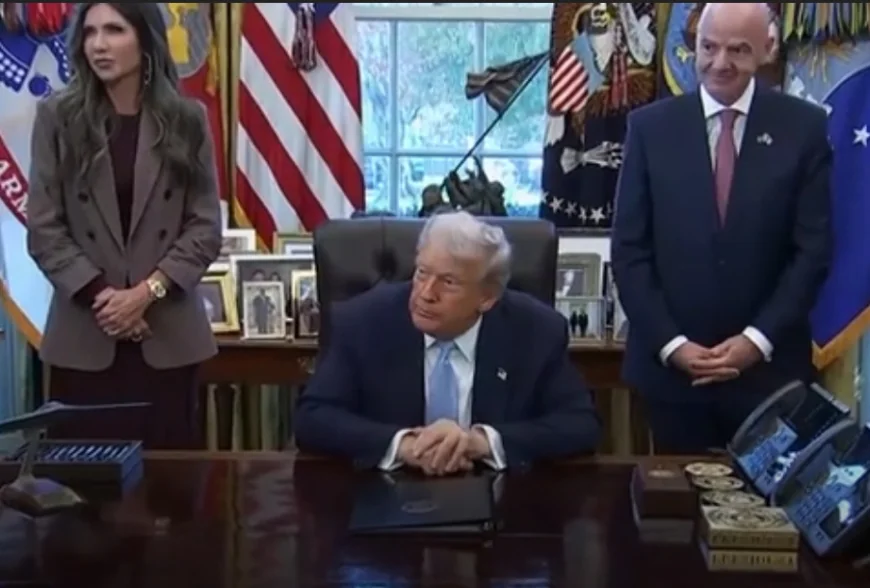
As the United States prepares to co-host the 2026 FIFA World Cup, the Trump administration has unveiled a new “FIFA Pass” — a priority visa appointment system for ticket holders.
Marketed as a way to streamline travel for international fans, the scheme aims to boost tourism, support local economies, and project the U.S. as a welcoming global host.
However, while the policy promises economic opportunity and diplomatic visibility, it also raises concerns about fairness, immigration inequality, and potential politicisation of global sports.
“FIFA Pass” Introduced for Fast-Track Visas
The Trump administration is launching a “FIFA Pass” (Priority Appointment Scheduling System) to provide people who’ve purchased 2026 World Cup tickets with prioritised visa interview slots.
Marco Rubio clarified that while appointments are faster, ticket holders still go through the “same vetting” as everyone else.
Over 400 additional U.S. consular officers have been deployed globally to handle the surge of visa requests.
Fast-tracking visa appointments for World Cup ticket holders encourages more international fans to travel to the U.S. This is expected to significantly increase spending on flights, hotels, dining, transportation, and events, providing a substantial economic boost to host cities.
By easing travel for global visitors, the U.S. portrays itself as a welcoming and business-friendly destination, thereby strengthening its status as a host of major international events.
However, citizens, immigrants, students, and business travellers facing long visa waits may view the FIFA Pass as prioritising tourists over legitimate applicants — raising questions about fairness and policy priorities.
Nations with historically slow U.S. visa approvals may push for similar fast-track systems, potentially leading to diplomatic pressure or demands for reciprocity.
Even with increased staffing, prioritising ticket holders could result in slower service for regular applicants (such as students, workers, and families), especially in high-demand embassies.
Political and Economic Implications
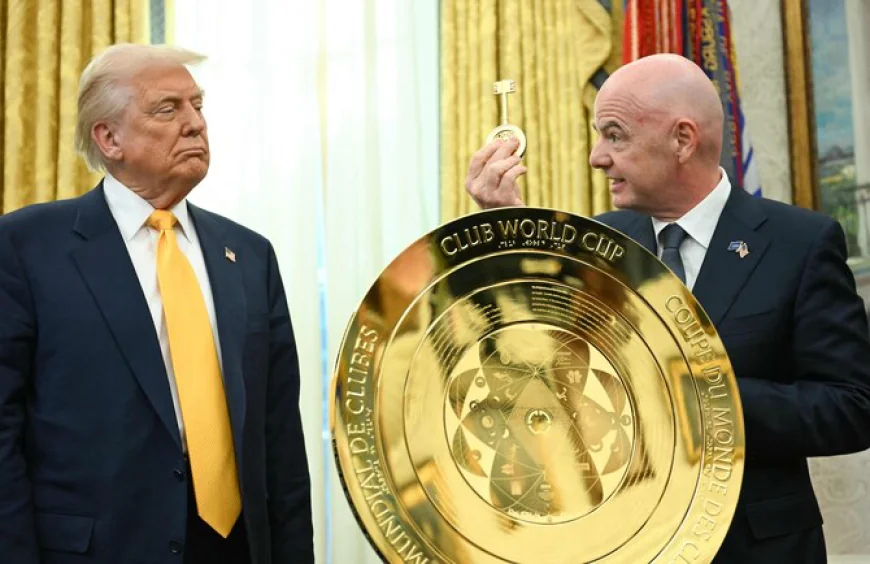
The program could help stimulate the economy during the World Cup, but may spark political criticism that the administration is using migration policy for populist or commercial purposes.
Hosting millions of visitors presents the U.S. with a significant diplomatic opportunity to showcase its culture, hospitality, and global leadership — if managed effectively.
International fans are expected to stay for long periods, spend heavily, and drive a rebound in inbound tourism.
If even a small number of bad visa decisions occur (such as fraud, overstays, or security incidents), the policy could become highly controversial.
The 2026 World Cup is expected to significantly boost the U.S. economy, with estimates suggesting around $30 billion in output and the creation of 185,000 jobs.
However, Forbes notes uncertainty: Trump’s threats to pull games from certain cities and harsh immigration rhetoric may deter some travellers.
According to The Independent, civil society and human rights groups (e.g., Human Rights Watch, ACLU) have raised concerns that the “FIFA Pass” is being used as a tool to whitewash Trump-era immigration policies
The Independent warns that, despite priority booking, long visa appointment wait times persist for many nationalities—some face delays of 400–700 days under Trump’s restrictive immigration policies.
Trump has raised concerns about the safety of some host cities. He suggested relocating games from cities he deems “unsafe,” exacerbating tensions with city officials.
Implications of the FIFA Pass Priority Visa System
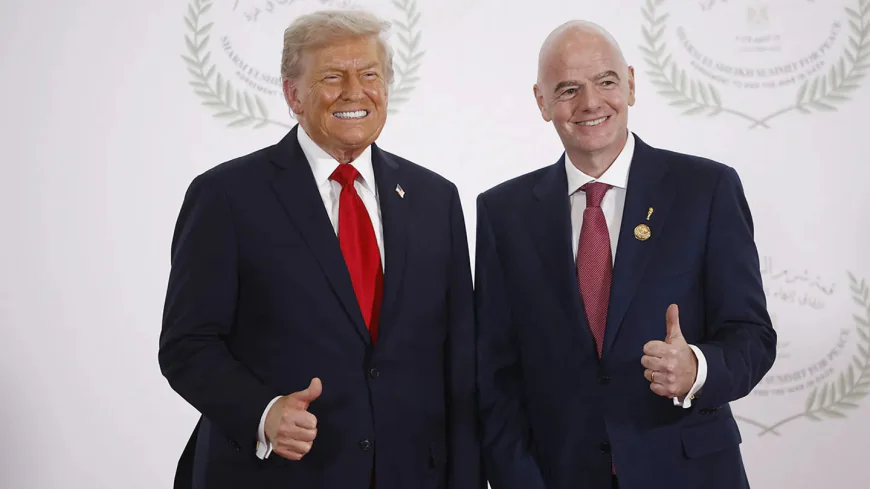
FIFA President Gianni Infantino and President Trump pose during a summit on Gaza in Sharm el-Sheikh, Egypt, on Oct. 13, 2025.
The Trump administration’s introduction of the “FIFA Pass” — officially the Prioritised Appointment Scheduling System — is more than a logistical fix; it is a calculated use of soft power.
The scheme, unveiled alongside FIFA President Gianni Infantino, will give 2026 World Cup ticket holders priority scheduling for U.S. visa interviews.
As Infantino put it, “If you have a ticket … you can have prioritised appointments to get your visa.”
The partnership between Donald Trump and FIFA President Gianni Infantino goes beyond sports diplomacy — it is a calculated political alliance that serves the interests of both parties.
For Trump, appearing alongside FIFA leadership at World Cup-related announcements reinforces his image as an international statesman, positioning the U.S. as a global host capable of delivering large-scale events.
It also enables him to capitalise on the World Cup's mass appeal to boost national pride, economic optimism, and international visibility — all key components of soft power.
By aligning himself with a universally popular sport, Trump seeks to broaden his appeal beyond traditional political audiences while projecting himself as a leader on the world stage.
Meanwhile, Secretary of State Marco Rubio confirmed that over 400 additional consular officers have been deployed globally to manage demand, enabling appointment times in about “80 per cent of the world” to drop to 60 days or less.
This policy could significantly enhance the U.S.’s international image — positioning it as both welcoming and efficient.
By facilitating easier travel for fans, the United States strengthens bilateral ties, especially with major football nations. This may translate into economic benefits, broader diplomatic engagement, and long-term tourism growth.
However, the policy also raises fairness and political risk. The FIFA Pass does not guarantee entry; it only provides expedited interview slots.
Critics argue that there is a prioritisation whereby a two-tier visa system favours wealthy fans over other visa applicants.
This concern means that by giving priority access to visa interview slots only to World Cup ticket holders, the U.S. is effectively giving preferential treatment to people who can afford to buy event tickets, travel internationally, and pay for accommodation — typically wealthier individuals.
Meanwhile, ordinary travellers — such as students, workers, tourists, or family visitors — may still face long delays and backlogs.
Critics argue that this prioritises commercial entertainment over genuine social, economic, or humanitarian travel needs.
Moreover, the public nature of Trump and Infantino’s alliance has drawn scrutiny.
Observers describe their relationship as a “strategic” rather than sincere partnership, driven by mutual interests: Trump gains visibility and geopolitical leverage, while FIFA secures stability and influence on U.S. soil.
This undermines FIFA’s image of neutrality and could fuel perceptions of politicisation.
In summary, the FIFA Pass represents a powerful blend of commerce, diplomacy, and soft power — but its success will depend on striking a balance between operational execution and ethical transparency, as well as global perceptions.
What's Your Reaction?
 Like
0
Like
0
 Dislike
0
Dislike
0
 Love
0
Love
0
 Funny
0
Funny
0
 Wow
0
Wow
0
 Sad
0
Sad
0
 Angry
0
Angry
0

I’m a freelance writer with a passion for business, lifestyle, and opinion pieces that explore culture, trends, and real-world insights. I bring a perspective that blends professional knowledge with cultural awareness, drawing on my experience in real estate and a keen interest in South Asian lifestyle and culture. I hold a Master’s in Popular Music Practice, and outside of writing, I enjoy playing the flute and reading about philosophy and psychology. I love crafting engaging, thought-provoking stories and am always excited to pitch fresh ideas or take on features that connect communities, trends, and the bigger picture.













Comments (0)