

Prof. Oquaye Slams GH¢4 Million NPP Flagbearer Fee: “Election Is Not an Auction”
In a bold and principled critique, former Speaker of Parliament Professor Aaron Mike Oquaye has condemned the New Patriotic Party’s (NPP) decision to charge a GH¢4 million development fee from presidential aspirants, describing it as a dangerous precedent that undermines democratic values.

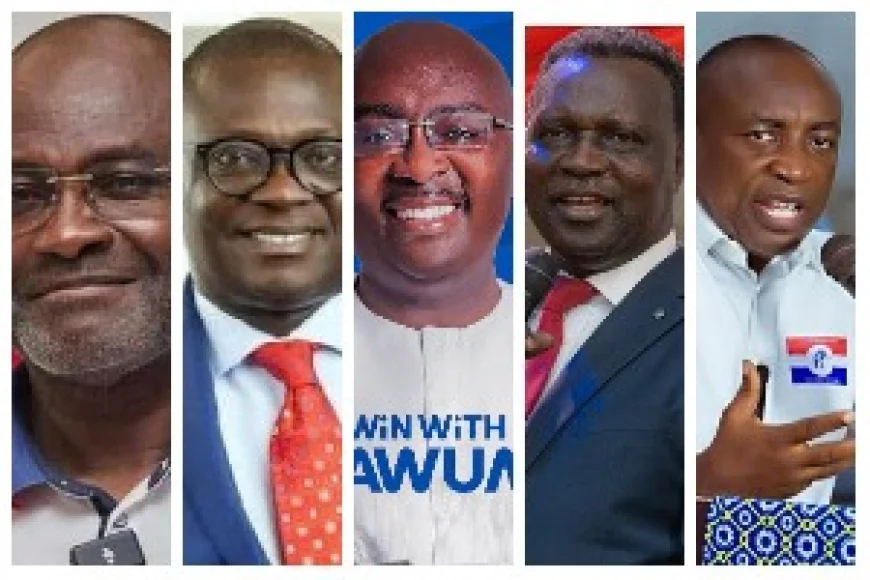

In a bold and principled critique, former Speaker of Parliament Professor Aaron Mike Oquaye has condemned the New Patriotic Party’s (NPP) decision to charge a GH¢4 million development fee from presidential aspirants, describing it as a dangerous precedent that undermines democratic values.
Speaking in an interview with the Daily Graphic, Prof. Oquaye warned that the fee promotes what he termed “moneycracy”—a system where financial power overshadows merit and democratic participation. He argued that elections should not resemble auctions, and that political parties must not be for sale.
According to documents released by the NPP, aspirants are required to pay GH¢100,000 for nomination forms, GH¢500,000 for filing, and an additional GH¢4 million as a development fee intended to support party infrastructure. However, critics—including Prof. Oquaye—believe this structure could disqualify capable candidates who lack deep financial resources, thereby skewing the race in favor of the wealthy.
Prof. Oquaye described the fee as “a bubonic plague” and emphasized that under Ghana’s 1992 Constitution, political parties must uphold democratic principles and avoid discrimination based on economic status. He cited Article 17 and Article 55 to reinforce his argument that internal party processes must be inclusive and constitutionally sound.
Drawing from the NPP’s history, Prof. Oquaye recalled how the party’s mother organization, the United Gold Coast Convention, was launched through voluntary contributions—not financial gatekeeping. He also referenced his own experience as Greater Accra Regional Secretary in 1992, noting that fundraising was traditionally done through donations and community engagement, not exorbitant fees.
He warned that allowing individuals to “buy” influence within the party could lead to a dangerous concentration of power, where governance is dictated by wealth rather than principle. “It will become a jingoistic malperformance of ‘he who pays the piper calls the tune,’” he said, stressing the need for a party-government partnership that reflects grassroots values.
Prof. Oquaye urged the NPP’s National Executive Committee to revisit its fundraising strategy and detach financial contributions from candidacy. He advocated for broader, community-based fundraising efforts that preserve the party’s integrity and prevent corruption.
He concluded with a sobering reminder: “We saw a man from abroad who came and bought his way to Parliament and disgraced us when he was arrested, tried, and jailed in the USA for cocaine.” For Prof. Oquaye, the creeping influence of money in politics threatens not only the NPP’s future but the moral fabric of Ghana’s democracy.
What's Your Reaction?
 Like
0
Like
0
 Dislike
0
Dislike
0
 Love
0
Love
0
 Funny
0
Funny
0
 Wow
0
Wow
0
 Sad
0
Sad
0
 Angry
0
Angry
0










Comments (0)