

The Economic Stakes Of The Mecca Pact: A New Regional Defence Economy?
As Saudi Arabia, Türkiye and Pakistan forge a new security alliance, the Mecca Pact could do more than reshape regional defence — it could redirect billions in military spending, investment and industrial development.
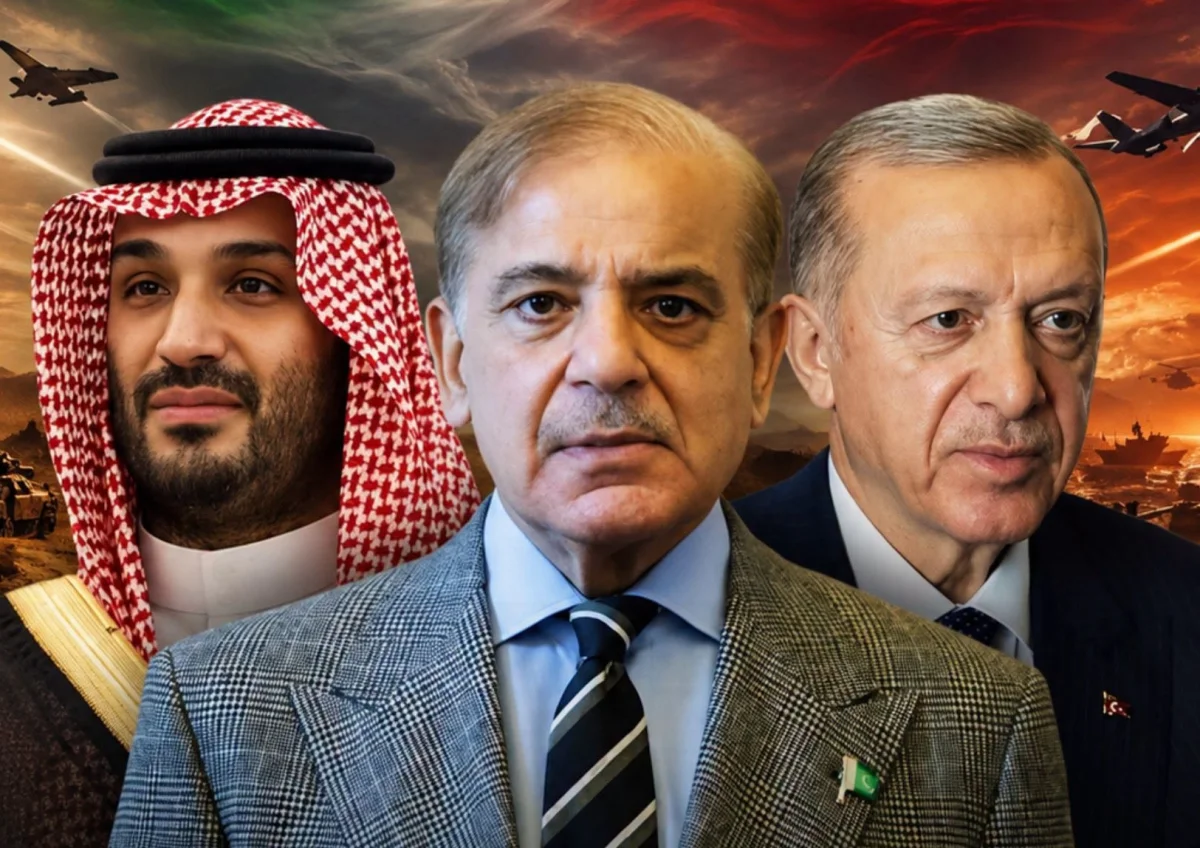
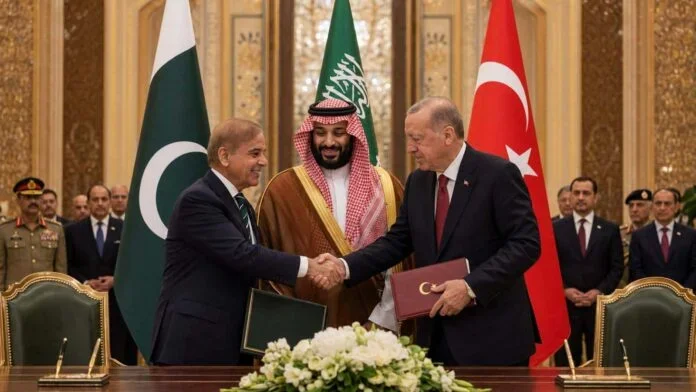
The Mecca Joint Defence Agreement signed by Saudi Arabia, Türkiye and Pakistan on 7 August is primarily a security pact, but its longer-term significance could be economic.
The agreement could reshape how the three countries approach defence spending, military procurement, investment and industrial development. For Saudi Arabia, in particular, it arrives as the kingdom attempts to transform its economy under Vision 2030 while reducing its reliance on foreign suppliers.
The Economic Backdrop
The agreement comes amid heightened regional instability following the US-Israeli war on Iran and attacks affecting Gulf security and energy infrastructure.
According to Reuters, the conflict has disrupted Gulf energy flows and threatened the security of Saudi Arabia, raising concerns in Riyadh about the protection of its oil infrastructure and wider economic interests.
Vision 2030 relies on attracting foreign investment and developing sectors including tourism, logistics, manufacturing and technology. Major projects require investors to commit capital over many years. Persistent geopolitical instability can instead increase perceived risk, insurance costs and the cost of financing.
A credible regional security framework could therefore have an economic value of its own: protecting the infrastructure and investment on which diversification depends.
What The Pact Entails
The central principle is that an armed attack against one member will be considered an attack against all three.
Turkish Foreign Minister Hakan Fidan described the arrangement as technically comparable to NATO's Article 5, although the precise military mechanisms are yet to be determined. Reuters reported that a ministerial committee and permanent secretariat will be established in Saudi Arabia to develop the framework.
Fidan has stressed that the agreement is not directed against Iran or another specific country. The pact is intended as a defensive arrangement designed to strengthen deterrence.
Saudi Arabia: Turning Defence Expenditure Into Industry
The clearest economic opportunity for Riyadh is defence localisation.
Saudi Arabia has historically spent heavily on imported military equipment. Under Vision 2030, however, it wants a greater proportion of that expenditure to generate economic activity domestically.
The General Authority for Military Industries (GAMI) reports that 24.89% of Saudi military spending was localised by the end of 2024, with the kingdom targeting more than 50% by 2030. GAMI says the strategy is intended to develop national manufacturing, research and technology capabilities, create jobs and increase the sector's contribution to the economy.
Hence by extension this makes the choices of partners economically significant. I e., it needs partners that can help establish manufacturing, maintenance, research and technology capabilities within the kingdom. Saudi Arabia is increasingly looking beyond simply buying weapons. Here is where Türkiye is potentially well placed to fulfil that role.
Türkiye: An Expanding Defence-Export Economy
Türkiye's defence industry has become an increasingly important export sector.
According to Anadolu Agency, Türkiye's defence and aerospace exports exceeded $10 billion in 2025, reaching approximately $10.05 billion. The figure included around $9.87 billion in goods exports and $184 million in services.
A Reuters analysis of trade data found that Türkiye's defence exports had more than tripled since 2021, reaching around $10 billion in 2025 and accounting for approximately 3.7% of the country's total exports. Exports to Europe and the United States had also almost quadrupled to $5.6 billion.
Saudi Arabia represents an attractive market because it combines substantial purchasing power with a government commitment to localisation.
This creates the possibility of moving beyond a conventional buyer-seller relationship towards co-production.
Instead of Saudi Arabia simply importing Turkish drones, aircraft or naval systems, future cooperation could involve joint ventures, local manufacturing, maintenance facilities and technology transfer.
The economic effect would consequently extend beyond the value of individual weapons contracts. It could create demand for engineering, electronics, software, logistics and specialised manufacturing while retaining a greater share of defence expenditure within Saudi Arabia.
Pakistan: Strategic Importance With Economic Benefits
Pakistan brings a different economic proposition.
According to Reuters, Pakistan has longstanding military ties with Saudi Arabia and has historically provided the kingdom with military support, including troops and equipment.
The new agreement could therefore strengthen an established relationship while creating opportunities in defence services, training and maintenance.
The wider economic implications may be even more important.
Pakistan has faced persistent external financing pressures and has a strong incentive to deepen relations with wealthy Gulf partners. Greater strategic importance to Saudi Arabia could support opportunities for investment, energy cooperation and infrastructure.
In that sense, the pact potentially gives Islamabad economic benefits from becoming a more important component of the Gulf's emerging security architecture.
Security As Economic Infrastructure
The most significant economic effect may ultimately be indirect.
Investors price geopolitical risk into decisions about where to deploy capital. If Saudi Arabia can demonstrate that attacks against its critical infrastructure would trigger a collective response, the pact could strengthen the perception of the kingdom as a more secure long-term investment destination.
On 9 August, two days after the agreement was signed, Reuters reported that Yemen's Iran-aligned Houthi rebels attacked Saudi Aramco's oil refinery in Jazan with a drone. The resulting fire was extinguished without casualties, while the Houthis claimed responsibility for the attack.
The incident illustrates the challenge facing the agreement: the economic value of collective security depends on whether it can actually deter threats
.For Saudi Arabia, the key question is therefore whether increased defence spending produces domestic economic value.
A Potential Regional Economic-Security Network
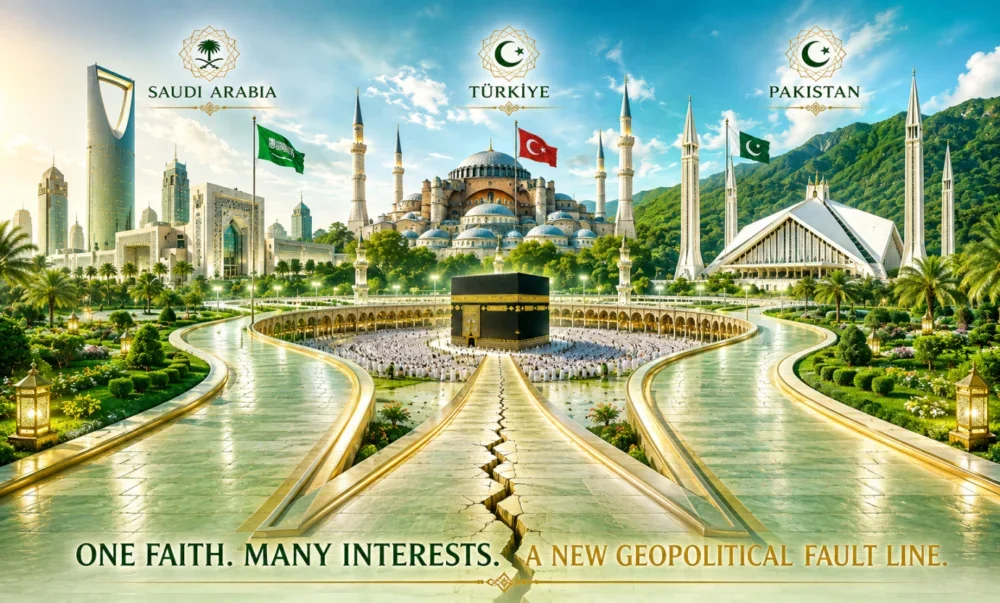
The pact could eventually extend beyond its three founding members. Reuters reported that Erdoğan envisages expansion, with Egypt identified as a potential future participant.
A larger membership could create a broader market for defence equipment, manufacturing, logistics and infrastructure protection. It would also create greater military and financial obligations for members.
Ultimately, the Mecca Pact should not yet be described as an economic bloc. It contains no major trade or investment agreement.
Its economic significance lies instead in what it could enable.
Saudi Arabia has capital and a clear localisation strategy. Türkiye has a defence industry whose exports have surpassed $10 billion. Pakistan brings military expertise and an established relationship with Riyadh.
If those strengths are combined through joint ventures, technology transfer and local manufacturing, the pact could evolve from a security arrangement into an instrument of industrial policy.
The broader question is whether the three countries can turn collective security into economic resilience.
For Saudi Arabia, success would mean transforming defence expenditure into domestic manufacturing and investment. For Türkiye, it means expanding a high-growth export industry. For Pakistan, it could mean leveraging strategic relevance into investment and economic cooperation.
The Mecca Pact is therefore not simply about who will defend whom. Its longer-term economic significance may lie in who manufactures the weapons, who finances them, where the value is created and whether greater security can attract the investment needed to transform the region's economies.
What's Your Reaction?
 Like
0
Like
0
 Dislike
0
Dislike
0
 Love
0
Love
0
 Funny
0
Funny
0
 Wow
0
Wow
0
 Sad
0
Sad
0
 Angry
0
Angry
0

I’m a freelance writer with a passion for business, lifestyle, and opinion pieces that explore culture, trends, and real-world insights. I bring a perspective that blends professional knowledge with cultural awareness, drawing on my experience in real estate and a keen interest in South Asian lifestyle and culture. I hold a Master’s in Popular Music Practice, and outside of writing, I enjoy playing the flute and reading about philosophy and psychology. I love crafting engaging, thought-provoking stories and am always excited to pitch fresh ideas or take on features that connect communities, trends, and the bigger picture.















Comments (0)