

Audi’s Bet on China: Growth Engine or Strategic Risk?
Audi is doubling down on China as its key luxury market, but rising competition and economic uncertainty are turning opportunity into risk.

For Audi, China is no longer just an important market—it is the centre of its global strategy. As the world’s largest automotive market and one of the fastest-growing segments for premium vehicles, China represents both Audi’s greatest opportunity and its most significant challenge.
Despite slowing growth and intensifying competition, the company continues to invest heavily in the region, signalling a long-term commitment. Yet this reliance raises a critical question: Is China a stable growth engine for Audi, or a source of increasing economic risk?
Why China Matters
China has become Audi’s single most important national market by a considerable margin. In 2025, the company delivered over 617,000 vehicles in China, accounting for a substantial share of its global sales of around 1.6 million units.
This scale reflects more than just size—it highlights structural dependence. China’s expanding middle and upper classes have driven sustained demand for premium vehicles, positioning the country as a key driver of revenue and long-term growth. In fact, Audi’s leadership has emphasised that the Chinese luxury car market is expected to grow by around 40% over the next decade, even as premium demand stagnates in Europe and North America.
This divergence explains Audi’s strategic focus. While Western markets face maturity and slower growth, China continues to offer expansion potential, particularly in urban centres where rising incomes and consumer aspirations fuel demand for luxury goods.
Moreover, China is not only a sales market but also a centre for innovation. Consumer expectations in China—especially around digital connectivity, in-car technology, and electric vehicles—are shaping the future of the global automotive industry. As a result, Audi is increasingly designing products specifically for Chinese consumers rather than adapting global models.
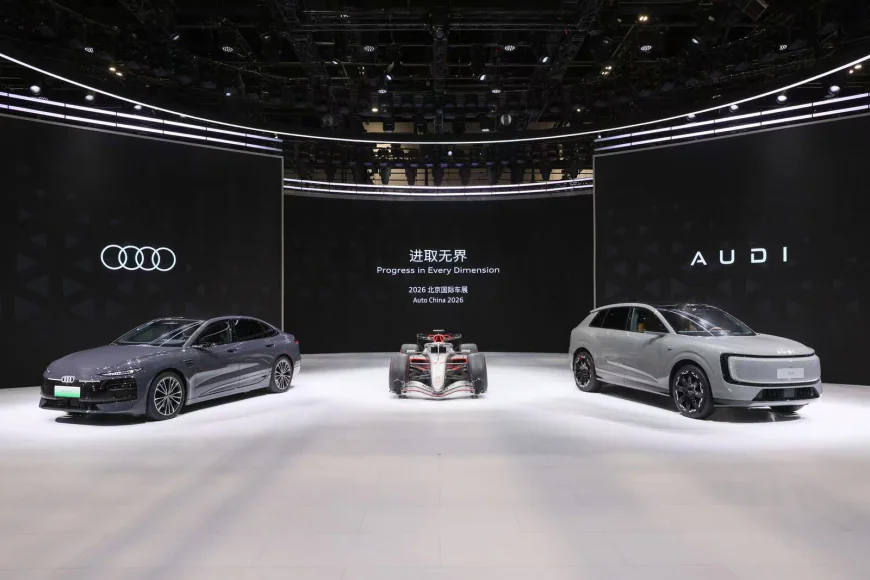
How Audi Is Expanding in China
To maintain its position, Audi has adopted a strategy centred on localisation, partnerships, and technological adaptation. One of the most significant developments is its deepening collaboration with Chinese automaker SAIC, with plans to jointly develop a new generation of vehicles tailored to the Chinese market.
This partnership reflects a broader shift. Rather than exporting European-designed vehicles, Audi is embedding itself within China’s industrial ecosystem. The company is investing in local production, research, and development, including innovation centres focused on digital technology and electric mobility.
A notable example is the creation of a new China-specific brand—developed with SAIC—which departs from Audi’s traditional identity. This move is designed to appeal to younger consumers and compete more effectively with domestic electric vehicle manufacturers.
At the same time, Audi is expanding its electric vehicle portfolio in China. The launch of models such as the A6L e-tron, equipped with advanced driver-assistance systems developed with Chinese technology partners, reflects the growing importance of software and AI in the automotive sector.
These developments highlight a key transformation: China is no longer just a destination for Audi cars—it is becoming a central hub for their development.
The Competitive Challenge
Despite these investments, Audi faces intensifying competition in China, particularly from domestic manufacturers. Chinese automakers such as Geely, Nio, and Huawei-backed brands are rapidly advancing in both technology and design, often offering vehicles with comparable features at lower prices.
This has fundamentally altered the competitive landscape. Historically, German brands dominated the premium segment, benefiting from strong brand recognition and perceived quality. Today, however, domestic firms are closing the gap, particularly in electric vehicles and digital innovation.
The impact is already visible in sales figures. In the first quarter of 2026, Audi’s deliveries in China fell by 12% year-on-year, contributing to a global decline of 6.1%. At the same time, broader data shows that German luxury brands collectively lost tens of thousands of unit sales in the Chinese market during the same period.
To remain competitive, companies have increasingly resorted to price reductions, indicating pressure on margins. This shift suggests that the premium segment is becoming more price-sensitive, undermining one of the key advantages historically enjoyed by luxury brands.
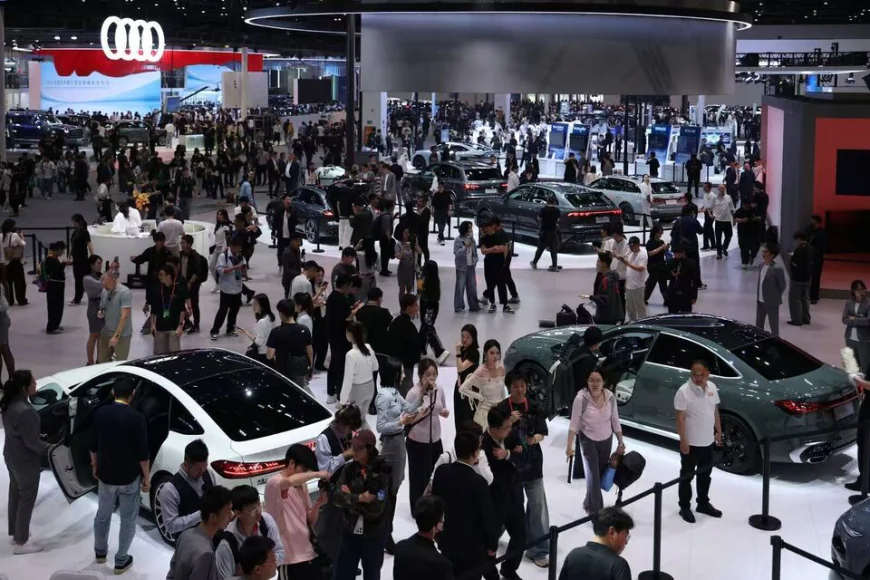
Audi showcase their latest models at Auto China 2026 in Beijing.
Broader Economic Effects
Audi’s strategy in China also has wider implications for the global economy and the automotive industry. The increasing localisation of production and innovation reflects a broader trend toward regionalisation in global manufacturing.
For Germany, this raises important questions. As companies like Audi invest more heavily in China, there is potential for reduced domestic production and employment, particularly if future growth is concentrated in overseas markets. At the same time, success in China remains critical for maintaining the competitiveness of German automakers globally.
More broadly, the evolution of the Chinese automotive market is reshaping global competition. The rise of domestic manufacturers and the rapid adoption of electric and digital technologies are accelerating innovation across the industry. This creates both opportunities and challenges for international firms, which must adapt quickly to remain relevant.
The implications extend beyond the automotive sector. As China continues to lead in areas such as electric vehicles and AI integration, it is increasingly influencing global technological standards. Companies that succeed in China are likely to be better positioned in the global market, while those that fail risk falling behind.
Final Thoughts
Audi’s focus on China reflects a strategic necessity rather than a choice. The country offers unparalleled growth potential in the luxury vehicle segment, making it central to the company’s long-term ambitions.
However, this opportunity comes with significant risks. Intensifying competition, economic uncertainty, and the high cost of technological transformation are creating a more challenging environment.
Ultimately, China represents both a growth engine and a strategic vulnerability for Audi. The company’s ability to navigate this dual reality will play a decisive role in shaping its future—and, more broadly, the trajectory of the global automotive industry.
What's Your Reaction?
 Like
0
Like
0
 Dislike
0
Dislike
0
 Love
0
Love
0
 Funny
0
Funny
0
 Wow
0
Wow
0
 Sad
0
Sad
0
 Angry
0
Angry
0

I’m a freelance writer with a passion for business, lifestyle, and opinion pieces that explore culture, trends, and real-world insights. I bring a perspective that blends professional knowledge with cultural awareness, drawing on my experience in real estate and a keen interest in South Asian lifestyle and culture. I hold a Master’s in Popular Music Practice, and outside of writing, I enjoy playing the flute and reading about philosophy and psychology. I love crafting engaging, thought-provoking stories and am always excited to pitch fresh ideas or take on features that connect communities, trends, and the bigger picture.

















Comments (0)